
ASTM D6130 Determination of Silicon by Inductively Coupled Plasma – Atomic Emission Spectroscopy
In ASTM D6130 test method, silicon and other engine coolant elements are determined by Inductively Coupled - Atomic Emission Spectroscopy (ICP-AES). Element determination is made by comparing standard and sample emission intensities. The values stated in SI units are to be regarded as the standard.
TRUSTED BY


Precision-driven testing for dimensional accuracy and compliance
- Overview
- Scope, Applications, and Benefits
- Test Process
- Specifications
- Instrumentation
- Results and Deliverables
Overview
ASTM D6130 describes a test method using ICP-AES to analyze the trace elements in coal, coke, and combustion residues. This technique can provide highly precise, sensitive multi-element analyses that enable accurate determination of the elements of interest: aluminum, calcium, iron, magnesium, and silicon.
In this method, samples are dissolved in acid and then introduced into the ICP-AES instrument, where the emission intensities are measured to determine elemental concentrations. ASTM D6130 is critical in materials characterization, environmental responsibility, and quality assurance within the coal and energy industries.

Scope, Applications, and Benefits
Scope
ASTM D6130 evaluates trace elements at very low concentration levels, including:
- Detection limits as low as 5 ppm
- Dissolved and dispersed elements in complex matrices
- Multi-element analysis in coal, coke, and combustion residues
- Applicability to low-level elemental detection in industrial materials
The method ensures accurate elemental profiling to support compliance and performance optimization.
Applications
- Coal and coke quality assessment
- Power plant residue evaluation
- Environmental monitoring
- Industrial quality control
- Basic materials research
- Engine coolant trace analysis
- Regulatory compliance testing
Benefits
- High sensitivity and accuracy
- Multi-element detection capability
- Wide application range
- Reliable regulatory compliance data
- Supports environmental safety
- Enables informed decision-making
- Standardized and repeatable methodology
Test Process
Sample Preparation & Dilution
The material is ground, acid-dissolved, and diluted with deionized water.
1Instrument Calibration
ICP-AES is calibrated using standard solutions.
2Sample Aspiration & Verification
Prepared sample is aspirated; blanks and standards are verified.
3Rinse Cycle & Run Completion
The instrument is rinsed with water between boron-containing samples.
4Technical Specifications
| Parameter | Details |
|---|---|
| Detection Limit | As low as 5 ppm |
| Applicable Materials | Coal, coke, combustion residues |
| Sample Conditioning | Typically 1000 mg/L |
| Output Units | ppm |
| Analysis Type | Multi-element |
| Sample Preparation | Acid digestion |
Instrumentation Used for Testing
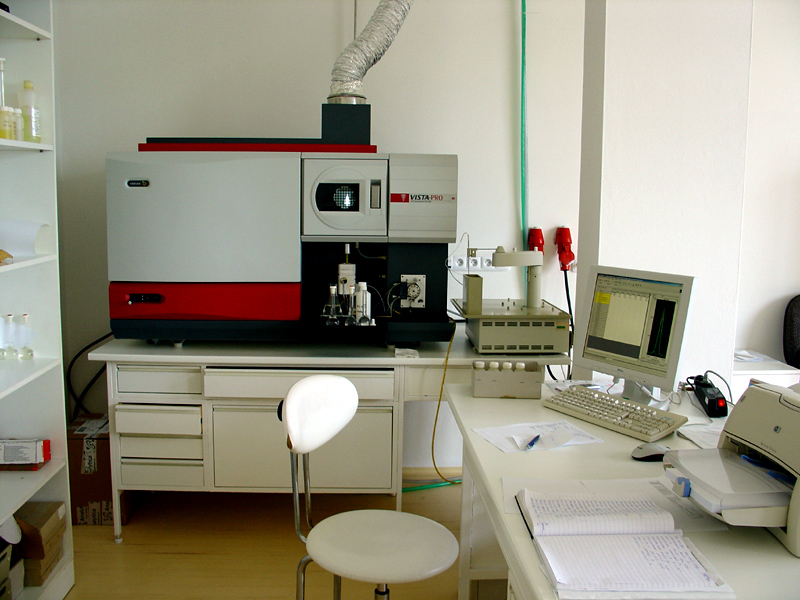
- ICP-AES spectrometer
- Analytical balance
- Acid digestion system
- Volumetric flasks
- Deionized water system
- Calibration software
- Sample nebulizer
Results and Deliverables
- Trace element concentration values (ppm)
- Calibration curves
- Instrument performance validation
- Quality control documentation
- Regulatory compliance reports
- Material characterization data
Frequently Asked Questions
ASTM D6130 is a standardized test method for determining the concentration of trace elements in coal, coke, combustion residues, and engine coolants using inductively coupled plasma-atomic emission spectrometry (ICP-AES).
This method applies to various samples, including coal, coke, combustion residues, and new and used engine coolants.
ASTM D6130 can detect a wide range of elements, including but not limited to aluminum, calcium, iron, magnesium, and silicon.
This test method is widely used in quality control, regulatory compliance, and research across various industries.
It requires specialized equipment & expertise to perform correctly. The method's accuracy can also be affected by complex matrices or interferences in the sample, which may require additional steps to mitigate.
Case Studies
In-depth examination of genuine material testing solutions
Dopant and Ultra-Low Concentration Elemental Analysis Using STEM…

Dopant and Ultra-Low Concentration Elemental Analysis Using STEM…
Introduction to STEM-EELS for Elemental Analysis Scanning Transmission Electron Microscopy (STEM) combined with Electron Energy Loss...
Read Case StudyAnalysis of PVC Pipe Degradation Using FTIR Spectroscopy

Analysis of PVC Pipe Degradation Using FTIR Spectroscopy
PVC Pipe in Infrastructure — and Why Degradation Matters Polyvinyl chloride (PVC) pressure pipe is one...
Read Case StudyNano-scale roughness measurement of Si-wafers by Atomic Force…

Nano-scale roughness measurement of Si-wafers by Atomic Force…
Nano-scale surface roughness is a critical parameter in fabricated thin-films that are used in optics, solar...
Read Case Study
Request a Quote
Submit your material details and receive testing procedures, pricing, and turnaround time within 24 hours.
 Quick Turnaround and Hasslefree process
 Confidentiality Guarantee
 Free, No-obligation Consultation
 100% Customer Satisfaction
