
ASTM C920-18 Specification for Elastomeric Joint Sealants
ASTM C920-18 test method covers the properties of a cured single-or multicomponent cold-applied elastomeric joint sealant for sealing, caulking, or glazing operations on buildings, plazas, and decks for vehicular or pedestrian use. The final results of this method are displayed keeping in view the international standards and inch-pound units.
TRUSTED BY


Precision-driven testing for dimensional accuracy and compliance
- Overview
- Scope, Applications, and Benefits
- Test Process
- Specifications
- Instrumentation
- Results and Deliverables
Overview
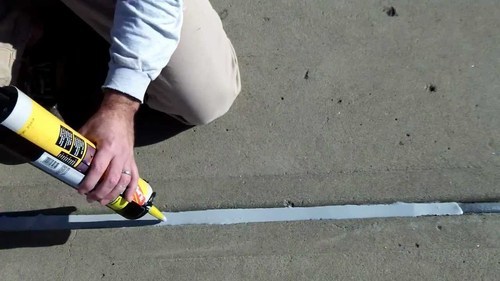
ASTM C920-18 defines the requirements and classification for elastomeric joint sealants used in construction and engineering applications. These sealants are designed to accommodate movement, provide weather resistance, and maintain durable sealing performance under varying environmental conditions.
The standard classifies sealants based on movement capability, application type, and performance characteristics. It ensures that sealants meet minimum quality and durability requirements, supporting long-term performance in joints exposed to thermal expansion, moisture, and mechanical stress.

Scope, Applications, and Benefits
Scope
ASTM C920-18 specifies performance requirements, classification, and testing criteria for elastomeric joint sealants used in sealing joints subjected to movement and environmental exposure.
- Covers single and multi-component elastomeric sealants
- Classifies sealants by movement capability and application type
- Includes requirements for adhesion, cohesion, and durability
- Applicable to building joints, glazing, and structural sealing
- Supports both laboratory testing and field applications
Applications
- Building expansion and control joints
- Glazing and curtain wall sealing
- Precast concrete joints
- Masonry and façade sealing
- Industrial and infrastructure sealing applications
Benefits
- Ensures reliable joint sealing performance
- Accommodates structural movement effectively
- Enhances weather and moisture resistance
- Improves durability and service life
- Supports compliance with industry standards
Test Process
Sample Preparation
Sealant specimens are prepared and conditioned according to specified dimensions and curing conditions.
1Application and Curing
Sealant is applied to substrates and allowed to cure under controlled environmental conditions.
2Performance Testing
Samples are subjected to adhesion, cohesion, and movement capability tests as per standard requirements.
3Evaluation and Classification
Results are analyzed to classify sealant based on movement, durability, and performance characteristics.
4Technical Specifications
| Parameter | Details |
|---|---|
| Material Type | Elastomeric sealants (silicone, polyurethane, etc.) |
| Classification | Type, Grade, Class, and Use |
| Movement Capability | Typically ±12.5% to ±50% |
| Application Mode | Single-component or multi-component |
| Adhesion Requirement | Strong bond to specified substrates |
| Durability | Resistance to weathering and aging |
| Test Conditions | Controlled laboratory environments |
| Cure Mechanism | Moisture cure or chemical cure |
Instrumentation Used for Testing
- Universal testing machine
- Environmental chamber
- Adhesion test apparatus
- Tensile testing equipment
- Curing ovens
- Measurement gauges
- Substrate preparation tools
Results and Deliverables
- Sealant classification (Type, Grade, Class, Use)
- Performance test results (adhesion, cohesion, movement)
- Compliance report as per ASTM C920-18
- Observations on material behavior
- Recommendations for application suitability
Why Choose Infinita Lab for ASTM C920-18?
Infinita Lab is a trusted USA-based testing laboratory offering ASTM C920-18 testing services across an extensive network of accredited facilities across the USA.
Infinita Lab is built to serve the full spectrum of modern testing needs—across industries, materials, and methodologies. Our advanced equipment and expert professionals deliver highly accurate and prompt test results, helping businesses achieve quality compliance and product reliability.
Looking for a trusted partner to achieve your research goals? Schedule a meeting with us, send us a request, or call us at (888) 878-3090 to learn more about our services and how we can support you. Request a Quote
Frequently Asked Questions
ASTM C920-18 specifies performance requirements and classification for elastomeric joint sealants used in construction. It ensures sealants provide durability, flexibility, and resistance to environmental conditions, helping maintain effective sealing in joints exposed to movement, weather, and mechanical stress over time.
One-component elastomeric sealant (Type S) and multicomponent elastomeric sealants (Type M), respectively, each of which has different grades for non-sag (Grade NS) and pourable (Grade P) applications.
These sealants are typically used to seal joints in building facades, window frames, highways, bridges, and industrial facilities against the intrusion of water, air, and other contaminants that may cause damage.
It means the capability of movement regarding the sealant's ability to stretch and compress with the joint without losing any sealing effectiveness. It is very important in applications where joints are subject to considerable movement.
Elastomeric joint sealants are flexible materials used to seal joints and gaps in structures. They can stretch and recover, allowing them to accommodate movement caused by temperature changes, structural shifts, or vibrations without losing sealing performance.
Case Studies
In-depth examination of genuine material testing solutions
Dopant and Ultra-Low Concentration Elemental Analysis Using STEM…

Dopant and Ultra-Low Concentration Elemental Analysis Using STEM…
Introduction to STEM-EELS for Elemental Analysis Scanning Transmission Electron Microscopy (STEM) combined with Electron Energy Loss...
Read Case StudyAnalysis of PVC Pipe Degradation Using FTIR Spectroscopy

Analysis of PVC Pipe Degradation Using FTIR Spectroscopy
PVC Pipe in Infrastructure — and Why Degradation Matters Polyvinyl chloride (PVC) pressure pipe is one...
Read Case StudyNano-scale roughness measurement of Si-wafers by Atomic Force…

Nano-scale roughness measurement of Si-wafers by Atomic Force…
Nano-scale surface roughness is a critical parameter in fabricated thin-films that are used in optics, solar...
Read Case Study
Request a Quote
Submit your material details and receive testing procedures, pricing, and turnaround time within 24 hours.
 Quick Turnaround and Hasslefree process
 Confidentiality Guarantee
 Free, No-obligation Consultation
 100% Customer Satisfaction
