
ASTM E2246 Strain gradient measurements of thin films using an Optical Interferometer
The ASTM E2246 test method determines the strain gradient of thin, reflecting films in microelectromechanical systems by a non-contact optical interferometric microscope that can form topographical 3-D data sets. This optical interferometric microscope does not record readings from the cantilevers touching the underlying layer.


Scope:
ASTM E2246 test method defines a standard for calculating the strain gradient of thin, reflecting films that help design and fabricate the microelectromechanical systems. Moreover, the strain gradient value can contribute to the application of Young’s Modulus. It obtains 3-D data sets by using a non-contact optical interferometric microscope which can help determine the properties of the cantilever. The strain gradient value impacts the structural and conductivity properties of thin films.
Procedure:
In ASTM E2246, a surface-micromachined cantilever is fabricated and made to bend out of the plane in the z-direction. An optical interferometer forms a topographical 3-D data set, resulting in 2-D data traces which are used for calculating the strain gradient. The transitional edges are obtained and aligned, along with determining the attachment position of the cantilevers. The endpoints and uncertainties are determined, and the misalignment is adjusted. A circular arc is used to specify the misalignment of the cantilevers. The strain gradient is obtained from the circle’s radius by taking the average of the strain gradient values from the traces.
Specimen size
For ASTM E2246, the specimen size should be as required, that is 5 µm wide and 350 µm long.
Data:
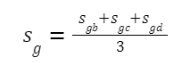
The strain gradient sg is obtained by taking the average of the residual strain values of the traces b, c, and d, as follows:
Conclusion:
ASTM E2246 test method defines a standard for calculating the strain gradient of thin, reflecting films that help design and fabricate the microelectromechanical systems.
Talk to Our Experts Today!
Submit your contact info and we’ll get back to you within 24 hours
Full Spectrum of ASTM Material Testing — Backed by 2,000+ Trusted Lab Partners
ASTM standards for chemical composition, physical properties, failure analysis, and other routine and non-routine testing for polymers and plastics
ASTM standards for determination of mechanical, physical, and thermal properties, and performance of monolithic and composite ceramics
ASTM standards guiding various destructive, non-destructive and analytical tests for quality control of different metals and alloys
ASTM standards for chemical analysis of solid, liquid and gaseous materials for specification compliance and quality control
ASTM standards for various chemical, physical, stability and exposure analysis of paints and coatings
Our Services

Metrology
A variety of microscopy and spectroscopy tools available for precise measurements from the nano to the meter scale.
Learn More
Materials Testing
ASTM and ISO standard and custom chemical, mechanical, thermal, corrosion tests, etc. for all materials metals, ceramic or polymers.
Learn More
Product Testing
Thousands of tests for product quality and reliability under heat, humidity, temperature shock, vibration, drop, electrostatic discharge.
Learn More


