
Corrosion Properties of Materials
Corrosion testing at Infinita Lab assesses the resistance of materials to environmental and chemical breakdown induced by moisture, salts, acids, and pollutants. With sophisticated equipment like Salt Spray (Fog) Chambers, Cyclic Corrosion Testers, Humidity Chambers, and Electrochemical Workstations, we reproduce field-like corrosive conditions to quantify surface degradation, coating integrity, as well as protective operating life. Industries use the findings to increase material ruggedness, avoid failure, and prolong the service life of components in varied environments.


Introduction to Corrosion Properties of Materials
Corrosion is one of the most significant issues in material performance, especially in industries such as construction, automotive, marine, and power. It is the slow destruction of a material—most typically metal—resulting from chemical or electrochemical interaction between the material and the environment. The destruction can cause structural deterioration, loss of functionality, as well as high-cost maintenance or failure.
We at Infinita Lab are experts in full-range Corrosion Testing Services that reproduce aggressive environmental and chemical environments to precisely determine material lifespan as well as protective coating integrity. Our testing enables producers to spot potential weaknesses early during the design or manufacturing phase, so that they can produce stronger, more durable, as well as corrosion-proof materials.
Understanding Corrosion and Its Impact
Corrosion occurs when materials interact with oxygen, water, salts, or other chemicals, resulting in surface degradation and loss of functionality. The main types of corrosion include:
- Uniform Corrosion: Occurs over widespread areas uniformly, usually the outcome of uniform environmental exposure.
- Pitting Corrosion: Local corrosion that creates minute cavities or potholes, most damaging in such base metals as stainless steel.
- Galvanic Corrosion: Occurs as a result of dissimilar contacting of metals in a conductive environment..
- Crevice Corrosion: Occurs in confined spaces or joints where moisture and contaminants accumulate.
Corrosion influences the materials’ appearance as well as their mechanical strength, conductivity, and safety. Knowing these mechanisms from simulated testing is crucial to the creation of long-lasting materials as well as effective protective linings.
Infinita Lab’s Corrosion Testing Capabilities
Infinita Lab offers a range of superior corrosion testing solutions designed to simulate real-world exposure and accelerate assessment timelines.
- Salt Spray (Fog) Chambers:
Simulate marine and industrial conditions with repeated use of a fine saltwater mist. The accelerated test puts the corrosion resistance of paints, metals, and surface treatments to the test with the help of time. - Cyclic Corrosion Testers:
These integrate salt fog, humidity, and dew cycles to emulate challenging outdoor conditions. Such tests give a better indication of service corrosion performance, particularly to the auto and marine industries. - Humidity Chambers:
Assess the effect of high humidity and condensation on finishes, composites, and metal substrates. These tests assist in determining blistering, delamination, and adhesion of coating during long-term exposure to moisture. - Accelerated Weathering Tests:
These tests put materials under accelerated environmental conditions of UV exposure, moisture, and temperature fluctuations to accelerate years’ worth of in-use exposure over a matter of weeks. Accelerated weathering aids in the assessment of the cumulative impact of environmental stressors on corrosion resistance, coating performance, and material deterioration. - Metallurgical Corrosion Evaluation:
This approach analyzes the microstructure and chemical structure of metals to assess corrosion susceptibility. Metallography and microhardness testing allow the detection of defects, grain boundaries, and inclusions that could affect corrosion behavior, making it possible the specifically optimize material design. - Electrochemical Corrosion Tests:
The corrosion rates and reaction kinetics of metal and coating samples are assessed with electrochemical methods such as cyclic voltammetry, electrochemical impedance spectroscopy, and potentiodynamic polarization. The tests give accurate information about the effectiveness of protective coating, susceptibility to pitting, as well as material stability towards corrosion conditions. - In-depth Laboratory Analyses using Microscopy, Chemical Assays, and Physical Techniques:
Microscopy tools like SEM and optical microscopy reveal surface morphology, microcracks, and corrosion products. Chemical assays such as XRF, ICP-OES, and titration quantify elemental composition and detect contaminants. Physical techniques like hardness, thickness, and adhesion tests assess structural integrity and protective coating performance after exposure to corrosive environments.
Partnering with Infinita Lab for Optimal Results
Infinita Lab addresses the most frustrating pain points in the Corrosion Properties process: complexity, coordination, and confidentiality. Our platform is built for secure, simplified support, allowing engineering and R&D teams to focus on what matters most: innovation. From kickoff to final report, we orchestrate every detail—fast, seamlessly, and behind the scenes.
Looking for a trusted partner to achieve your research goals? Schedule a meeting with us, send us a request, or call us at (888) 878-3090 to learn more about our services and how we can support you. Request a Quote
3 Easy Steps to Start Testing
Read Our Blogs and Research Papers
Sand and Dust Testing: Methods, Standards, and Industrial Uses
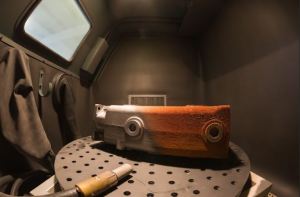
Sand and Dust Testing: Methods, Standards, and Industrial Uses
Sand and dust testing evaluates the ability of products and components to resist penetration and abrasion from fine particulate matter...
Read ArticleCorrosion Failure Analysis

Corrosion Failure Analysis
Corrosion is the degradation of a material caused by a reaction with its surrounding environment. When corrosion causes material failure,...
Read ArticleTop 20 Additive Manufacturing Testing Methods
Top 20 Additive Manufacturing Testing Methods
Top 20 Additive Manufacturing Testing Methods Additive manufacturing (AM) is defined as a process of combining materials to produce items...
Read Article
New Benchmarks in Quality Standards
Empowering you to recognize and address inherent risks within your operations, supply chains, and quality management systems

Advanced Testing Services
Assessing the alignment of your products and services with, and their surpassing of, quality, safety, sustainability, and performance benchmarks.

100% Inspection Guarantee
Confirming the specifications, worth, and safety of your raw materials, products, and assets.

Certification
Officially verifying that your products and services adhere to both established external and internal standards.
Meet our Team
Best Industry Experts to Help You
Pradyumna Gupta PhD, MBA

Vinay Vidyarthi PhD

Dhairya Srivastava MBA

Rana Pratap PhD

Gautam Kumar PhD

Keisha Antoine PhD

Animangsu Ghatak PhD

Sabyasachi Roy

Srinivas Mettu PhD

Shantanu Behera PhD
Talk to Our Experts Today!
Submit your contact info and we’ll get back to you within 24 hours


