


Test Methods Overview
Test methods are standardized procedures for assessing the physical, chemical, mechanical, thermal, electrical, and environmental properties of materials and products. Test methods ensure the repeatability of test results in different labs, industries, and regulatory environments.
International organizations such as ISO, ASTM, MIL-STD, DIN, and IEC, as well as other regulatory agencies, usually develop standardized test procedures. Test methods allow us to evaluate materials, verify product quality, and ensure compliance with industry-standard test procedures.
Our test service supports many internationally recognized test methods for the precise characterization and certification of materials across aerospace, automotive, electronics, polymers, medical devices, and advanced materials.
Importance of Standardized Test Methods
Standardized test methods are integral to product development, quality, and regulatory requirements. Some of the advantages of standardized test methods include:
- Consistency: the test results remain the same across labs.
- Regulation: the tests comply with safety and quality standards.
- Materials: The tests ensure that materials conform to the specifications.
- Product Development: The tests provide the much-needed information for the R&D process.
- Quality: The tests help maintain quality control.
Categories of Test Methods
Test methods are typically grouped based on the type of property or environmental condition being evaluated.
Mechanical Test Methods
Mechanical tests are used to determine a material’s strength and durability, as well as its structure under different forms of stress. These tests include:
- Tensile & Compressive Strength Testing — ASTM E8, ASTM D638, ASTM D695
- Hardness Testing — Brinell (ASTM E10), Rockwell (ASTM E18), Vickers (ASTM E92)
- Fatigue & Fracture Testing — ASTM E399, ASTM E647
- Impact Resistance (Charpy & Izod) — ASTM E23, ASTM D256
- Flexural Strength — ASTM D790, ASTM C1684
- Adhesion & Bond Strength Testing — ASTM D1002, ASTM D4541
- Nanoindentation Testing — for thin films and micro-scale components
- Dynamic Mechanical Analysis (DMA) — ASTM E1640
- Thermomechanical Analysis (TMA)
These tests apply to different materials, ranging from metals to polymers and composites.
Thermal Test Methods
Thermal tests assess how the material responds to changes in temperature, to heat, and to heat-induced deterioration. The tests that are usually performed include:
- Differential Scanning Calorimetry (DSC) — ASTM E793 (enthalpy of fusion), ASTM E794 (melting & crystallization), ASTM E1356 (glass transition Tg), ASTM D3418, ISO 11357
- Thermogravimetric Analysis (TGA) — ASTM E1131 (compositional analysis), ASTM D6370 (polymer degradation), ISO 11358
- Thermomechanical Analysis (TMA) — ASTM E831 (CTE linear), ASTM E1545 (glass transition by TMA), ISO 11359
- Dynamic Mechanical Analysis (DMA) — ASTM E1640, ASTM D4065 (viscoelastic properties), ISO 6721
- Oxidative Induction Time (OIT) — ASTM E1858, ASTM D3895 (polyolefins), ISO 11357-6
- Specific Heat Capacity — ASTM E1269, ISO 11357-4
- Coefficient of Thermal Expansion (CTE) — ASTM E228, ASTM E289 (dilatometry), ISO 11359-2
- Vicat Softening Temperature — ASTM D1525, ISO 306
- Heat Deflection / Distortion Temperature (HDT) — ASTM D648, ISO 75
- Thermal Conductivity — ASTM E1461 (laser flash), ASTM C518 (steady-state heat flow), ISO 22007
- Flammability & Fire Testing — ASTM D635 (horizontal burning), ASTM D3801 (vertical burning/UL94), ASTM E84 (surface burning), ASTM E1354 (cone calorimeter), ISO 5660
Corrosion and Environmental Test Methods
In corrosion and environmental testing, the focus is on how well something will withstand harsh conditions. The tests usually involve:
- Temperature and humidity
- Salt spray tests
- UV tests
- Testing for explosive atmospheres
- Ingress Protection tests
This type of testing is usually important for industries such as aerospace, automotive, electronics, and outdoor gear.
Chemical and Material Characterization Methods
The tests used to characterize materials determine their chemical composition, purity, and structure. The tests commonly used include:
- Spectroscopy
- Elemental Testing
- Moisture Testing
- Polymer Testing
These tests are commonly used in labs dealing with advanced materials, plastics, and research.
Industries Served
Test methods have been employed across various industries to ensure safety, reliability, and compliance with standards. Industries that rely the most on standardized testing include:
- Aerospace & Defense
- Automotive Manufacturing
- Electronics & Electrical
- Plastics & Polymers
- Construction & Structural Materials
- Energy & Power Systems
Why Choose Infinita Lab?
With Infinita Lab (www.infinitalab.com), you are guaranteed a Nationwide Network of Accredited Laboratories spread across the USA, the best Consultants from around the world, Convenient Sample Pick-Up and Delivery, and Fast Turnaround Time.
Our team understands the stakes and subtleties of every test. Whether you’re validating a new Product, de-risking a prototype, or navigating complex compliance requirements, our specialists guide the process with rigor and clarity.
Looking for a trusted partner to achieve your research goals? Schedule a meeting with us, send us a request, or call us at (888) 878-3090 to learn more about our services and how we can support you. Request a Quote
Essential FAQs on Testing standard Materials Testing Services
Test methods are standardized procedures used to assess the physical, chemical, mechanical, thermal, and environmental properties of a product or a material, with the main purpose of obtaining accurate, consistent, and reliable results.
Standardized test methods provide consistent and reliable results, enabling manufacturers, researchers, and regulators to compare results and ensure compliance with industry standards.
These standardized testing methods are used across a wide range of materials, including metals, plastics, ceramics, composites, coatings, electronics, medical device materials, and construction materials.
Several industries rely on these standardized tests to ensure the safety, quality, and compliance of their materials. Some of these industries include aerospace, automobiles, electronics, and energy.
These tests are used to obtain vital information about the performance, endurance, and exposure of materials.
3 Easy Steps to Start Testing
Read Our Blogs and Research Papers
Torque Calibration: Methods, Standards & Traceability Guide

Torque Calibration: Methods, Standards & Traceability Guide
What Is Torque Calibration? Torque calibration is the process of comparing a torque-measuring instrument — torque wrench, torque transducer, torque...
Read ArticleNFPA 130 Fire Safety Standard Guide for Fixed Guideway Transit Systems
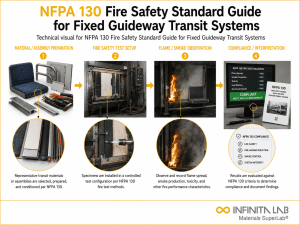
NFPA 130 Fire Safety Standard Guide for Fixed Guideway Transit Systems
Fixed Guideway Transit and Passenger Rail Systems Standard, NFPA 130 Fire safety testing for railroad systems and other industrial applications...
Read ArticleWater Analysis for Power Generation: Key Parameters & Testing Methods

Water Analysis for Power Generation: Key Parameters & Testing Methods
Introduction: Water Quality in Power Generation Water is the working fluid and primary cooling medium in virtually every thermal power...
Read Article
New Benchmarks in Quality Standards
Empowering you to recognize and address inherent risks within your operations, supply chains, and quality management systems

Advanced Testing Services
Assessing the alignment of your products and services with, and their surpassing of, quality, safety, sustainability, and performance benchmarks.

100% Inspection Guarantee
Confirming the specifications, worth, and safety of your raw materials, products, and assets.

Certification
Officially verifying that your products and services adhere to both established external and internal standards.
Meet our Team
Best Industry Experts to Help You
Pradyumna Gupta PhD, MBA

Vinay Vidyarthi PhD

Dhairya Srivastava MBA

Rana Pratap PhD

Gautam Kumar PhD

Keisha Antoine PhD

Animangsu Ghatak PhD

Sabyasachi Roy

Srinivas Mettu PhD

Shantanu Behera PhD
Talk to Our Experts Today!
Submit your contact info and we’ll get back to you within 24 hours


