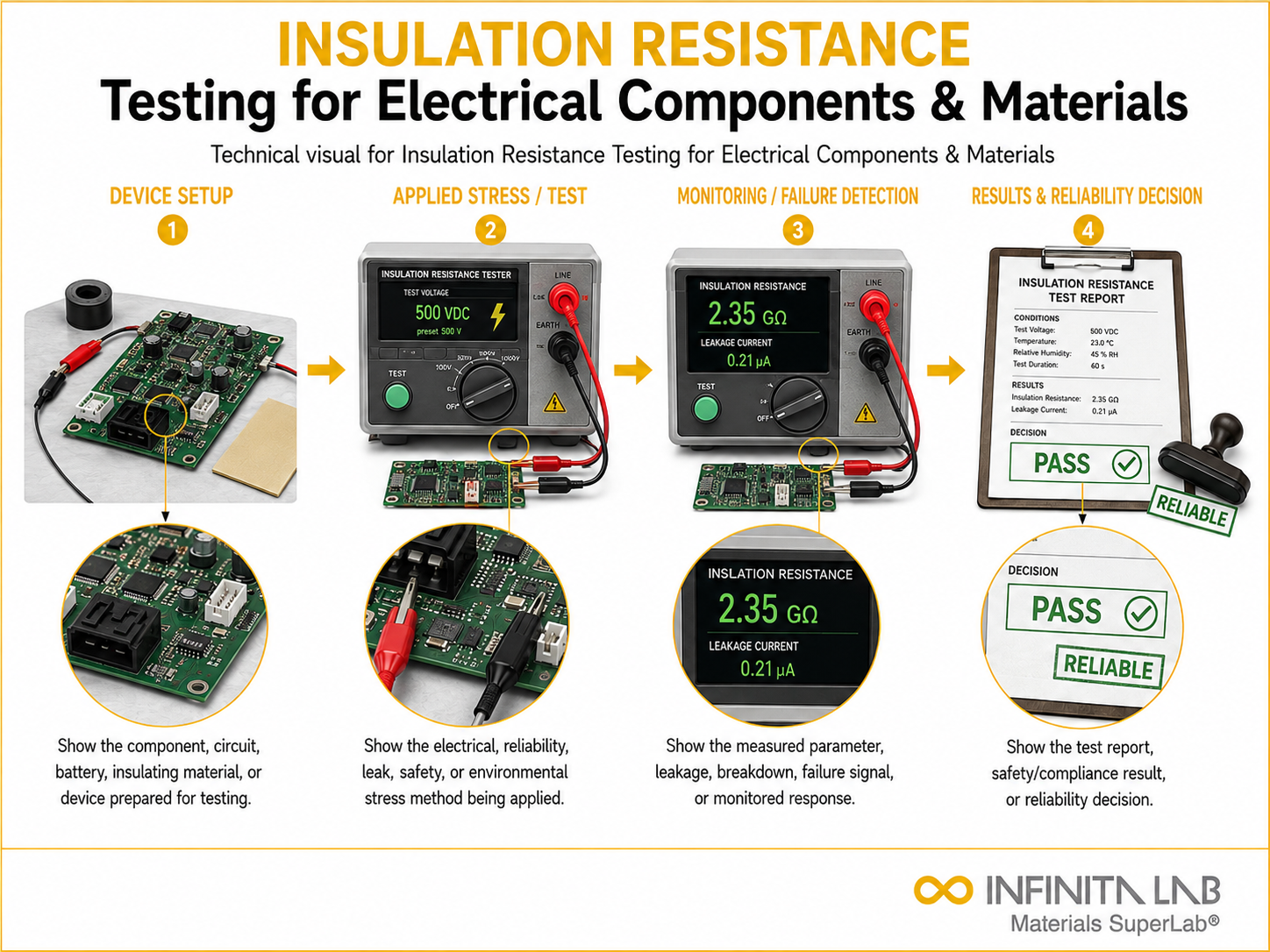


What Is Insulation Resistance?
Insulation Resistance Testing is a vital electrical test used to evaluate the integrity of insulating materials in cables, equipment, and electrical systems. It measures the resistance offered by insulation to the flow of current, helping detect leakage paths, moisture ingress, contamination, or degradation that could lead to failures or hazards.
This testing plays a crucial role in preventive maintenance and quality assurance across industries such as power generation, construction, and manufacturing. By ensuring insulation effectiveness, it enhances system reliability, reduces downtime, and safeguards personnel and equipment from electrical faults and unexpected breakdowns.

Applications and Benefits of Insulation Resistance Testing
Scope
Insulation Resistance Testing assesses the condition and effectiveness of insulation in electrical systems by measuring resistance under applied voltage, ensuring safety and performance reliability.
- Applicable to cables, motors, transformers, and switchgear
- Detects leakage currents and insulation degradation
- Supports preventive maintenance programs
- Used in installation and commissioning checks
- Ensures compliance with electrical safety standards
Applications
- Electrical cable testing and validation
- Motor and transformer insulation assessment
- Preventive maintenance in industrial systems
- Commissioning of new electrical installations
- Troubleshooting electrical faults
Benefits
- Enhances electrical system safety
- Prevents unexpected equipment failures
- Detects early insulation degradation
- Reduces maintenance and downtime costs
- Ensures regulatory compliance
Our Testing Procedure
Sample Preparation
The equipment is isolated, discharged, and prepared to ensure safe and accurate testing conditions.
1Connection Setup
Test leads are connected between conductor and insulation or ground as per test configuration.
2Voltage Application
A DC test voltage is applied using an insulation tester to measure resistance.
3Result Measurement
The insulation resistance value is recorded and evaluated against standard limits.
4Test parameters and requirements
| Parameter | Details |
|---|---|
| Test voltage | Typically 250 V, 500 V, 1 kV, 5 kV |
| Measurement range | kΩ to TΩ |
| Test type | Spot reading, time-resistance, polarization index (PI) |
| Duration | 1 minute or extended for PI testing |
| Temperature correction | Applied for accurate comparison |
| Output | Insulation resistance value in ohms |


- Insulation Resistance Tester (Megger)
- Digital multimeter (for preliminary checks)
- Test leads and probes
- Grounding and discharge equipment
- Temperature measurement devices
Equipment and Instrumentation Used for Testing
What You Receive: Test Report, Data, and Certification
- Insulation resistance values (in ohms)
- Polarization Index (PI) and DAR values
- Detailed test report with observations
- Compliance with IEC/IEEE standards
- Recommendations for maintenance or replacement
Insulation Resistance FAQs
Insulation resistance testing measures the resistance of insulating materials in electrical systems to detect leakage currents and degradation. It helps ensure safety, reliability, and proper functioning of equipment by identifying potential insulation failures early.
It is important because poor insulation can lead to electrical faults, short circuits, and safety hazards. Regular testing helps detect deterioration early, preventing equipment damage, downtime, and risks to personnel.
A good insulation resistance value depends on the equipment type and standards, but generally higher resistance indicates better insulation. Values are compared against standard guidelines or manufacturer recommendations for evaluation.
Polarization Index is the ratio of insulation resistance measured at 10 minutes to that at 1 minute. It indicates insulation condition and helps detect moisture, contamination, or aging effects in electrical equipment.
Factors include temperature, humidity, contamination, aging, and physical damage. Environmental conditions and material properties significantly influence insulation performance and test results.
Electrical insulation health assessment evaluates the condition of insulation in cables, motors, transformers, and other electrical equipment. Tests such as insulation resistance, polarization index, dielectric loss, and partial discharge measurements help identify moisture, contamination, aging, and potential defects. The results are analyzed to assess insulation reliability and determine maintenance needs.
Insulator testing evaluates the electrical, mechanical, and environmental performance of insulating components used in power transmission and distribution systems. Tests may include dielectric strength, flashover voltage, mechanical load, leakage current, and contamination resistance. The results help verify that insulators meet applicable standards and can withstand their intended operating conditions.
Why Choose Infinita Lab for Insulation Resistance Testing
When your Insulation Resistance results have to hold up - for compliance, a customer audit, or an engineering decision - accuracy and an unbiased third-party report matter more than price. Infinita Lab routes your insulation resistance testing to ISO/IEC 17025-accredited U.S. partner labs with hands-on method experience, so you get defensible data, transparent reporting, and turnaround times built around your project deadline - not ours.

Looking for an Accredited Partner for Insulation Resistance Testing?
Send query us at hello@infinitalab.com or call us at (888) 878-3090 to learn more about our services and how we can support you.





