


ASTM C1291: Ceramic Elevated Temperature Creep Testing Services
For advanced monolithic ceramics, the ASTM C1291 test method covers the assessment of tensile creep strain, creep strain rate, and creep time-to-failure at elevated temperatures, typically between 1073 and 2073 K. Advanced ceramics that act as macroscopically isotropic and homogeneous are covered by ASTM C1291.
TRUSTED BY


Get ASTM C1291 compliant results — request your ceramic elevated temperature creep testing quote
- Overview
- Scope, Applications, and Benefits
- Test Process
- Specifications
- Instrumentation
- Results and Deliverables
What Is ASTM C1291 Ceramic Elevated Temperature Creep?
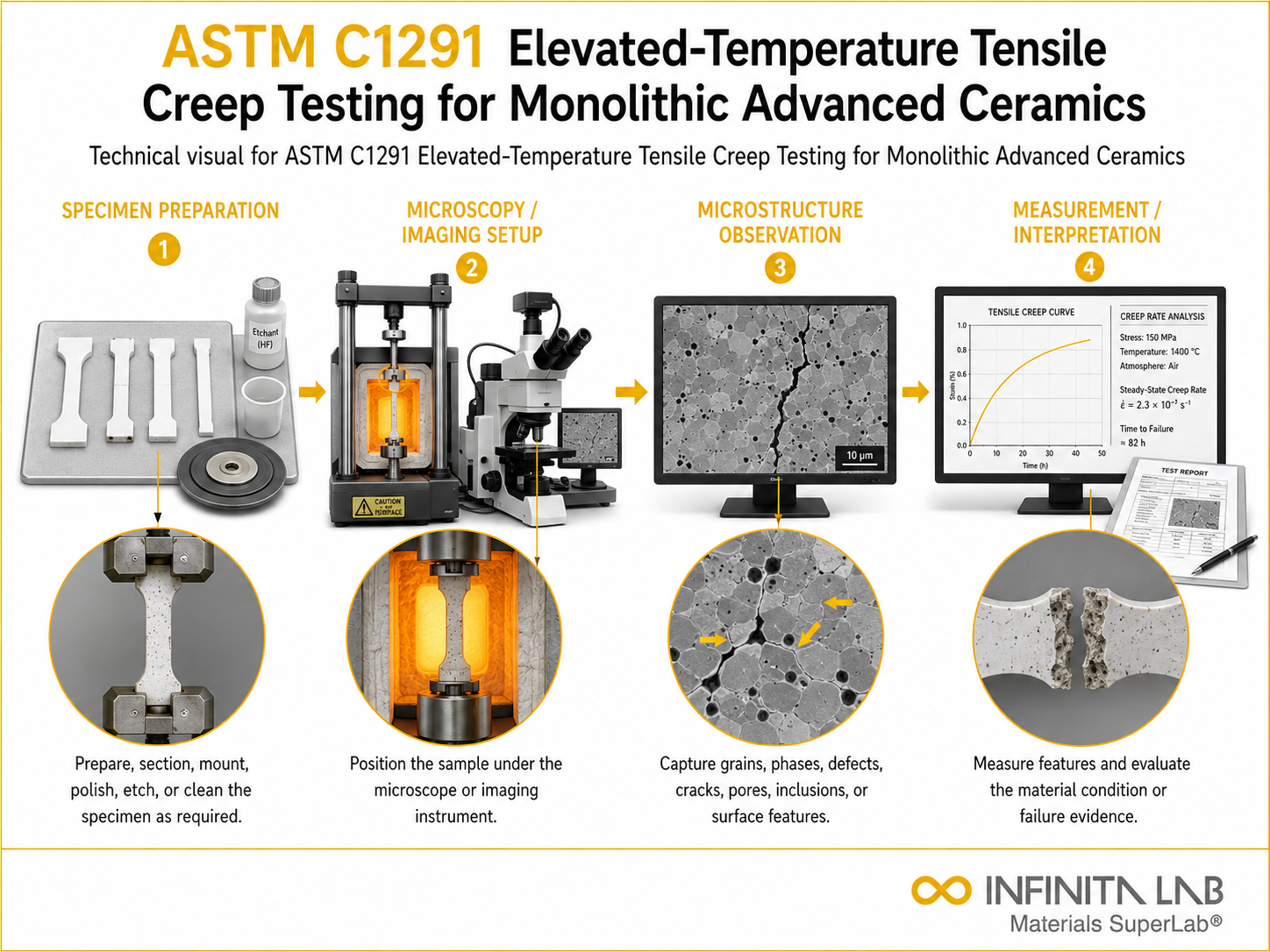
ASTM C1291 is a standardised test method for evaluating the long-term stress response of advanced monolithic ceramics at high temperatures. The test measures the tensile creep strain, rate of creep strain, and time to failure of the material when subjected to continuous loading and heating.
The test method is useful for monitoring the strain response of the material as a function of time, which helps in determining its load-carrying capability in a situation where time-dependent deformation is involved.
Applications and Benefits of ASTM C1291 Ceramic Elevated Temperature Creep Testing
Scope
ASTM C1291 applies to advanced monolithic ceramics and is used to determine their tensile creep properties at high temperatures. The tests are conducted under controlled high-temperature conditions, either with a constant load or a constant stress, to determine their long-term mechanical properties.
ASTM C1291 evaluates:
- Tensile creep behavior under constant load
- Creep strain rate over time
- Time to rupture or failure
- High-temperature deformation characteristics
- Long-term material stability
Applications
- High-temperature material development
- Creep resistance evaluation
- Stress rupture characterization
- Design data generation for structural ceramics
- Aerospace ceramic components
- Gas turbine and engine components
- High-temperature industrial parts
- Research and development of advanced ceramics
- Quality assurance and certification testing
Benefits
- Determines long-term load-bearing capability
- Evaluates deformation under sustained high temperature
- Provides creep strain rate data
- Estimates time-to-failure under stress
- Supports life prediction modelling
- Generates reliable high-temperature performance data
- Enhances material selection and design reliability
Our ASTM C1291 Testing Procedure
Specimen Preparation & Heating
Smooth or notched specimens are machined to strict tolerances and heated to the specified elevated temperature before loading.
1Load Application
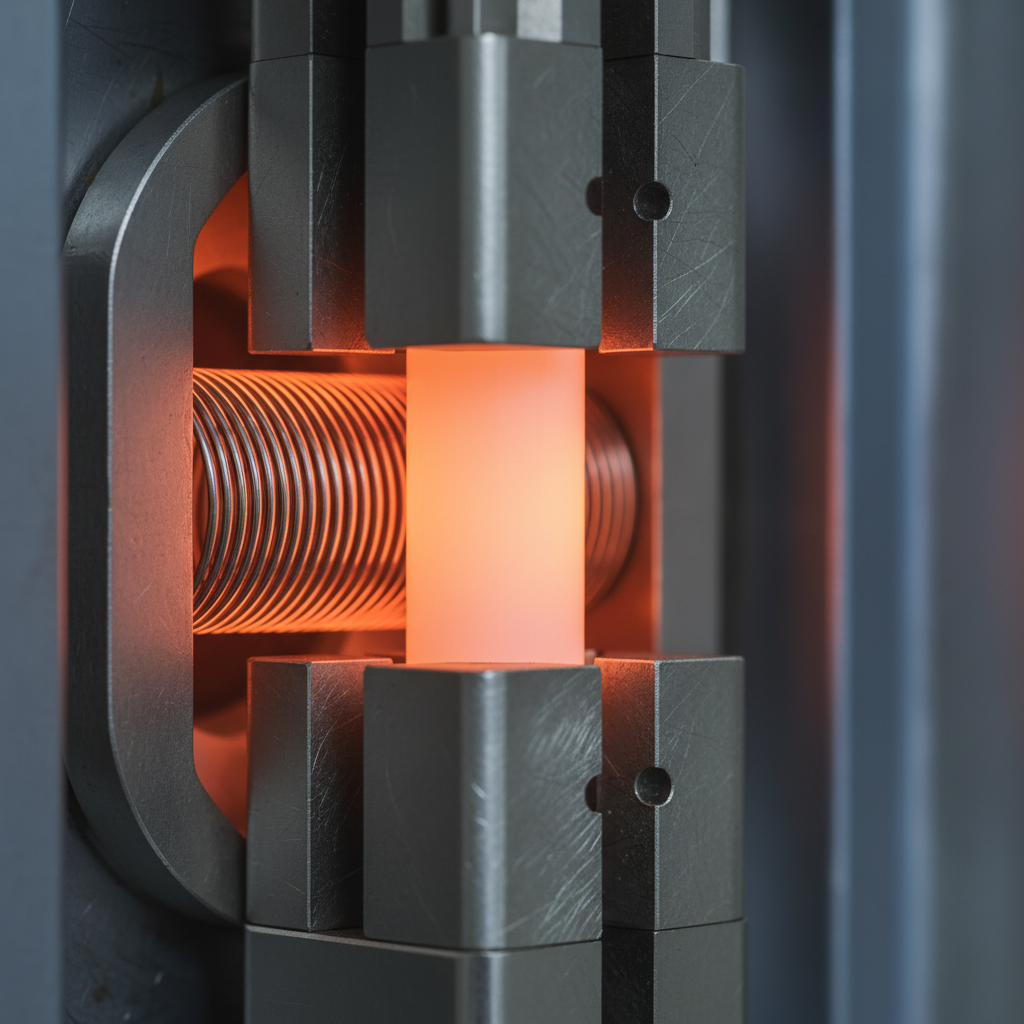
Constant load (lever arm system) or constant stress (cam/curved lever system) is applied and maintained throughout the test.
2Creep Monitoring
Gauge length is continuously measured to determine time-dependent creep strain.
3Failure & Calculation
Test runs until rupture or specified time; creep strain is calculated using ε = (L – Lo) / Lo.
4ASTM C1291 Test Parameters and Requirements
| Parameter | Details |
|---|---|
| Applicable Materials | Monolithic advanced ceramics |
| Specimen Types | Smooth, notched, smooth & notched combination, flat specimens |
| Temperature Range | ~800°C to 1800°C (1073–2073 K) |
| Atmosphere | Ambient air, inert gas (argon), or vacuum |
| Gauge Length | Typically ~25–50 mm |
| Grip Type | Collet grips or button-head fixtures |
| Cross-Section Tolerance | ± 0.05 mm |
| Parallelism Tolerance | 0.03 mm |
| Measured Parameters | Creep strain, Creep strain rate, Time-to-failure |


- High-temperature creep testing machine
- Straight lever arm (constant load) system
- Curved lever/cam (constant stress) system
- High-temperature furnace
- Extensometer or displacement measurement system
- Temperature controller and thermocouples
- Data acquisition system
- Precision micrometres and dimensional measurement tools
Equipment and Instrumentation Used for ASTM C1291 Testing
What You Receive: Test Report, Data, and Certification
- Creep strain vs. time curves
- Creep strain rate data
- Time-to-failure results
- Stress rupture data
- High-temperature performance evaluation
- Comparative material performance reports
- Design and life prediction data
- Compliance documentation
ASTM C1291 Ceramic Elevated Temperature Creep FAQs
ASTM C1291 is a standard test method used to determine tensile creep strain, creep rate, and time-to-failure of monolithic advanced ceramics under constant tensile load at elevated temperatures.
This method applies to monolithic advanced ceramics such as silicon nitride, silicon carbide, alumina, and zirconia, commonly used in high-temperature structural applications like aerospace, turbines, and automotive engine components.
The Creep test assesses the deformation behavior of ceramics at high temperatures and stress, which is useful for estimating the reliability and lifetime of components under severe thermal and mechanical conditions.
The test measures tensile creep deformation over time, steady-state creep rate, and rupture life while the specimen is subjected to constant tensile stress at a specified elevated temperature.
The Creep performance is a function of temperature, stress level, grain size, microstructure, porosity, and material composition. These factors influence the deformation mechanisms and time to failure under sustained high-temperature loading conditions.
Why Choose Infinita Lab for Ceramic Elevated Temperature Creep Testing
At the core of this breadth is our network of 2,000+ accredited laboratories across the USA, offering access to over 10,000 testing methods and analytical services. From advanced materials characterization (SEM, TEM, RBS, XPS) to mechanical, chemical, environmental, biological, and standardized ASTM/ISO-compliant testing, we deliver unmatched flexibility, specialization, and scale. You are never limited by geography, facility, or methodology — Infinita Lab connects you to the right expertise and testing solution, every time.

Looking for an Accredited Partner for ASTM C1291 Ceramic Elevated Temperature Creep Testing?
Send query us at hello@infinitalab.com or call us at (888) 878-3090 to learn more about our services and how we can support you.



Request a Quote
Submit your material details and receive testing procedures, pricing, and turnaround time within 24 hours.
 Quick Turnaround and Hasslefree process
 Confidentiality Guarantee
 Free, No-obligation Consultation
 100% Customer Satisfaction
