


MIL-STD-464: Electromagnetic Environmental Effects Testing Services
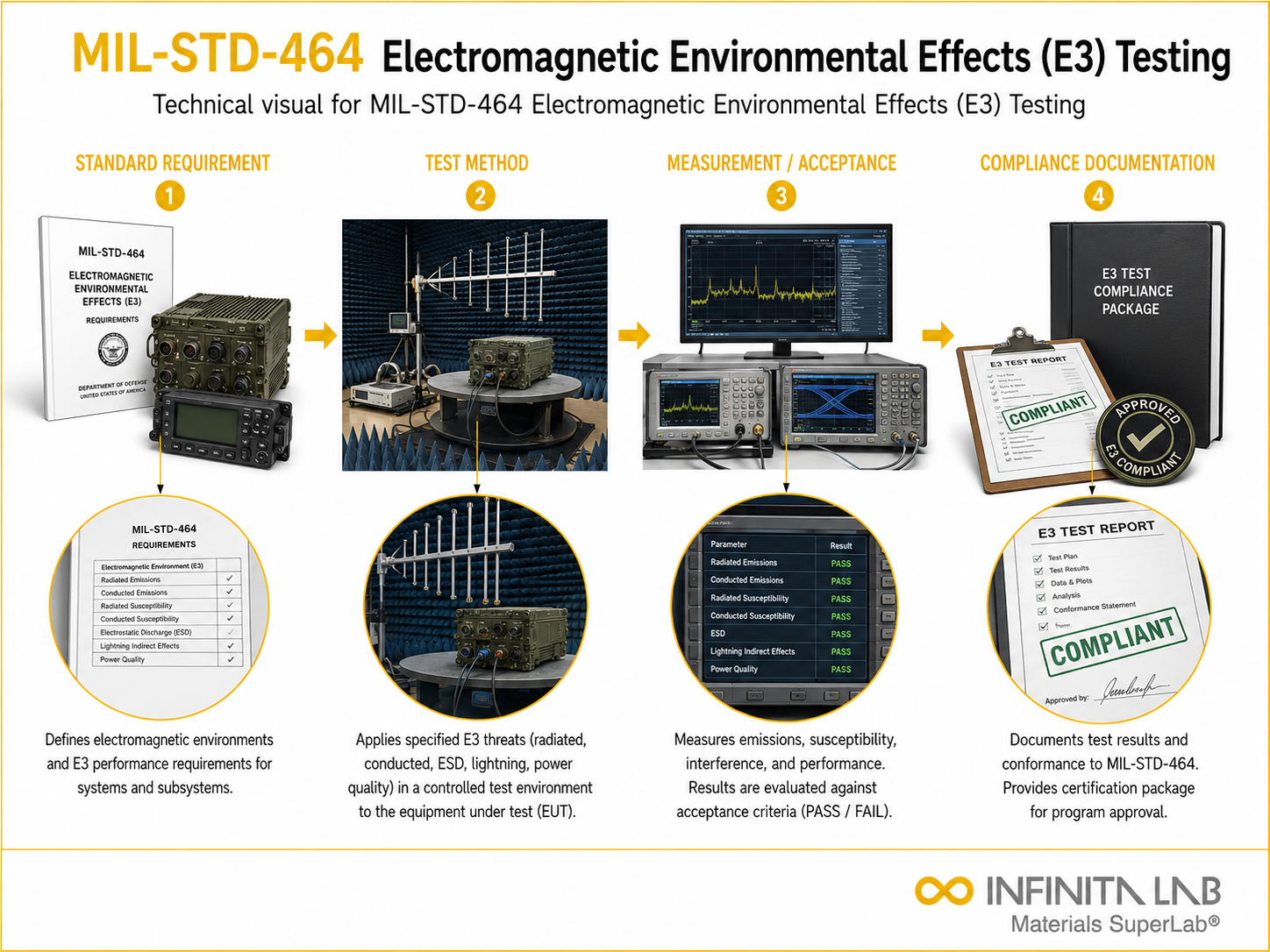
This MIL-STD-464 testing standard establishes Electromagnetic Environmental Effects (E3) interface requirements and verification criteria for airborne, sea, space, and ground systems, including associated ordnance. The standard requires that the system shall be electromagnetically compatible among all subsystems and equipment within the system and with environments caused by electromagnetic effects external to the system.
TRUSTED BY


Get MIL-STD-464 compliant results — request your electromagnetic environmental effects testing quote
- Overview
- Scope, Applications, and Benefits
- Test Process
- Specifications
- Instrumentation
- Results and Deliverables
What Is MIL-STD-464 Electromagnetic Environmental Effects?
MIL-STD-464 is a U.S. military standard that defines electromagnetic environmental effects (E3) requirements and verification criteria for complete systems and platforms, including airborne, naval, space, and ground systems. It ensures that systems operate reliably in complex electromagnetic environments without causing or experiencing interference.
Unlike component-level EMC standards, MIL-STD-464 focuses on system-level compatibility, ensuring that all subsystems function together without interference and remain resilient against external electromagnetic threats, including electromagnetic interference (EMI), electromagnetic pulse (EMP), lightning, and high-intensity radiated fields (HIRF).

Applications and Benefits of MIL-STD-464 Electromagnetic Environmental Effects Testing
Scope
MIL-STD-464 testing evaluates:
- Electromagnetic compatibility (EMC) at the system level
- Electromagnetic interference (EMI) control
- Resistance to electromagnetic pulse (EMP)
- Lightning and electrostatic discharge (ESD) effects
- High-intensity radiated fields (HIRF) susceptibility
- System-to-system electromagnetic interaction
Applications
- Military aircraft, ships, and ground vehicles
- Space systems and satellites
- Defense communication and radar systems
- Electronic warfare systems
- Integrated weapon and control platforms
Benefits
- Ensures system-level electromagnetic compatibility
- Prevents interference between subsystems
- Protects against electromagnetic threats (EMP, lightning)
- Improves mission reliability and safety
- Supports integration of complex electronic systems
Our MIL-STD-464 Testing Procedure
System Definition
Complete platform (aircraft, vehicle, or system) is defined along with subsystems and interfaces.
1Test Planning
Electromagnetic environments and threat scenarios (EMI, EMP, HIRF) are identified.
2E3 Evaluation
System-level testing and analysis are conducted for emissions, susceptibility, and coupling effects.
3Data Analysis
System performance is evaluated for compatibility, interference, and operational reliability.
4MIL-STD-464 Test Parameters and Requirements
| Parameter | Details |
|---|---|
| Applicable Systems | Airborne, sea, ground, and space platforms |
| Key Phenomena | EMI, EMP, HIRF, lightning, ESD |
| Verification Level | Full system/platform testing |
| Related Standards | MIL-STD-461 (subsystems), MIL-STD-810 (environmental) |
| Measured Outputs | Emissions, susceptibility, system interaction |


- EMI/EMC test chambers (anechoic chambers)
- RF signal generators and amplifiers
- Spectrum analyzers
- Lightning and surge simulation systems
- EMP simulators
- Electrostatic discharge (ESD) testers
- Data acquisition and monitoring systems
Equipment and Instrumentation Used for MIL-STD-464 Testing
What You Receive: Test Report, Data, and Certification
- Electromagnetic compatibility (EMC) performance data
- System-level interference and coupling analysis
- EMP, lightning, and HIRF resistance evaluation
- Identification of electromagnetic vulnerabilities
- Compliance evaluation with MIL-STD-464 requirements
MIL-STD-464 Electromagnetic Environmental Effects FAQs
MIL-STD-464 is used to evaluate electromagnetic compatibility at the system level, ensuring that complete platforms operate reliably without interference in complex electromagnetic environments.
E3 stands for electromagnetic environmental effects, which include EMI, EMP, lightning, and other electromagnetic phenomena that can affect system performance.
MIL-STD-461 applies to individual components and subsystems, while MIL-STD-464 applies to complete systems and platforms, ensuring overall compatibility and integration.
The standard addresses threats such as electromagnetic interference, electromagnetic pulse (EMP), lightning strikes, electrostatic discharge, and high-intensity radiated fields.
It ensures that complex military systems can operate safely and reliably in electromagnetic environments, preventing failures due to interference and improving mission performance.
Why Choose Infinita Lab for Electromagnetic Environmental Effects Testing
At the core of this breadth is our network of 2,000+ accredited laboratories across the USA, offering access to over 10,000 testing methods and analytical services. From advanced materials characterization (SEM, TEM, RBS, XPS) to mechanical, chemical, environmental, biological, and standardized ASTM/ISO-compliant testing, we deliver unmatched flexibility, specialization, and scale. You are never limited by geography, facility, or methodology — Infinita Lab connects you to the right expertise and testing solution, every time.

Need MIL-STD-464 Electromagnetic Environmental Effects Testing You Can Rely On?
Send query us at hello@infinitalab.com or call us at (888) 878-3090 to learn more about our services and how we can support you.



Request a Quote
Submit your material details and receive testing procedures, pricing, and turnaround time within 24 hours.
 Quick Turnaround and Hasslefree process
 Confidentiality Guarantee
 Free, No-obligation Consultation
 100% Customer Satisfaction
