


ASTM D6186: Lubricating Oil Oxidation Induction Time Testing Services
The ASTM D6186 test technique is used to determine the oxidation induction time of lubricating oils exposed to oxygen at a pressure of 3.5 MPa and temperatures of 130 to 210 °C. The results of specimens analyzed using this method are measured in SI units.
TRUSTED BY


Get ASTM D6186 compliant results — request your lubricating oil oxidation induction time testing quote
- Overview
- Scope, Applications, and Benefits
- Test Process
- Specifications
- Instrumentation
- Results and Deliverables
What Is ASTM D6186 Lubricating Oil Oxidation Induction Time?
ASTM D6186 is a standardized method used to determine the oxidation induction time (OIT) of lubricating oils under accelerated conditions. Oxidation stability is a critical property that influences oil performance, service life, and resistance to degradation during operation at elevated temperatures.
This method measures the time required for rapid oxidation to begin when the oil is exposed to oxygen at controlled temperature and pressure. It provides valuable insight into the effectiveness of antioxidant additives and overall formulation stability, helping ensure reliable performance and extended service intervals in demanding operating environments.

Applications and Benefits of ASTM D6186 Lubricating Oil Oxidation Induction Time Testing
Scope
This test method evaluates the oxidation resistance of lubricating oils by determining the time required for oxidation initiation under controlled conditions.
Includes:
- Measurement of oxidation induction time
- Evaluation of antioxidant performance
- Applicability to lubricating oils
- Testing under controlled temperature and oxygen pressure
- Support for quality control and formulation assessment
Applications
- Automotive and industrial lubricants
- Engine oils and gear oils
- Hydraulic fluids
- Turbine and compressor oils
- Lubricant formulation development
- Quality control laboratories
Benefits
- Determines oxidation stability of oils
- Helps predict service life
- Evaluates antioxidant effectiveness
- Improves formulation quality
- Supports maintenance planning
- Reduces risk of oil degradation
Our ASTM D6186 Testing Procedure
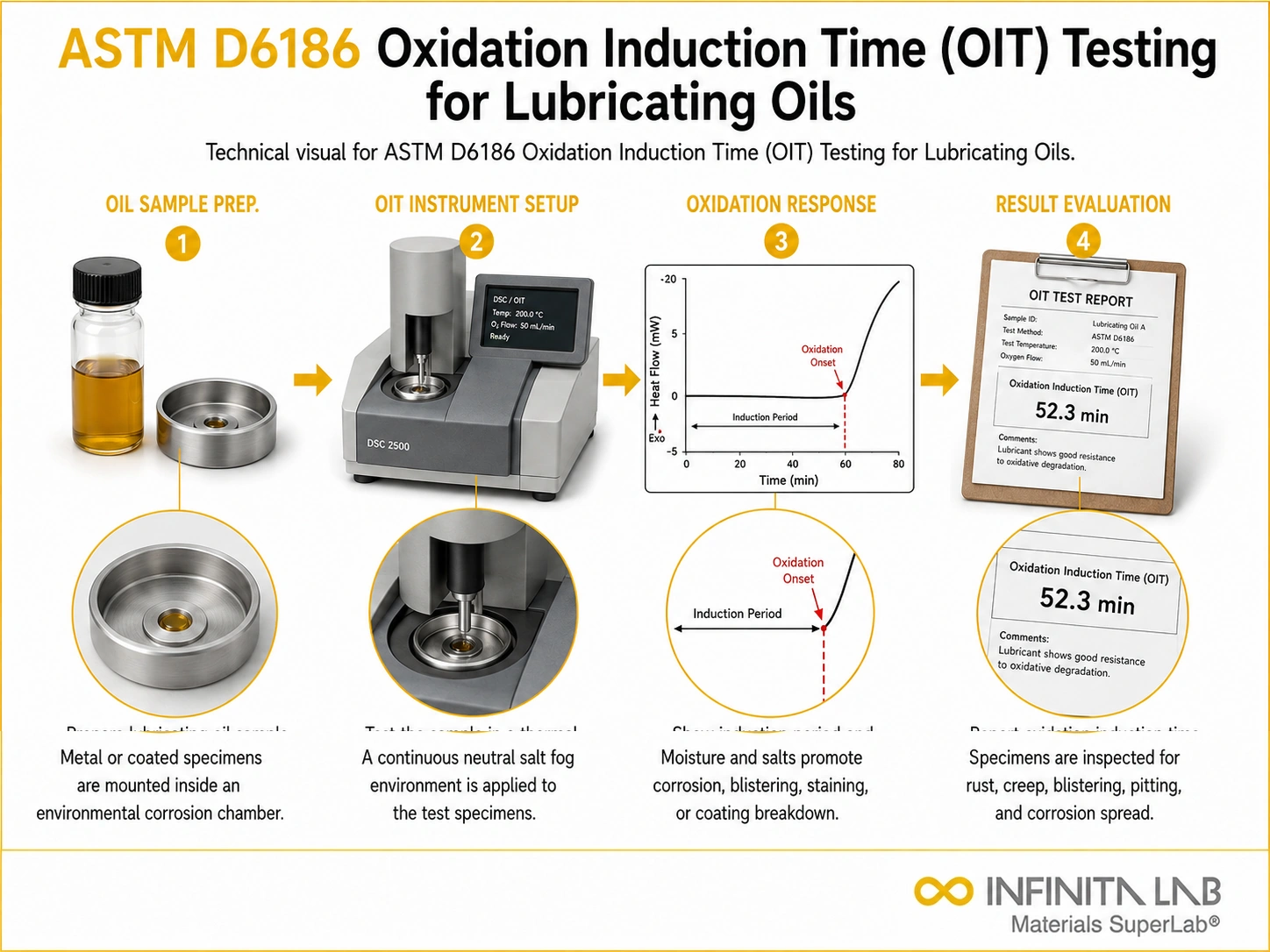
Sample Preparation
The lubricating oil sample is prepared and placed in a test vessel under specified conditions.
1Oxygen Charging
The system is pressurized with oxygen at a defined pressure and temperature.
2Oxidation Monitoring
The pressure or oxygen uptake is monitored to detect the onset of oxidation.
3Time Determination
The oxidation induction time is recorded as the time until rapid oxidation occurs.
4ASTM D6186 Test Parameters and Requirements
| Parameter | Details |
|---|---|
| Property Measured | Oxidation induction time (OIT) |
| Material Type | Lubricating oils |
| Method | Accelerated oxidation testing |
| Measurement Unit | Time (minutes or hours) |
| Test Condition | Elevated temperature and oxygen pressure |
| Output | Induction time value |


- Oxidation stability tester or pressure vessel
- Oxygen supply system
- Temperature-controlled bath or oven
- Pressure measurement system
- Data acquisition system
- Sample containers
Equipment and Instrumentation Used for ASTM D6186 Testing
What You Receive: Test Report, Data, and Certification
- Oxidation induction time values
- Pressure or oxygen uptake curves
- Test conditions and parameters
- Antioxidant performance evaluation
- Quality and stability assessment
- Detailed analytical report
ASTM D6186 Lubricating Oil Oxidation Induction Time FAQs
Oxidation induction time indicates how long an oil resists degradation under oxidative conditions. Longer induction times reflect better stability, ensuring extended service life, reduced sludge formation, and improved protection of machinery components during operation.
ASTM D6186 simulates accelerated oxidation conditions to estimate how oils behave over time. This helps manufacturers and users predict oil lifespan and schedule maintenance or replacement more effectively.
Oxidation stability depends on base oil composition, antioxidant additives, temperature, oxygen exposure, and contamination. Proper formulation and controlled conditions help enhance resistance to oxidation.
Oxidation leads to the formation of acids, sludge, and varnish, which degrade oil performance, increase viscosity, and can cause equipment wear or failure if not controlled.
The method measures the delay before oxidation begins. A longer induction time indicates that antioxidants are effectively preventing or slowing oxidation reactions.
Why Choose Infinita Lab for Lubricating Oil Oxidation Induction Time Testing?
At the core of this breadth is our network of 2,000+ accredited laboratories across the USA, offering access to over 10,000 testing methods and analytical services. From advanced materials characterization (SEM, TEM, RBS, XPS) to mechanical, chemical, environmental, biological, and standardized ASTM/ISO-compliant testing, we deliver unmatched flexibility, specialization, and scale. You are never limited by geography, facility, or methodology — Infinita Lab connects you to the right expertise and testing solution, every time.

Need ASTM D6186 Lubricating Oil Oxidation Induction Time Testing You Can Rely On?
Send query us at hello@infinitalab.com or call us at (888) 878-3090 to learn more about our services and how we can support you.



Request a Quote
Submit your material details and receive testing procedures, pricing, and turnaround time within 24 hours.
 Quick Turnaround and Hasslefree process
 Confidentiality Guarantee
 Free, No-obligation Consultation
 100% Customer Satisfaction
