


ASTM D2863: Limiting Oxygen Index LOI Testing Services
ASTM D2863 is a test method for measurement of the minimum concentration of oxygen, in an oxygen-nitrogen mixture present in a plastic sample, that supports Candle-like Plastic combustion (oxygen index).
TRUSTED BY


Get ASTM D2863 compliant results — request your limiting oxygen index LOI testing quote
- Overview
- Scope, Applications, and Benefits
- Test Process
- Specifications
- Instrumentation
- Results and Deliverables
What Is ASTM D2863 Limiting Oxygen Index LOI?
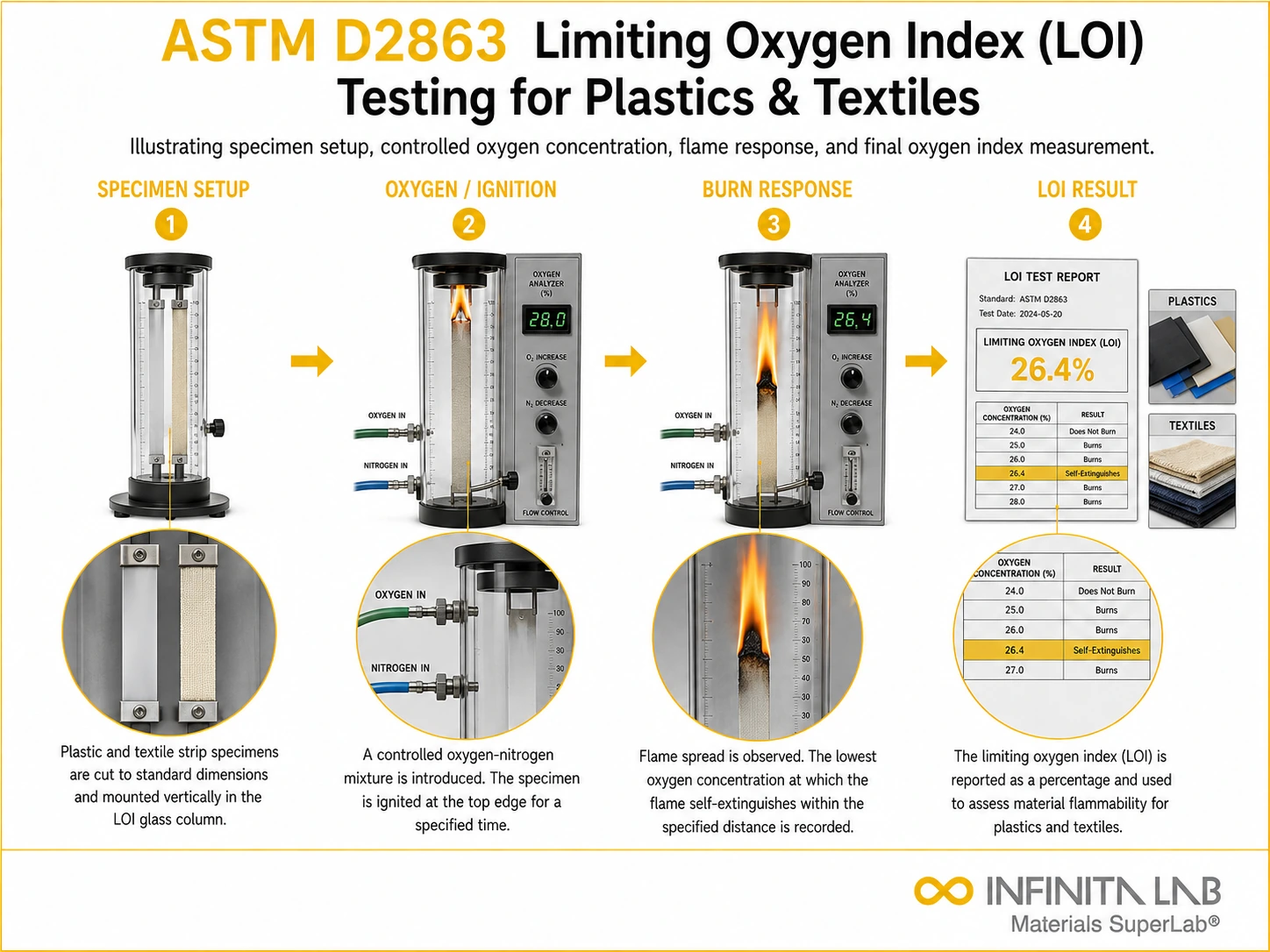
ASTM D2863 defines a standardised method for measuring the minimum concentration of oxygen in an oxygen-nitrogen mixture that will support flaming combustion of a plastic material — a value known as the Limiting Oxygen Index (LOI) or Oxygen Index (OI). Since normal air contains approximately 21% oxygen, materials with an LOI above 21% are considered self-extinguishing in air, while those below 21% will sustain burning.
The test involves supporting a specimen vertically in a transparent glass chimney, igniting the top of the specimen, and then flowing a controlled mixture of oxygen and nitrogen upward through the chimney. The oxygen concentration is systematically adjusted until the minimum concentration that just supports combustion for a specified duration or burn length is identified. This value directly reflects the inherent flammability behaviour of the material.

Applications and Benefits of ASTM D2863 Limiting Oxygen Index LOI Testing
Scope
ASTM D2863 evaluates:
- Limiting oxygen index (LOI) of plastic materials
- Minimum oxygen concentration for sustained combustion
- Effect of flame retardant additives on LOI
- Comparative flammability ranking of polymers
- Influence of specimen orientation on burning behavior
- Effect of thickness on oxygen index values
Applications
- Flame retardant polymer formulation development
- Electrical and electronic enclosure materials
- Building and construction plastic components
- Transportation interior materials (aviation, rail)
- Wire and cable insulation qualification
- Textile and fibre flame retardancy evaluation
- Research and development in fire science
Benefits
- Provides a precise numerical flammability index
- Enables rapid screening of flame retardant effectiveness
- Supports comparative ranking of polymer flammability
- Guides flame-retardant additive selection and loading
- Provides data for fire safety material approvals
- Applicable to a wide range of polymer types
Our ASTM D2863 Testing Procedure
Specimen Preparation
Specimens are cut or molded to the standard geometry and conditioned.
1Gas Flow Setup
Oxygen and nitrogen flow rates are set to achieve the target oxygen concentration.
2Ignition
The top surface of the specimen is ignited with the standard igniter.
3Concentration Adjustment
Oxygen concentration is incrementally adjusted to find the minimum value supporting sustained burning.
4ASTM D2863 Test Parameters and Requirements
| Parameter | Details |
|---|---|
| Specimen Orientation | Vertical |
| Applicable Materials | Plastics, polymer sheets, films, laminated and cellular materials |
| Specimen Thickness | Up to 10.5 mm (self-supporting materials) |
| Test Environment | Controlled gas flow and ambient laboratory conditions |
| Specimen Types | Vertical bars, sheets, films, and flexible specimens |


- Oxygen index test column (glass chimney)
- Precision oxygen and nitrogen gas flow controllers
- Oxygen analyser / concentration monitor
- Specimen holder and ignition torch
- Stopwatch/timer
- Data recording system
Equipment and Instrumentation Used for ASTM D2863 Testing
What You Receive: Test Report, Data, and Certification
- Limiting oxygen index (LOI) value
- Combustion behavior observations
- Effect of flame retardant level on LOI (comparative)
- Specimen burn length and time data
- Flammability classification report
ASTM D2863 Limiting Oxygen Index LOI FAQs
It measures the minimum concentration of oxygen required to support continuous burning of a plastic specimen.
LOI stands for Limiting Oxygen Index, expressed as the percentage of oxygen in an oxygen–nitrogen mixture needed for sustained combustion.
A higher LOI value means better flame resistance and lower flammability.
Plastics, films, sheets, foams, laminates, and other polymer-based materials can be tested.
It is widely used in plastics, aerospace, automotive, cable insulation, electronics, and construction materials industries.
Why Choose Infinita Lab for Limiting Oxygen Index LOI Testing?
At the core of this breadth is our network of 2,000+ accredited laboratories across the USA, offering access to over 10,000 testing methods and analytical services. From advanced materials characterization (SEM, TEM, RBS, XPS) to mechanical, chemical, environmental, biological, and standardized ASTM/ISO-compliant testing, we deliver unmatched flexibility, specialization, and scale. You are never limited by geography, facility, or methodology — Infinita Lab connects you to the right expertise and testing solution, every time.

Looking for an Accredited Partner for ASTM D2863 Limiting Oxygen Index LOI Testing?
Send query us at hello@infinitalab.com or call us at (888) 878-3090 to learn more about our services and how we can support you.



Request a Quote
Submit your material details and receive testing procedures, pricing, and turnaround time within 24 hours.
 Quick Turnaround and Hasslefree process
 Confidentiality Guarantee
 Free, No-obligation Consultation
 100% Customer Satisfaction
