


ASTM D2857 Dilute Solution Viscosity Testing for Polymers
Polymer dilute solution viscosity determination is covered by ASTM D 2857 Standard practice. For particular polymers like nylon, poly(vinyl chloride), polyethene, and poly(ethylene terephthalate), dilute solution viscosity procedures are described in many ASTM standards (Test Methods D789, D1243, D1601, and D4603, and Practice D3591).
TRUSTED BY


Precision-driven testing for dimensional accuracy and compliance
- Overview
- Scope, Applications, and Benefits
- Test Process
- Specifications
- Instrumentation
- Results and Deliverables
Overview
ASTM D2857 establishes a standardized test method for determining the viscosity of polymer solutions, which reflects the molecular weight and flow behavior of polymer materials. Viscosity is a key parameter influencing processing characteristics such as extrusion, molding, and coating, as well as final product performance. This method typically measures solution viscosity under controlled conditions to ensure consistency and comparability.
The test is widely used in polymer manufacturing and quality control to monitor material consistency and detect variations in molecular structure. By evaluating viscosity, ASTM D2857 helps manufacturers optimize processing conditions, maintain product uniformity, and ensure polymers meet required performance specifications for various industrial applications.

Scope, Applications, and Benefits
Scope
ASTM D2857 outlines procedures for measuring the viscosity of polymer solutions under controlled temperature and concentration conditions to assess flow characteristics and molecular properties.
- Applicable to polymers soluble in suitable solvents
- Measures solution viscosity as an indicator of molecular weight
- Requires controlled temperature and concentration conditions
- Supports evaluation of polymer processing behavior
- Suitable for laboratory testing and quality assurance
Applications
- Polymer manufacturing quality control
- Material characterization and grade verification
- Process optimization in extrusion and molding
- Coating and adhesive formulation evaluation
- Research and development of polymer materials
Benefits
- Provides insight into polymer molecular weight and structure
- Ensures consistency in material processing behavior
- Supports optimization of manufacturing conditions
- Reduces defects related to improper flow properties
- Enhances product quality and performance reliability
Test Process
Solution Preparation
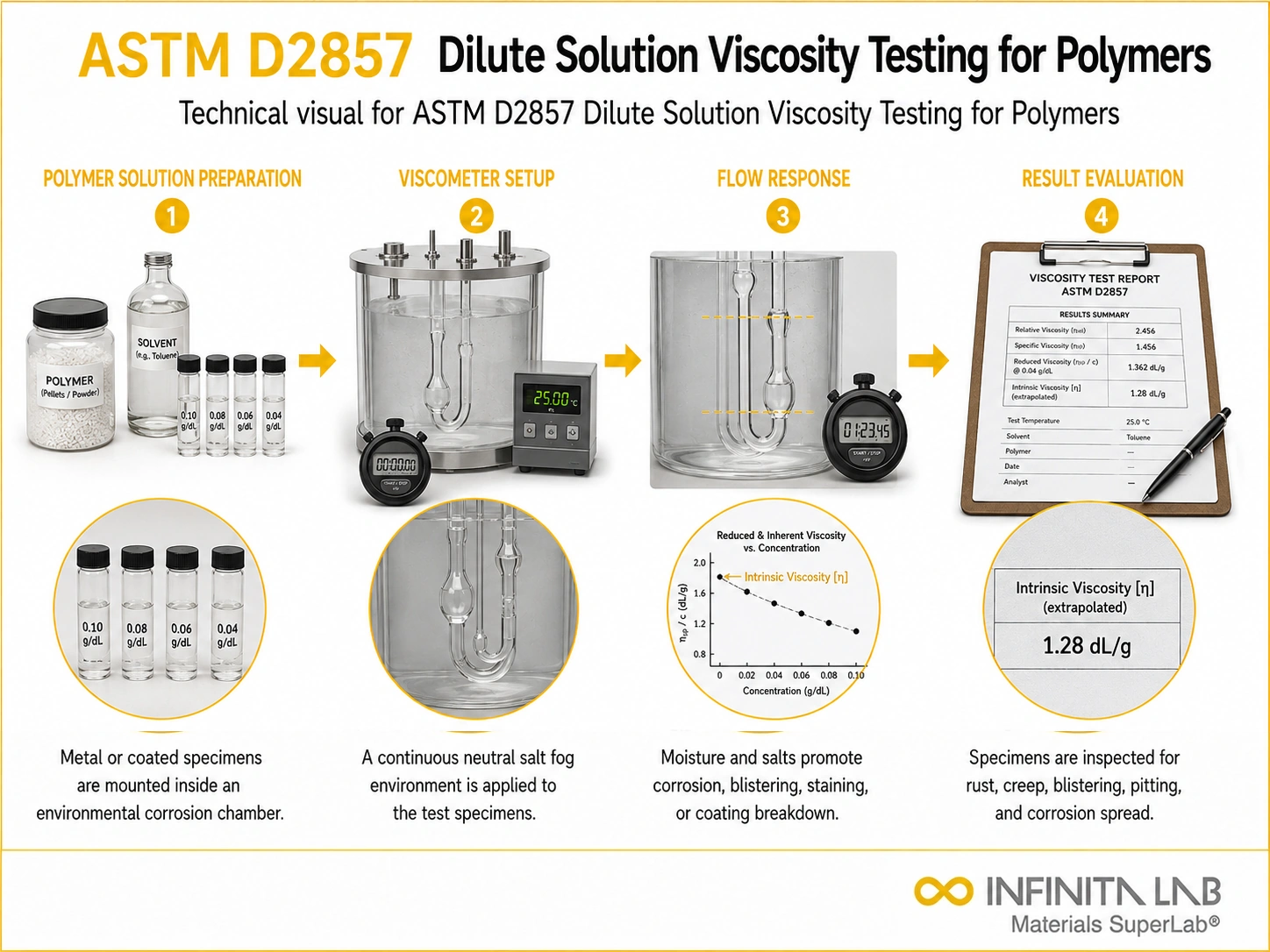
Polymer is dissolved in a suitable solvent at a specified concentration to form a homogeneous solution.
1Temperature Conditioning
The solution is maintained at a controlled temperature to ensure consistent viscosity measurement conditions.
2Viscosity Measurement
The flow time of the solution is measured using a calibrated viscometer under standard conditions.
3Data Calculation
Viscosity values are calculated based on flow time and compared with standard or reference values.
4Technical Specifications
| Parameter | Details |
|---|---|
| Material Type | Soluble polymers in appropriate solvents |
| Test Principle | Measurement of flow resistance under controlled conditions |
| Measurement Unit | Typically centipoise (cP) or relative viscosity |
| Method Type | Capillary or similar viscometer-based technique |
| Temperature Control | Essential for accurate and repeatable results |
| Concentration | Defined polymer solution concentration required |
| Environment | Controlled laboratory conditions |


Instrumentation Used for Testing
- Capillary viscometer
- Temperature-controlled bath
- Analytical balance
- Glassware for solution preparation
- Stopwatch or timing device
- Stirring equipment
- Calibration standards
Results and Deliverables
- Measured viscosity values
- Relative or intrinsic viscosity calculations
- ASTM D2857 compliant test report
- Assessment of polymer consistency and quality
- Recommendations for processing and material selection
Frequently Asked Questions
ASTM D2857 is a standard test method for determining the viscosity of polymer solutions. It is important because viscosity reflects molecular weight and processing behavior, helping ensure consistent material quality and performance in manufacturing applications.
Temperature significantly affects viscosity, so maintaining a constant temperature ensures accurate, repeatable results and reliable comparison between different polymer samples.
Factors include polymer concentration, temperature, solvent type, and molecular weight distribution, all of which affect flow behavior and measurement accuracy.
The test requires complete solubility of the polymer and controlled conditions, and may not be suitable for polymers that degrade or react in the chosen solvent.
It contributes significantly by evaluating flow properties, but overall performance also depends on additional factors such as mechanical properties and environmental conditions.
Why Choose Infinita Lab for Advanced Materials Testing and Characterization?
At the core of this breadth is our network of 2,000+ accredited laboratories across the USA, offering access to over 10,000 testing methods and analytical services. From advanced materials characterization (SEM, TEM, RBS, XPS) to mechanical, chemical, environmental, biological, and standardized ASTM/ISO-compliant testing, we deliver unmatched flexibility, specialization, and scale. You are never limited by geography, facility, or methodology — Infinita Lab connects you to the right expertise and testing solution, every time.

Looking for a Trusted Partner for Accurate and Reliable Testing Services?
Send query us at hello@infinitalab.com or call us at (888) 878-3090 to learn more about our services and how we can support you.



Request a Quote
Submit your material details and receive testing procedures, pricing, and turnaround time within 24 hours.
 Quick Turnaround and Hasslefree process
 Confidentiality Guarantee
 Free, No-obligation Consultation
 100% Customer Satisfaction
