


ASTM D4603: PET Inherent Viscosity Molecular Weight Testing Services
The ASTM D4603 test method uses a glass capillary viscometer to determine the inherent viscosity of polyethylene terephthalate (PET) soluble at 0.50 % concentration in a 60/40 phenol/1,1,2,2 tetrachloroethane solution.
TRUSTED BY


Get ASTM D4603 compliant results — request your PET inherent viscosity molecular weight testing quote
- Overview
- Scope, Applications, and Benefits
- Test Process
- Specifications
- Instrumentation
- Results and Deliverables
What Is ASTM D4603 PET Inherent Viscosity Molecular Weight?
ASTM D4603 determines the inherent viscosity (IV) of polyethylene terephthalate (PET), which is directly related to its molecular weight and processing behavior. The test measures the flow characteristics of PET solutions to assess polymer chain length and material quality.
This method is widely used in the plastics, packaging, and polymer manufacturing industry to evaluate PET used in bottles, films, and fibers. Inherent viscosity is a critical parameter influencing strength, melt behavior, and overall product performance, making it essential for quality control and material specification.

Applications and Benefits of ASTM D4603 PET Inherent Viscosity Molecular Weight Testing
Scope
ASTM D4603 measures the inherent viscosity of PET by dissolving the polymer in a suitable solvent and analyzing its flow behavior.
It helps determine molecular characteristics and ensures consistency in polymer production and application.
- Inherent viscosity (IV) determination
- Molecular weight estimation
- Polymer quality evaluation
- Processability assessment
- Batch consistency verification
- Material comparison
- Quality control testing
Applications
- PET bottles and containers
- Polyester fibers and textiles
- Packaging films and sheets
- Engineering plastic components
- Recycling and reprocessed PET
Benefits
- Indicates molecular weight and chain length
- Helps control processing conditions
- Ensures consistent product quality
- Supports material selection
- Improves mechanical performance
- Aids in recycling quality assessment
- Meets industry standards
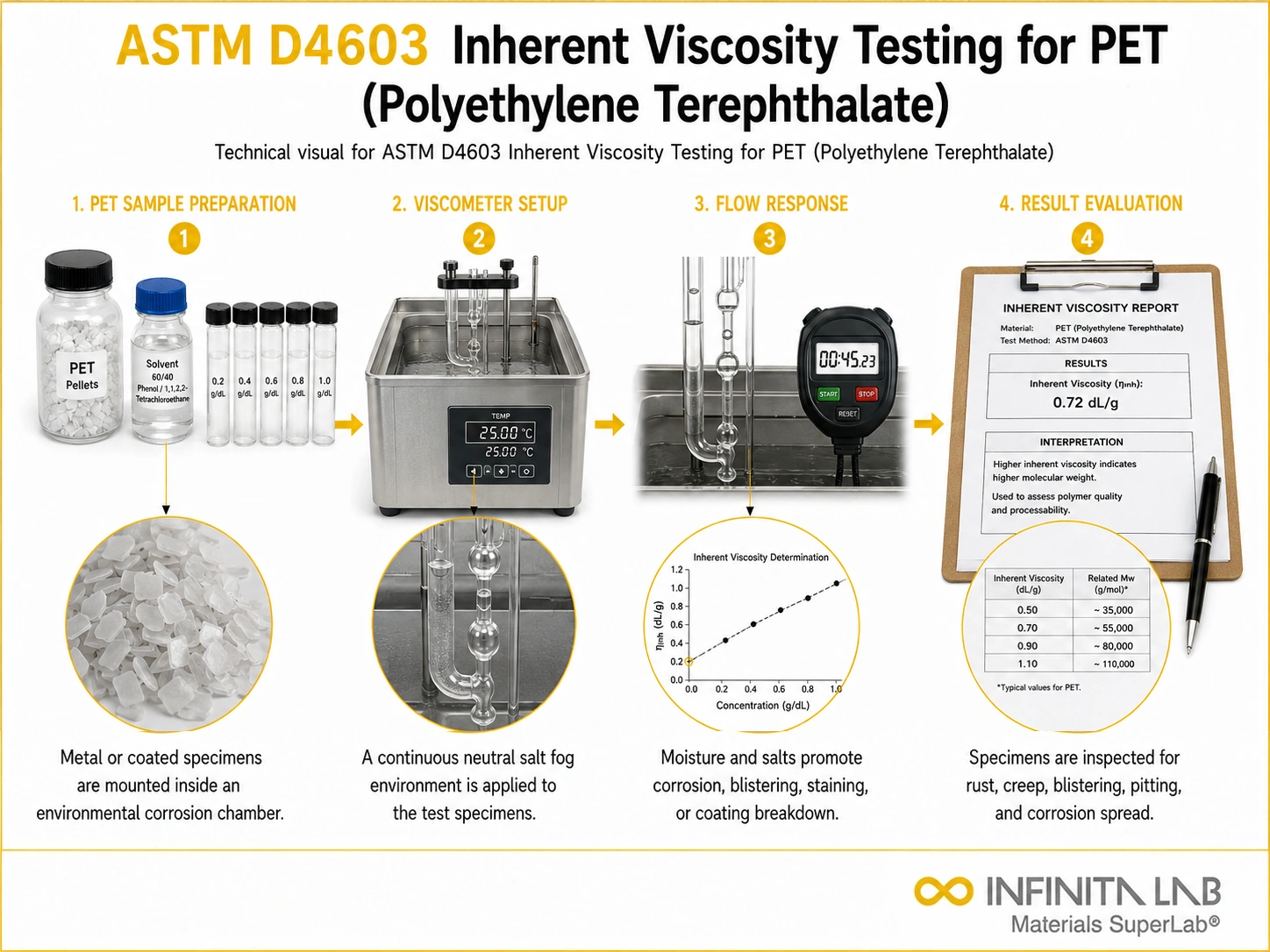
Our ASTM D4603 Testing Procedure
Sample Preparation
PET sample is dried and dissolved in a specified solvent under controlled conditions.
1Solution Preparation
A uniform polymer solution is prepared at a defined concentration.
2Viscosity Measurement
Flow time is measured using a capillary viscometer under controlled temperature.
3Calculation
Inherent viscosity is calculated from solution and solvent flow times.
4ASTM D4603 Test Parameters and Requirements
| Parameter | Details |
|---|---|
| Material Type | Polyethylene terephthalate (PET) polymer. |
| Solvent Used | Specific solvent mixture for PET dissolution. |
| Temperature Control | Typically maintained at 25°C. |
| Concentration | Defined polymer concentration in solution. |
| Measured Parameter | Inherent viscosity (IV). |
| Result Unit | dL/g (deciliters per gram). |
| Viscometer Type | Ubbelohde or similar capillary viscometer. |
| Sample Condition | Dry and contamination-free sample. |


- Capillary viscometer (Ubbelohde type)
- Constant temperature bath
- Analytical balance
- Drying oven
- Glassware for solution preparation
- Timing device or digital viscometer system
Equipment and Instrumentation Used for ASTM D4603 Testing
What You Receive: Test Report, Data, and Certification
- Inherent viscosity (IV) values
- Molecular weight estimation
- Batch consistency analysis
- Quality control reports
- Compliance with ASTM D4603
- Test documentation
- Final test certification
ASTM D4603 PET Inherent Viscosity Molecular Weight FAQs
The ASTM D4603 test method used in the determination of inherent viscosity of polyethylene terephthalate.
Inherent viscosity indicates polymer chain length, which directly affects mechanical strength, melt flow behavior, and suitability for applications like bottles, fibers, and films.
PET is commonly used to manufacture food packaging materials such as drinks or food containers
ASTM D4603 testing requires a representative sample weight of PET resin in the range between 0.2 and 0.5 grams.
The ASTM D4603 test is important for correctly determining PET's inherent viscosity. This enables the manufacturer to calculate the material properties that affect product quality.
Why Choose Infinita Lab for PET Inherent Viscosity Molecular Weight Testing?
At the core of this breadth is our network of 2,000+ accredited laboratories across the USA, offering access to over 10,000 testing methods and analytical services. From advanced materials characterization (SEM, TEM, RBS, XPS) to mechanical, chemical, environmental, biological, and standardized ASTM/ISO-compliant testing, we deliver unmatched flexibility, specialization, and scale. You are never limited by geography, facility, or methodology — Infinita Lab connects you to the right expertise and testing solution, every time.

Need ASTM D4603 PET Inherent Viscosity Molecular Weight Testing You Can Rely On?
Send query us at hello@infinitalab.com or call us at (888) 878-3090 to learn more about our services and how we can support you.



Request a Quote
Submit your material details and receive testing procedures, pricing, and turnaround time within 24 hours.
 Quick Turnaround and Hasslefree process
 Confidentiality Guarantee
 Free, No-obligation Consultation
 100% Customer Satisfaction
