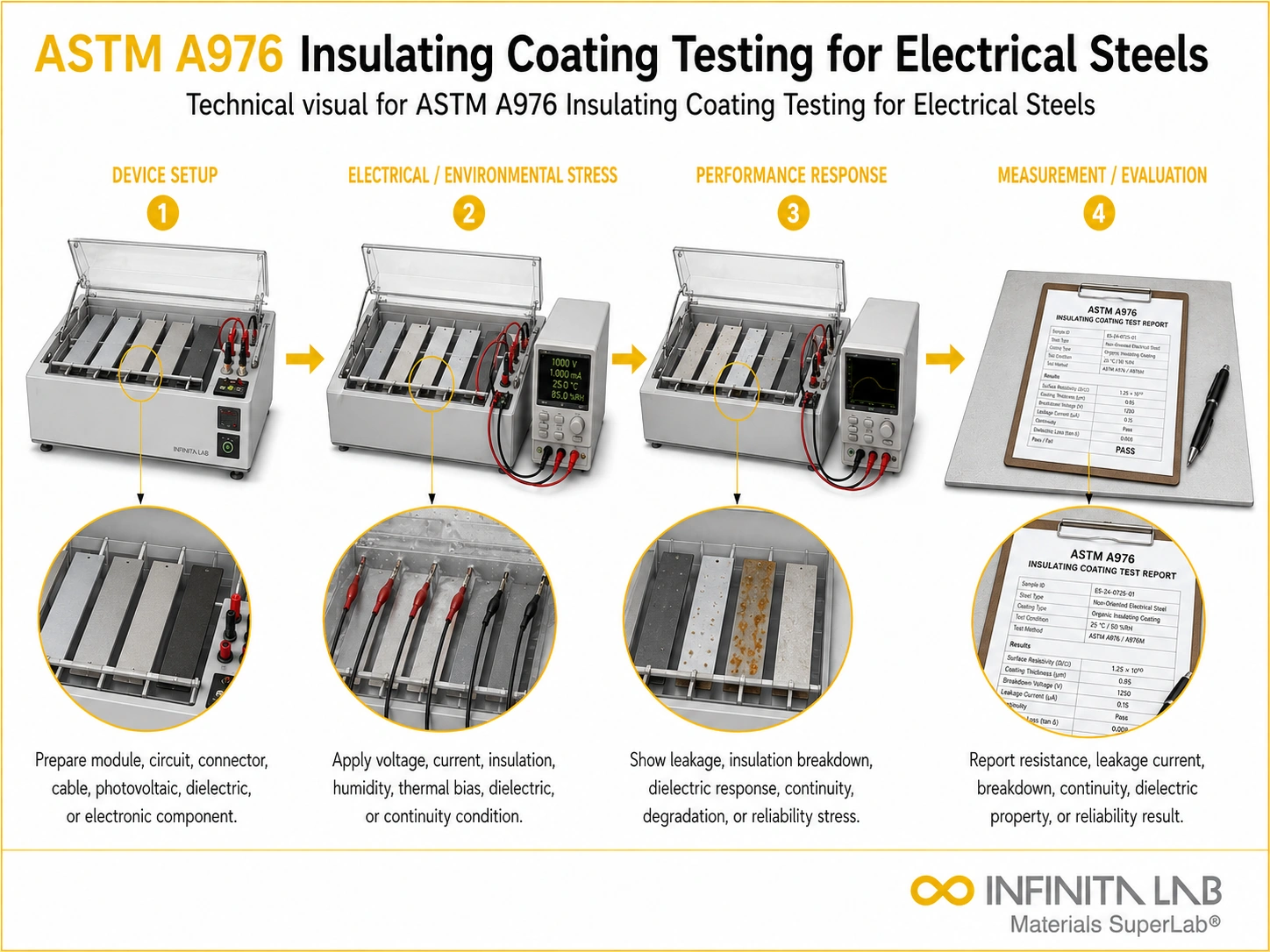


What Is ASTM A976 Electrical Steel Insulating Coating?
ASTM A976 is a standard specification that classifies insulating coatings applied to electrical steels based on their chemical composition and relative insulating ability. These coatings are essential for minimizing interlaminar eddy current losses in magnetic cores used in electrical equipment such as transformers and motors.
The standard helps manufacturers select appropriate coatings that enhance electrical efficiency, corrosion resistance, and mechanical performance. ASTM A976 ensures consistency in coating classification and performance, supporting quality control and optimal functionality in electrical and energy applications.

Applications and Benefits of ASTM A976 Electrical Steel Insulating Coating Testing
Scope
ASTM A976 defines the classification and evaluation of insulating coatings for electrical steels based on composition and their ability to provide electrical insulation between laminations.
- Applicable to electrical steels used in magnetic cores
- Classifies coatings by composition and insulating properties
- Evaluates relative insulating ability
- Supports energy efficiency and performance optimization
- Ensures compliance with ASTM standards
- Includes organic, inorganic, and hybrid coating types
- Suitable for transformers, motors, and generators
Applications
- Transformer core laminations
- Electric motor and generator cores
- Magnetic components in electrical systems
- Power distribution equipment
- Energy-efficient electrical devices
Benefits
- Reduces eddy current losses
- Improves electrical efficiency
- Enhances corrosion resistance
- Provides insulation between laminations
- Supports standardized coating selection
Our ASTM A976 Testing Procedure
Sample Preparation
Coated electrical steel samples are prepared with controlled dimensions and surface conditions.
1Coating Identification
The coating type is identified based on composition and classification.
2Insulation Evaluation
Relative insulating ability is measured using standardized electrical resistance methods.
3Performance Assessment
Results are analyzed to determine coating effectiveness and classification.
4ASTM A976 Test Parameters and Requirements
| Parameter | Details |
|---|---|
| Material | Electrical steel with insulating coatings |
| Coating types | Organic, inorganic, hybrid |
| Measurement | Relative insulating ability |
| Parameter | Interlaminar resistance |
| Objective | Reduce eddy current losses |
| Sample type | Laminated electrical steel sheets |
| Output | Coating classification and performance |


- Electrical resistance measurement
- Insulation resistance tester
- Surface analysis tools
- Micrometer or thickness gauge
- Data acquisition system
Equipment and Instrumentation Used for ASTM A976 Testing
What You Receive: Test Report, Data, and Certification
- Coating classification report
- Insulating ability values
- Electrical resistance data
- Performance evaluation results
- Compliance certification as per ASTM A976
ASTM A976 Electrical Steel Insulating Coating FAQs
ASTM A976 is a standard that classifies insulating coatings on electrical steels based on their composition and insulating ability. It helps ensure proper coating selection for efficient electrical performance in magnetic components.
Insulating coatings reduce eddy current losses between steel laminations. This improves energy efficiency and performance of electrical devices such as transformers and motors by minimizing unwanted heat generation.
Relative insulating ability refers to how effectively a coating prevents electrical current flow between adjacent steel laminations. Higher insulating ability reduces energy losses and improves device efficiency.
By ensuring proper insulation between laminations, the standard helps reduce eddy current losses. This leads to lower energy consumption and improved performance of electrical equipment.
Interlaminar resistance refers to the electrical resistance between adjacent layers of laminated steel. Higher resistance indicates better insulation, reducing eddy current losses and improving overall efficiency of electrical equipment such as transformers and motors.
Coating thickness influences insulation performance. Thicker coatings generally provide higher resistance, but excessive thickness may affect magnetic properties or stacking factor, making controlled application essential for optimal performance.
Why Choose Infinita Lab for Electrical Steel Insulating Coating Testing?
At the core of this breadth is our network of 2,000+ accredited laboratories across the USA, offering access to over 10,000 testing methods and analytical services. From advanced materials characterization (SEM, TEM, RBS, XPS) to mechanical, chemical, environmental, biological, and standardized ASTM/ISO-compliant testing, we deliver unmatched flexibility, specialization, and scale. You are never limited by geography, facility, or methodology — Infinita Lab connects you to the right expertise and testing solution, every time.

Looking for an Accredited Partner for ASTM A976 Electrical Steel Insulating Coating Testing?
Send query us at hello@infinitalab.com or call us at (888) 878-3090 to learn more about our services and how we can support you.





