

What Is ASTM E346 Methanol Analysis?
ASTM E346-24, Standard Test Method for Analysis of Carbonizables in Methanol, is the current edition of a designation with a bumpy history. Earlier editions, most recently E346-08e1, titled Standard Test Methods for Analysis of Methanol, bundled fourteen sections covering acidity and carbonizables, plus color, distillation range, permanganate time, specific gravity, water, water miscibility, ethanol, acetone, and trimethylamine. ASTM withdrew that multi-test version in 2017. The International Methanol Producers and Consumers Association (IMPCA) methanol specification still cites E346, though. So ASTM Committee D16 reinstated the designation as a rewrite that retains only the carbonizables test, and the 2024 edition reflects that narrower scope. What does it measure? Impurities in methanol that darken in the presence of concentrated sulfuric acid, a long-established indicator of organic contaminants that can compromise product purity. Results are expressed on the platinum-cobalt color scale. The method applies to samples whose carbonizables reach up to 60 Pt-Co units. If results feed a conformance decision against a specification limit, the standard directs rounding according to Practice E29. SI units are regarded as standard, and no other units are included. Hazard statements sit in a dedicated safety section, which makes sense given the corrosive acid and the flammable, toxic solvent involved. The standard calls itself suitable for manufacturing control and for determining compliance with specification limits. Water, acidity, color, specific gravity, and distillation range, all once found in the withdrawn edition, are now measured by separate methods. That’s why laboratories typically assess methanol with a panel of standards rather than E346 alone. Below, you’ll find what the current E346 covers, how the test is applied, and what clients should expect to receive.
Applications and Benefits of ASTM E346 Methanol Analysis Testing
Scope
ASTM E346 outlines procedures for determining the composition and purity of methanol using various analytical techniques. It evaluates:
- ASTM E346-24 covers the determination of carbonizables in methanol.
- Applicable to samples with carbonizables concentrations up to 60 platinum-cobalt (Pt-Co) units.
- Carbonizables are impurities that darken or carbonize in the presence of concentrated sulfuric acid, so the test serves as a screen for organic contamination.
- This edition is a single-test standard. Acidity, water, color, distillation range, specific gravity, ethanol, acetone, and trimethylamine determinations are no longer included.
- E346-08e1, the earlier multi-test edition (Standard Test Methods for Analysis of Methanol), was withdrawn in 2017 and should not be cited as an active standard.
- Results used for conformance decisions against a specification are rounded according to Practice E29, per the standard.
- SI units are regarded as the standard, and no other units are included in the document.
- It identifies itself as suitable for manufacturing control and for determining compliance with specification limits.
- Hazard statements are collected in a dedicated section, and the user remains responsible for establishing appropriate safety, health and environmental practices.
Applications
- Release testing of methanol produced for sale against purchaser or industry specifications that cite E346.
- Verification of cargo quality for methanol traded under the IMPCA reference specification, which lists carbonizables by ASTM E346 with a maximum of 30 Pt-Co in its July 2021 edition.
- In-process manufacturing control at methanol production and purification facilities.
- Chemical manufacturers and solvent users running incoming-material checks on methanol bought as a feedstock or process solvent.
- Chasing down unexpected discoloration or suspected organic contamination in a shipment.
- Supplier qualification and periodic audit testing of methanol lots.
Benefits
- One focused parameter, easy to slot into a broader methanol quality panel.
- Alignment with a method referenced in the IMPCA methanol reference specification, which supports commercial acceptance of results.
- Familiar platinum-cobalt reporting, which buyers, sellers, and inspectors already use.
- Early detection of organic impurities that may not be revealed by purity or water measurements alone.
- Clear documentation that a lot was evaluated against the current edition rather than a withdrawn standard.
- Access to accredited partner labs experienced in hazardous solvent handling, with the safety controls that sulfuric acid and methanol require.
Our ASTM E346 Testing Procedure
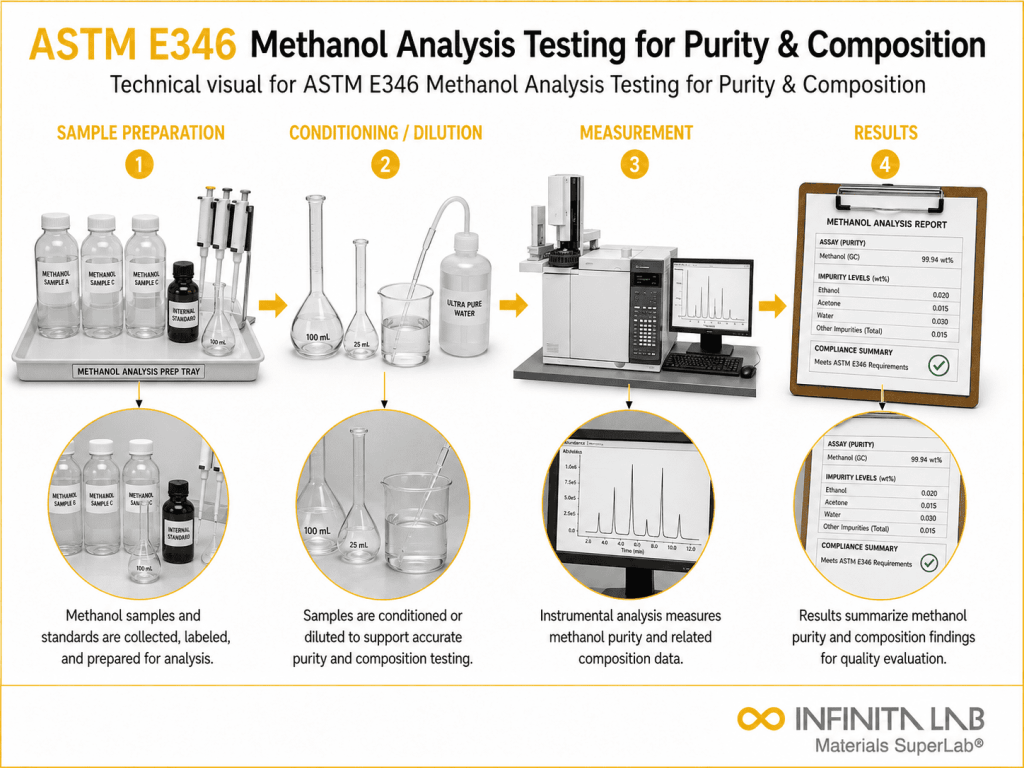
Sample Preparation
Methanol sample is collected and handled to avoid contamination or evaporation losses.
1Method Selection
Appropriate analytical method (e.g., titration, chromatography) is selected based on parameters.
2Chemical Analysis
Purity and impurities are measured using selected techniques such as GC or titration.
3Data Evaluation & Reporting
Results are calculated and reported as purity percentage and impurity levels.
4ASTM E346 Test Parameters and Requirements
| Parameter | Details |
|---|---|
| Applicable Materials | Methanol (industrial and reagent grades) |
| Sample Type | Liquid methanol samples |
| Measured Outputs | Methanol purity (%), water content, impurity levels |
| Methods Included | Titration, chromatography, and other analytical techniques |
| Detection Range | Major (%) to trace levels (ppm) |


- Platinum-Cobalt Color Reference Standards – the scale against which the acid-treated sample color is assigned a Pt-Co value.
- Colorimeter or Spectrophotometer – gives objective color measurement when the lab’s validated procedure uses instruments instead of purely visual comparison.
- Visual Color Comparison Apparatus – for side-by-side evaluation of sample and reference standards when the method is performed visually.
- Calibrated Volumetric Glassware and Balances – deliver accurate, traceable measurement of sample and reagent quantities.
- Temperature-Controlled Equipment – maintains specified conditions where the procedure calls for controlled temperature during acid treatment.
- Chemical Fume Hood and Corrosion-Resistant Safety Equipment – keep analysts safe while they handle concentrated sulfuric acid and flammable, toxic methanol.
Equipment and Instrumentation Used for ASTM E346 Testing
What You Receive: Test Report, Data, and Certification
- A reported carbonizables value expressed in platinum-cobalt units for each methanol sample tested.
- The standard and edition applied, ASTM E346-24, are named clearly.
- Rounding per Practice E29, with a statement of whether it was applied for conformance comparison.
- On request, a comparison against the customer’s stated specification limit, such as one derived from the IMPCA reference specification.
- Sample identification and receipt and handling records, plus any observations about appearance or deviations from the method.
- A formal laboratory report from an accredited partner lab, suitable for supplier files, cargo documentation, or audit review.
ASTM E346 Methanol Analysis FAQs
It determines methanol purity and impurity levels including water, aldehydes, and other contaminants, providing accurate chemical composition data essential for quality control, process optimization, and safe use in industrial, fuel, and laboratory applications.
ASTM E346 uses multiple analytical techniques such as titration, gas chromatography, and Karl Fischer analysis to accurately measure methanol composition, ensuring reliable detection of both major components and trace impurities in different sample types.
Accurate methanol analysis ensures product quality, safe handling, and proper performance in applications such as fuel, solvents, and chemical processing, while also helping industries comply with specifications and avoid contamination-related issues.
Liquid methanol samples, including industrial and reagent grades, are tested under controlled laboratory conditions to determine purity and impurity content using appropriate analytical methods defined in the ASTM standard.
Industries such as chemical manufacturing, energy, pharmaceuticals, and laboratories use ASTM E346 to ensure methanol quality, maintain process efficiency, and verify compliance with specifications for safe and effective application in various processes.
ASTM E346 determines carbonizable impurities in methanol. The sample is treated with concentrated sulfuric acid, and the resulting color change is assessed against a platinum-cobalt color scale to evaluate impurity levels.
Why Choose Infinita Lab for Methanol Analysis Testing
When your Methanol Analysis results have to hold up - for compliance, a customer audit, or an engineering decision - ASTM E346 accuracy and an unbiased third-party report matter more than price. Infinita Lab routes your ASTM E346 methanol analysis testing to ISO/IEC 17025-accredited U.S. partner labs with hands-on method experience, so you get defensible data, transparent reporting, and turnaround times built around your project deadline - not ours.

Need ASTM E346 Methanol Analysis Testing You Can Rely On?
Send query us at hello@infinitalab.com or call us at (888) 878-3090 to learn more about our services and how we can support you.



