


ASTM E256: Chlorine Organic Compounds Sodium Peroxide Testing Services
The purpose of the ASTM E256-09 test method is to determine the total chlorine content of unknown organic samples or to assay known chlorine-containing organic compounds. The apparatus required to perform this test is Sodium Peroxide Bomb of flame ignition type with 22-mL capacity, Gelatine Capsule, and Burner.
TRUSTED BY


Get ASTM E256 compliant results — request your chlorine organic compounds sodium peroxide testing quote
- Overview
- Scope, Applications, and Benefits
- Test Process
- Specifications
- Instrumentation
- Results and Deliverables
What Is ASTM E256 Chlorine Organic Compounds Sodium Peroxide?
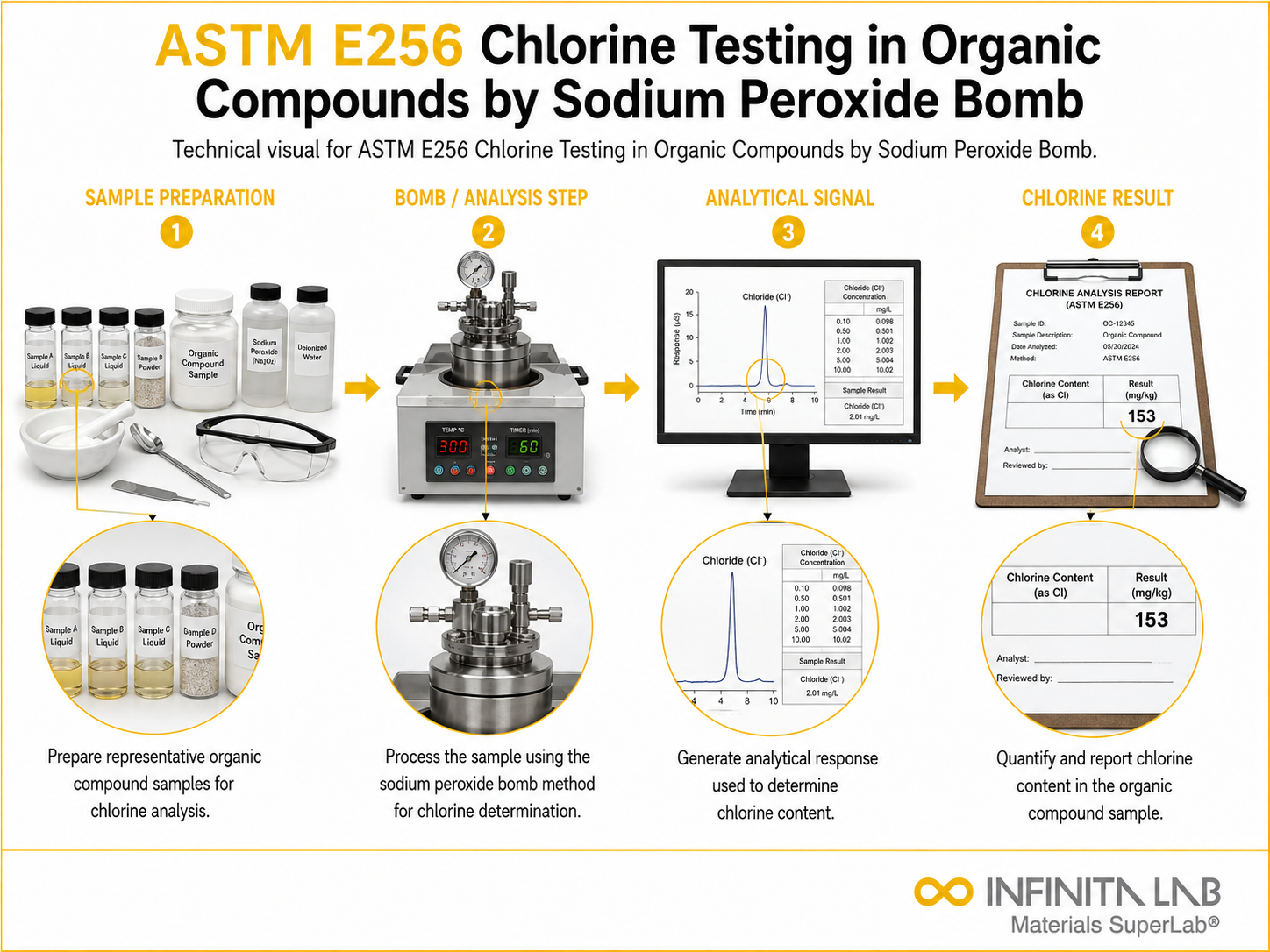
ASTM E256 describes the standard test method for determining chlorine content in organic compounds by sodium peroxide bomb ignition (oxygen-flask combustion). The organic sample is combusted in a sealed bomb with sodium peroxide as the oxidant, converting all organically bound chlorine to chloride ions in solution, which are then determined by argentometric titration or potentiometric methods.
Chlorine determination is critical for characterizing halogenated organic compounds, polymers, pesticides, pharmaceuticals, and specialty chemicals, where chlorine content defines product identity, purity, and compliance with environmental and safety regulations.

Applications and Benefits of ASTM E256 Chlorine Organic Compounds Sodium Peroxide Testing
Scope
ASTM E256 evaluates:
- Total organic chlorine content (wt%) in organic compounds
- Applicable to solid and liquid organic samples
- Covers chlorine in volatile, non-volatile, and polymeric organics
- Determination ranges from trace levels to high-chlorine compounds
Applications
- Halogenated polymer (PVC, PVDC, CPVC) chlorine content verification
- Pesticide and agrochemical active ingredient analysis
- Pharmaceutical chlorine content for purity determination
- Chlorinated solvent and chemical intermediate analysis
- Environmental sample organic chlorine screening
Benefits
- Complete combustion ensures quantitative chlorine recovery
- Applicable to a wide range of organic matrices
- More complete than wet chemical extraction for complex organics
- Provides traceable, precise chlorine determination
- Supports regulatory and product specification compliance
Our ASTM E256 Testing Procedure
Sample Preparation
Weigh sample, encapsulate, load with sodium peroxide flux
1Bomb Ignition
Electrically ignite bomb, convert chlorine to sodium chloride
2Extraction
Dissolve fused mass, filter, acidify solution for analysis
3Chloride Titration
Titrate with AgNO₃, calculate chlorine percentage
4ASTM E256 Test Parameters and Requirements
| Parameter | Details |
|---|---|
| Applicable Materials | Organic compounds, polymers, pesticides, pharmaceuticals |
| Sample Mass | 20–200 mg |
| Determination Range | 0.1–80 wt% Cl |
| Titrant | Standardized AgNO₃ solution |


- Sodium peroxide bomb (Parr or equivalent)
- Analytical balance (±0.1 mg)
- Potentiometric autotitrator with Ag/AgCl electrode
- Standardized silver nitrate titrant
- Hot plate and filtration apparatus
- Bomb ignition circuit and safety shield
Equipment and Instrumentation Used for ASTM E256 Testing
What You Receive: Test Report, Data, and Certification
- Total chlorine content (wt%) with replicate precision
- Blank correction data
- Titration curves and endpoint documentation
- Comparison to specification limits
- Full ASTM E256 test report with traceability
ASTM E256 Chlorine Organic Compounds Sodium Peroxide FAQs
ASTM E256 is a standard test method used to determine chlorine content in organic compounds, ensuring accurate analysis of halogen presence for quality control and chemical evaluation.
ASTM E256 is important because chlorine content affects chemical properties, stability, and environmental impact, making accurate measurement essential for industrial and regulatory compliance.
ASTM E256 involves converting chlorine in organic compounds into measurable inorganic form, followed by titration or instrumental analysis to quantify chlorine concentration.
ASTM E256 requires combustion or digestion apparatus, titration setup, analytical reagents, and measurement instruments for accurate determination.
ASTM E256 results are reported as chlorine content, typically in percentage or ppm, indicating composition and compliance with specifications.
Why Choose Infinita Lab for Advanced Materials Testing and Characterization?
At the core of this breadth is our network of 2,000+ accredited laboratories across the USA, offering access to over 10,000 testing methods and analytical services. From advanced materials characterization (SEM, TEM, RBS, XPS) to mechanical, chemical, environmental, biological, and standardized ASTM/ISO-compliant testing, we deliver unmatched flexibility, specialization, and scale. You are never limited by geography, facility, or methodology — Infinita Lab connects you to the right expertise and testing solution, every time.

Looking for an Accredited Partner for ASTM E256 Chlorine Organic Compounds Sodium Peroxide Testing?
Send query us at hello@infinitalab.com or call us at (888) 878-3090 to learn more about our services and how we can support you.



Request a Quote
Submit your material details and receive testing procedures, pricing, and turnaround time within 24 hours.
 Quick Turnaround and Hasslefree process
 Confidentiality Guarantee
 Free, No-obligation Consultation
 100% Customer Satisfaction
