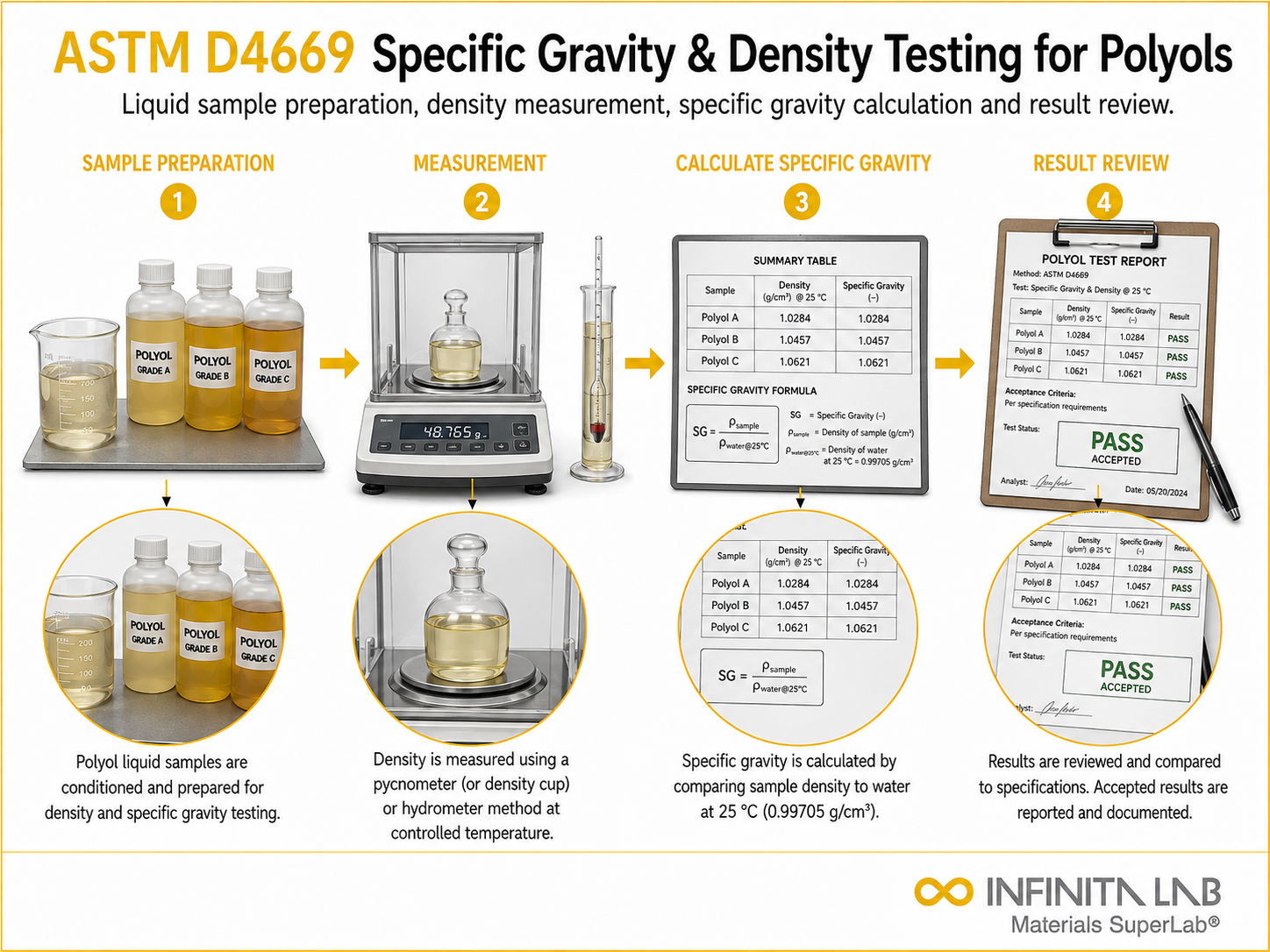


What Is ASTM D4669 Polyol Specific Gravity Density?
ASTM D4669 provides a standardized method for determining the specific gravity of polyol raw materials used in polyurethane production. Specific gravity is a fundamental physical property of polyols used in quality control, material identification, accurate volumetric metering during polyurethane processing, and conversion between weight- and volume-based formulation quantities. Since polyurethane foam machines measure components volumetrically, knowing the specific gravity of each component is essential for achieving the correct stoichiometric ratio.
The method uses a calibrated pycnometer or digital oscillating-tube density meter to measure polyol density at the specified temperature, from which specific gravity relative to water is calculated. The test is simple and rapid, and it provides a useful first-level quality check that can detect contamination, moisture, or off-spec polyol material.

Applications and Benefits of ASTM D4669 Polyol Specific Gravity Density Testing
Scope
ASTM D4669 evaluates:
- Specific gravity of polyether and polyester polyols
- Density consistency of polyol production batches
- Compliance with specific gravity specification limits
- Temperature dependence of polyol specific gravity
- Material identification support through density measurement
- Batch-to-batch density consistency of polyol products
Applications
- Flexible and rigid polyurethane foam polyol metering
- Polyurethane elastomer and RIM formulation
- CASE polyurethane application polyols
- Polyol manufacturer quality control
- Polyol incoming inspection for foam and elastomer producers
- Blended polyol system characterization
- Research and development in polyurethane chemistry
Benefits
- Enables accurate volumetric metering of polyols in foam machines
- Provides a rapid quality check for incoming polyol shipments
- Detects moisture absorption or contamination in polyols
- Supports stoichiometric calculation accuracy
- Provides data for polyol formulation and blending
- Reduces processing errors from incorrect polyol quantities
Our ASTM D4669 Testing Procedure
Equipment Calibration
Pycnometer or density meter is calibrated with distilled water at the test temperature.
1Temperature Equilibration
Polyol sample is equilibrated to the specified test temperature (typically 25°C).
2Density Measurement
Sample mass in the calibrated pycnometer is measured, or digital density meter reading is recorded.
3Specific Gravity Calculation
Specific gravity is calculated relative to water at the reference temperature.
4ASTM D4669 Test Parameters and Requirements
| Parameter | Details |
|---|---|
| Test Principle | Pycnometric or oscillating tube density measurement |
| Test Temperature | 25°C (standard) |
| Applicable Materials | Polyether and polyester polyols |
| Output Units | Dimensionless (specific gravity) or g/cm³ |
| Measured Outputs | Specific gravity of polyol |


- Calibrated glass pycnometer or digital density meter
- Analytical balance (0.1 mg resolution)
- Precision temperature bath (±0.1°C)
- Pipettes and volumetric equipment
- Desiccator for cooling before weighing
- Data recording system
Equipment and Instrumentation Used for ASTM D4669 Testing
What You Receive: Test Report, Data, and Certification
- Specific gravity values at specified temperature
- Batch compliance evaluation
- Temperature records during measurement
- Compliance reports
- Traceability and calibration records
ASTM D4669 Polyol Specific Gravity Density FAQs
ASTM D4669 determines specific gravity of polyols. It evaluates density relative to water, helping ensure consistency, formulation accuracy, and quality control in polyurethane manufacturing and related chemical applications.
Key parameters include sample temperature, measurement method, calibration standards, and sample preparation. Controlled conditions ensure accurate determination of specific gravity in polyol materials.
The test measures specific gravity of polyols. Results indicate density characteristics and influence formulation, mixing ratios, and processing performance in polyurethane systems.
ASTM D4669 applies to polyols used in polyurethane foams, coatings, adhesives, sealants, and elastomers where density affects processing and final product properties.
ASTM D4669 results depend on temperature control and measurement accuracy. Variations in sample handling or impurities may affect results, requiring careful calibration and validation procedures.
Why Choose Infinita Lab for Polyol Specific Gravity Density Testing?
At the core of this breadth is our network of 2,000+ accredited laboratories across the USA, offering access to over 10,000 testing methods and analytical services. From advanced materials characterization (SEM, TEM, RBS, XPS) to mechanical, chemical, environmental, biological, and standardized ASTM/ISO-compliant testing, we deliver unmatched flexibility, specialization, and scale. You are never limited by geography, facility, or methodology — Infinita Lab connects you to the right expertise and testing solution, every time.

Looking for an Accredited Partner for ASTM D4669 Polyol Specific Gravity Density Testing?
Send query us at hello@infinitalab.com or call us at (888) 878-3090 to learn more about our services and how we can support you.





