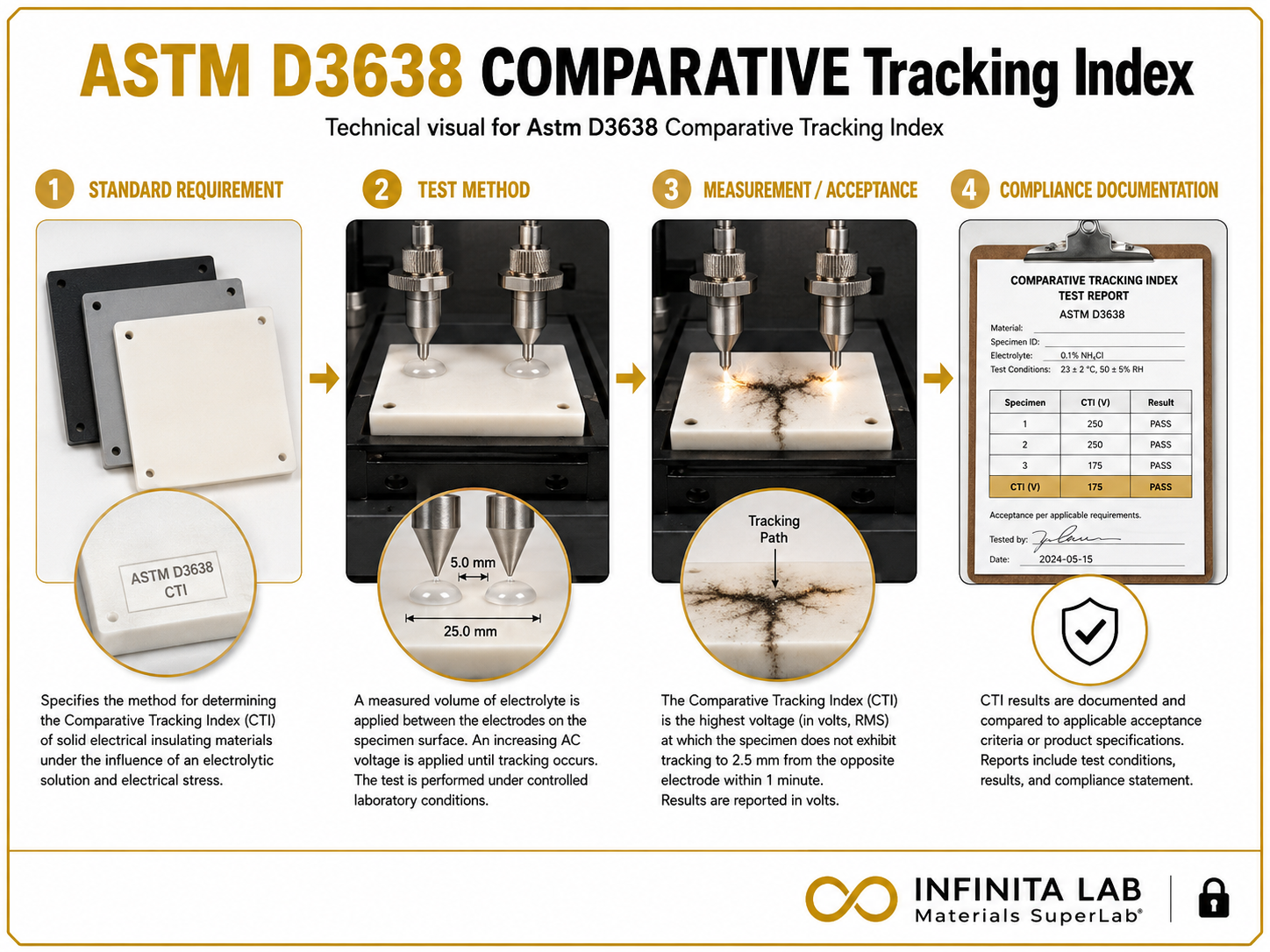


What Is ASTM D3638 Comparative Tracking Index?

Applications and Benefits of ASTM D3638 Comparative Tracking Index Testing
Our ASTM D3638 Testing Procedure


Equipment and Instrumentation Used for ASTM D3638 Testing
What You Receive: Test Report, Data, and Certification
ASTM D3638 Comparative Tracking Index FAQs
It is a method for assessing the Comparative Tracking Index (CTI) of electrical insulating materials under wet, contaminated surfaces.
CTI measures a material’s ability to resist surface tracking from electrical stress and contamination.
It helps evaluate insulating materials' suitability for electrical applications and ensures compliance with safety standards.
A higher CTI value indicates better resistance to tracking and suitability for high-voltage applications.
Tracking occurs due to electrical discharges on the material's surface in the presence of contaminants like water or dirt.
Comparative Tracking Index (CTI) testing evaluates the resistance of solid electrical insulating materials to surface tracking caused by electrical stress and contamination. According to IEC 60112, a specimen is placed between two electrodes, and a controlled voltage is applied while drops of an electrolyte solution are deposited on its surface. The voltage at which the material withstands the specified test conditions without tracking failure is determined to establish its CTI value.
The CTI tracking index test measures the voltage resistance of an insulating material’s surface under controlled electrical and contamination conditions. A test solution is repeatedly dropped between electrodes placed on the specimen while electrical current is monitored. The specimen is assessed for conductive tracking paths, excessive current, or persistent flaming. The results help compare the tracking resistance of insulating materials used in electrical components.
An electrical insulation CTI rating indicates a material’s relative resistance to surface tracking under standardized test conditions. Higher CTI values generally indicate better resistance to tracking. Under IEC 60112, materials are commonly grouped as follows: Group I (CTI ≥ 600 V), Group II (400–599 V), Group IIIa (175–399 V), and Group IIIb (100–174 V). These ratings help engineers select insulating materials for electrical applications, but they do not independently determine safe creepage distances or overall electrical safety.
Why Choose Infinita Lab for Comparative Tracking Index Testing
When your Comparative Tracking Index results have to hold up - for compliance, a customer audit, or an engineering decision - ASTM D3638 accuracy and an unbiased third-party report matter more than price. Infinita Lab routes your ASTM D3638 comparative tracking index testing to ISO/IEC 17025-accredited U.S. partner labs with hands-on method experience, so you get defensible data, transparent reporting, and turnaround times built around your project deadline - not ours.

Looking for an Accredited Partner for ASTM D3638 Comparative Tracking Index Testing?
Send query us at hello@infinitalab.com or call us at (888) 878-3090 to learn more about our services and how we can support you.





