


ASTM B633: Electrodeposited Zinc Coating Testing Services
This method ASTM B 633 covers the specification for coatings to waive the defects on materials such as scratches, porosity, pits, inclusions, cracks, roll marks, and die marks, which may adversely affect the appearance and performance of coatings applied.
TRUSTED BY


Get ASTM B633 compliant results — request your electrodeposited zinc coating testing quote
- Overview
- Scope, Applications, and Benefits
- Test Process
- Specifications
- Instrumentation
- Results and Deliverables
What Is ASTM B633 Electrodeposited Zinc Coating?
ASTM B633 specifies requirements for electrodeposited zinc coatings applied to iron and steel components to provide corrosion protection. The standard defines coating thickness, finish types, chromate treatments, and supplementary requirements to ensure consistent performance in various service environments.
This specification is widely used in automotive, construction, and hardware industries where zinc coatings act as a sacrificial barrier to prevent rusting. ASTM B633 ensures reliable coating quality, improved durability, and compliance with performance requirements for zinc-plated steel components.

Applications and Benefits of ASTM B633 Electrodeposited Zinc Coating Testing
Scope
ASTM B633 covers electrodeposited zinc coatings on iron and steel for corrosion protection and functional applications. It includes classification based on coating thickness, finish, and supplementary treatments to meet different environmental exposure conditions.
Includes:
- Zinc electroplating on iron and steel substrates
- Coating thickness classification (SC1 to SC4)
- Chromate conversion coatings and passivation
- Surface finish and appearance requirements
- Testing and inspection procedures
Applications
- Automotive fasteners and components
- Construction hardware and fittings
- Electrical enclosures and parts
- Industrial machinery components
- Nuts, bolts, and screws
- Structural steel accessories
Benefits
- Excellent corrosion protection through sacrificial coating
- Cost-effective surface treatment solution
- Improved service life of steel components
- Variety of finishes and thickness options
- Good adhesion and uniform coating
- Suitable for mass production processes
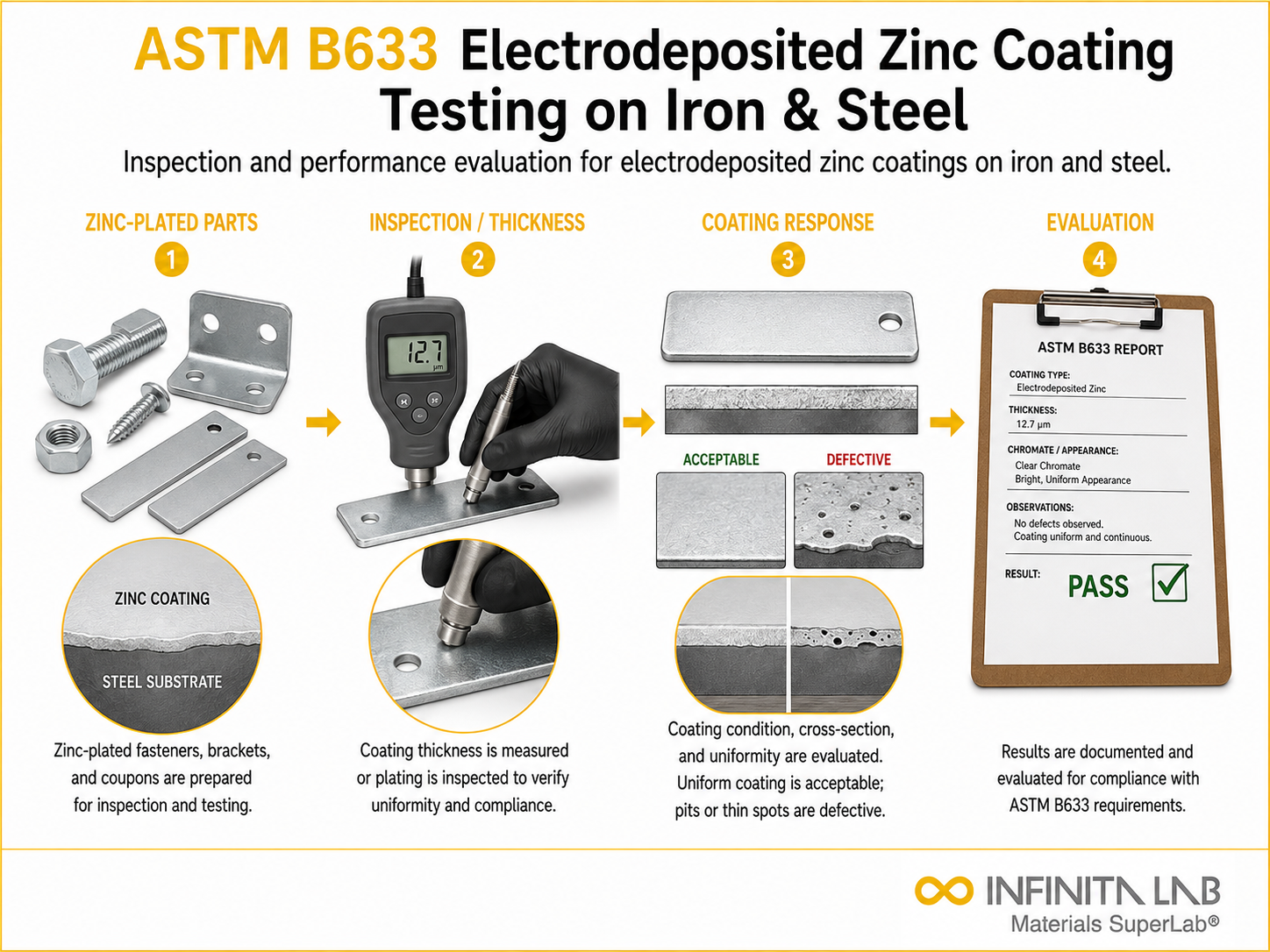
Our ASTM B633 Testing Procedure
Surface Preparation
Components are cleaned and pretreated to ensure proper adhesion of the zinc coating.
1Electroplating Process
Zinc is deposited onto the surface using a controlled electrochemical process.
2Thickness & Adhesion Testing
Coating thickness and adhesion are measured to verify compliance with requirements.
3Inspection & Evaluation
Coated parts are visually inspected and evaluated for corrosion resistance and defects.
4ASTM B633 Test Parameters and Requirements
| Parameter | Details |
|---|---|
| Coating Type | Electrodeposited zinc coating |
| Substrate | Iron and steel components |
| Coating Classification | SC1, SC2, SC3, SC4 based on service conditions |
| Coating Thickness | Typically 5 µm to 25 µm depending on classification |
| Finish Types | Clear, yellow, olive drab, black chromate finishes |
| Chromate Treatment | Optional passivation for enhanced corrosion resistance |
| Corrosion Resistance | Sacrificial protection against rusting |
| Adhesion Requirement | Coating must adhere without peeling or flaking |
| Surface Quality | Smooth, uniform, and defect-free |


- Electroplating equipment
- Coating thickness gauge
- Adhesion testing tools
- Salt spray test chamber
- Microscopes for inspection
- pH meter for bath control
Equipment and Instrumentation Used for ASTM B633 Testing
What You Receive: Test Report, Data, and Certification
- Coating thickness measurement report
- Adhesion test results
- Surface inspection report
- Corrosion resistance evaluation report
- Compliance certificate as per ASTM B633
- Test summary with classification details
ASTM B633 Electrodeposited Zinc Coating FAQs
ASTM B633 is used to specify requirements for electrodeposited zinc coatings on iron and steel, ensuring corrosion protection, coating quality, and performance consistency across industrial applications such as automotive, construction, and hardware manufacturing.
SC1 to SC4 represent service condition classifications based on coating thickness and intended environment, ranging from mild indoor exposure to severe outdoor or corrosive conditions requiring thicker coatings.
Zinc coating acts as a sacrificial layer that corrodes preferentially, protecting the underlying steel from rust and extending the service life of the component.
The zinc coating provides sacrificial protection and can be enhanced with chromate treatments, ensuring extended resistance to corrosion in various environments.
The standard focuses on coating specifications and may require additional testing for specific environmental conditions or specialized applications beyond general corrosion protection.
Why Choose Infinita Lab for Electrodeposited Zinc Coating Testing
At the core of this breadth is our network of 2,000+ accredited laboratories across the USA, offering access to over 10,000 testing methods and analytical services. From advanced materials characterization (SEM, TEM, RBS, XPS) to mechanical, chemical, environmental, biological, and standardized ASTM/ISO-compliant testing, we deliver unmatched flexibility, specialization, and scale. You are never limited by geography, facility, or methodology — Infinita Lab connects you to the right expertise and testing solution, every time.

Need ASTM B633 Electrodeposited Zinc Coating Testing You Can Rely On?
Send query us at hello@infinitalab.com or call us at (888) 878-3090 to learn more about our services and how we can support you.



Request a Quote
Submit your material details and receive testing procedures, pricing, and turnaround time within 24 hours.
 Quick Turnaround and Hasslefree process
 Confidentiality Guarantee
 Free, No-obligation Consultation
 100% Customer Satisfaction
