

What Is ASTM E128 Porous Filter Pore Diameter Permeability?
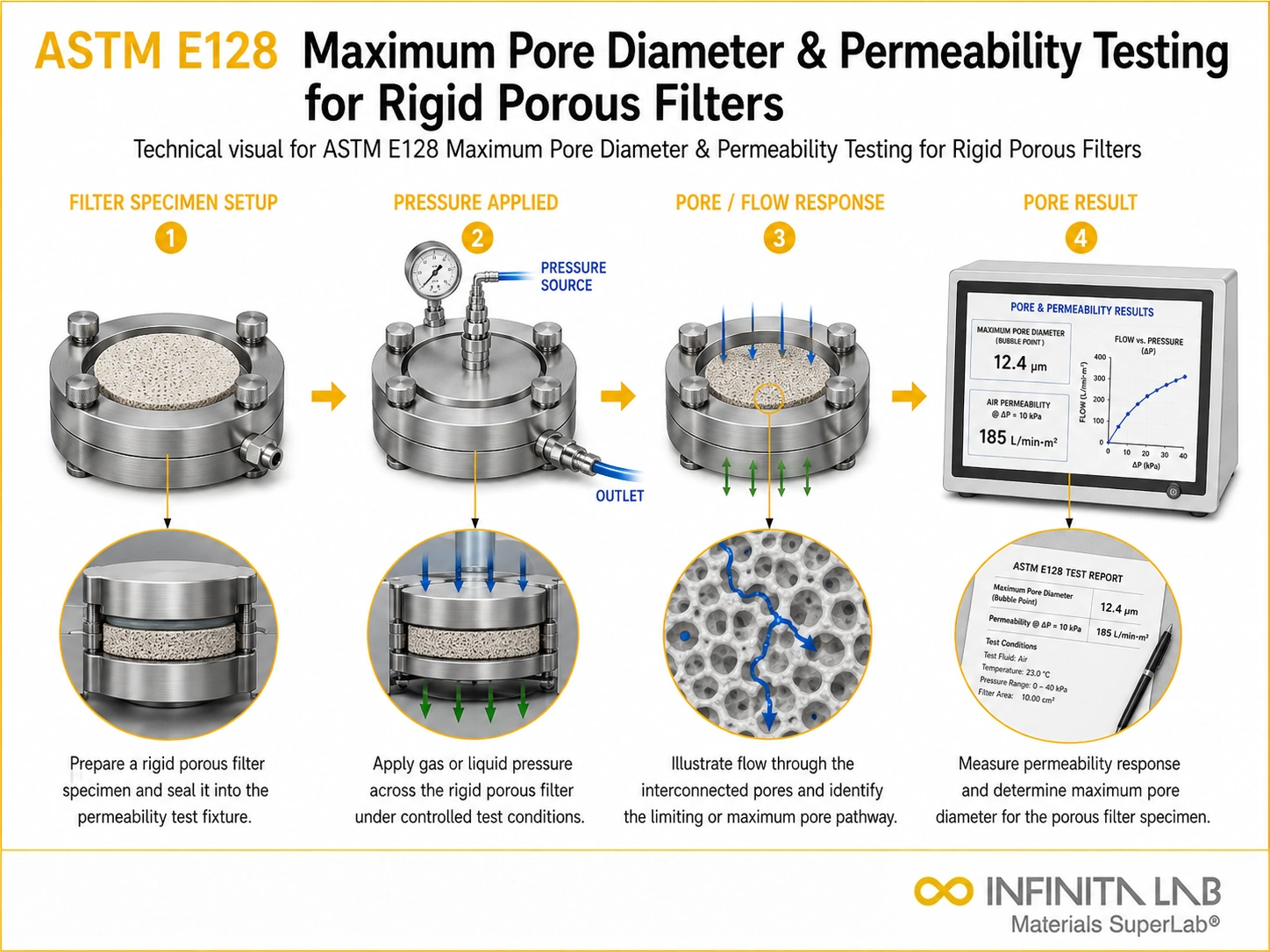
ASTM E128 defines a standardized method for determining the maximum pore diameter and permeability characteristics of rigid porous filters used in laboratory applications. The test evaluates the largest pore size by measuring the pressure required to force a liquid through the filter, providing insight into filtration performance.
The method also assesses permeability by measuring the rate of fluid flow through the porous structure under controlled conditions. This dual evaluation ensures accurate characterization of filter media, supporting quality control, filtration efficiency assessment, and selection of appropriate filters for analytical and industrial processes.

Applications and Benefits of ASTM E128 Porous Filter Pore Diameter Permeability Testing
Scope
ASTM E128 covers procedures for measuring maximum pore size and permeability of rigid porous filter materials using liquid displacement techniques. It applies to filters used in laboratory environments where controlled filtration performance is required.
- Determination of maximum pore diameter using pressure-based methods
- Measurement of permeability through flow rate analysis
- Applicable to rigid porous materials such as ceramics and sintered metals
- Use of wetting liquids to ensure complete pore filling
- Evaluation under controlled pressure and temperature conditions
Applications
- Selection and qualification of laboratory filtration media
- Quality control of porous filter manufacturing
- Evaluation of ceramic and sintered metal filters
- Filtration performance testing in research laboratories
- Validation of pore size specifications
- Process optimization in filtration systems
Benefits
- Provides accurate determination of maximum pore size
- Enables evaluation of filtration efficiency and performance
- Supports consistent quality control of porous materials
- Enhances reliability of filtration processes
- Helps in selecting appropriate filters for specific applications
- Reduces variability in filtration results
Our ASTM E128 Testing Procedure
Sample Preparation
Saturate the porous filter completely with a suitable wetting liquid to fill all pores.
1Pressure Application
Gradually apply gas pressure to force liquid out of the largest pore.
2Bubble Detection
Identify the pressure at which the first continuous bubble stream appears.
3Permeability Measurement
Measure fluid flow rate through the filter under controlled pressure conditions.
4ASTM E128 Test Parameters and Requirements
| Parameter | Details |
|---|---|
| Measurement Principle | Bubble point method for pore size determination |
| Pore Size Range | Typically micron to sub-micron levels |
| Pressure Range | Depends on pore size and liquid properties |
| Wetting Liquid | Low surface tension liquid |
| Permeability Unit | Flow rate per unit pressure |
| Temperature Control | Required for consistent fluid properties |
| Repeatability | High with proper saturation and pressure control |


- Pressure regulator and gauge
- Gas supply system (air or inert gas)
- Flow measurement device
- Test cell or filter holder
- Wetting liquid reservoir
- Temperature monitoring device
- Data acquisition system
Equipment and Instrumentation Used for ASTM E128 Testing
What You Receive: Test Report, Data, and Certification
- Maximum pore diameter value
- Bubble point pressure data
- Permeability measurement results
- Flow rate vs. pressure characteristics
- Test condition records (temperature, liquid type)
- Compliance verification report
ASTM E128 Porous Filter Pore Diameter Permeability FAQs?
The bubble point method determines the largest pore size by measuring the pressure required to displace liquid from the largest pore. The first continuous bubble indicates the maximum pore diameter, providing critical information about filtration limits.
Factors include improper wetting, pressure instability, temperature variations, and errors in bubble detection. Proper control of these variables is essential for accurate results.
Pore size defines the size of openings in the filter, while permeability measures how easily fluid flows through those openings. Both parameters are critical for understanding filter performance.
Smaller pore sizes generally provide higher filtration efficiency by blocking finer particles, while larger pores allow higher flow rates but may reduce filtration effectiveness.
It ensures accurate characterization of filter properties, enabling proper selection and reliable performance in filtration processes, which is essential for maintaining data integrity and experimental accuracy.
ASTM E128 determines the permeability and maximum pore diameter of rigid porous filters made from materials such as glass, ceramic, metal, or plastic. Airflow through the filter is measured under a controlled pressure difference to determine permeability. Maximum pore diameter is assessed by applying air pressure to a liquid-saturated filter until the first air bubble passes through.
Why Choose Infinita Lab for Porous Filter Pore Diameter Permeability Testing?
When your Porous Filter Pore Diameter Permeability results have to hold up - for compliance, a customer audit, or an engineering decision - ASTM E128 accuracy and an unbiased third-party report matter more than price. Infinita Lab routes your ASTM E128 porous filter pore diameter permeability testing to ISO/IEC 17025-accredited U.S. partner labs with hands-on method experience, so you get defensible data, transparent reporting, and turnaround times built around your project deadline - not ours.

Need ASTM E128 Porous Filter Pore Diameter Permeability Testing You Can Rely On?
Send query us at hello@infinitalab.com or call us at (888) 878-3090 to learn more about our services and how we can support you.





