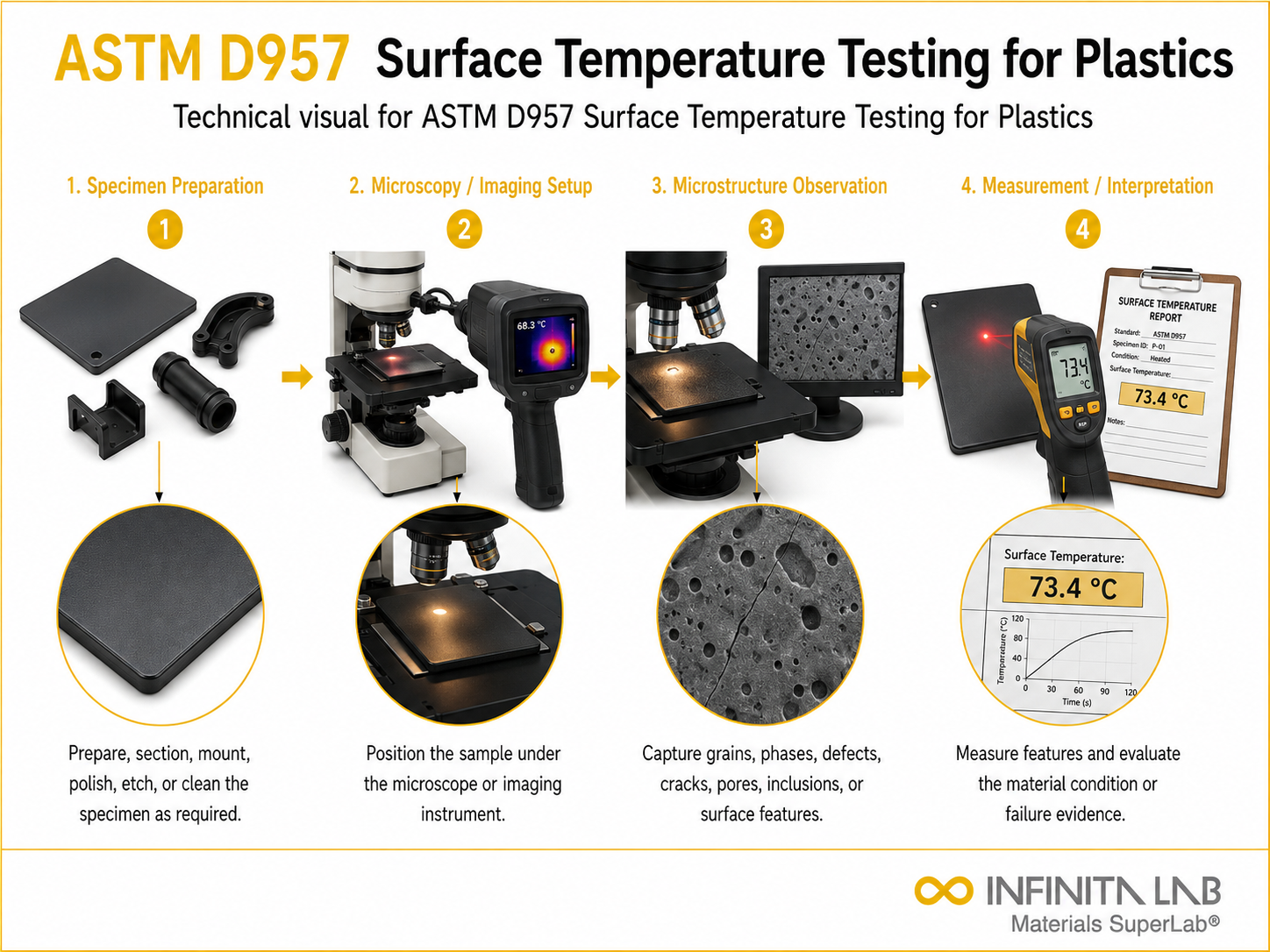


What Is ASTM D957 Plastic Surface Temperature?
ASTM D 957 surface temperature testing is the standard method for determining the surface temperature of plastic molding equipment and molds during the plastic molding process. ASTM D 957 outlines the measurement procedures and equipment needed to accurately record mold surface temperatures. This provides plastics processors, mold designers, and manufacturing engineers with reliable surface temperature data. This data is essential for optimizing processes, evaluating mold performance, and ensuring consistency in production.

Applications and Benefits of ASTM D957 Plastic Surface Temperature Testing
Scope
ASTM D 957 measures the temperature distribution on mold surfaces by checking specific contact points across the mold cavity during the plastic molding cycle. This helps processors check temperature uniformity, identify hot and cold spots, and ensure that mold surface temperatures meet the required processing standards to maintain consistent part quality.
ASTM D 957 surface temperature testing evaluates:
- Mold cavity surface temperature distribution during the plastic molding process
- Temperature uniformity and hot or cold spot identification across mold cavity surfaces
- Surface temperature consistency across multiple measurement points and molding cycles
- Effect of cooling channel design, mold material, and processing conditions on surface temperature
- Compliance with defined mold surface temperature requirements for plastic processing programs
Applications
- Injection molding, compression molding, and transfer molding process temperature evaluation
- Mold design verification and cooling channel performance assessment programs
- Thermoplastic and thermoset plastic processing temperature monitoring and optimization
- Production consistency verification for molded plastic component manufacturing
- Mold maintenance and performance assessment programs for plastics processing facilities
Benefits
- Provides reliable mold surface temperature data for plastic processing optimization
- Supports mold design verification and cooling system performance assessment
- Identifies mold surface temperature non-uniformity before production processing
- Delivers traceable surface temperature records for process engineering submissions
- Reduces production risk by verifying mold surface temperature consistency early in the process setup
Our ASTM D957 Testing Procedure
Measurement Point Setup
Defined measurement points identified across mold cavity surface per ASTM D 957 requirements.
1Mold Temperature Stabilization
Mold operated through defined cycles until thermal equilibrium achieved at processing conditions.
2Surface Temperature Measurement
Contact thermometer or thermocouple applied at defined points recording mold surface temperature.
3Data Analysis & Reporting
Temperature data analyzed across measurement points to determine uniformity and test compliance result.
4ASTM D957 Test Parameters and Requirements
| Parameter | Details |
|---|---|
| Applicable Equipment | Injection, compression, and transfer molding equipment and mold assemblies |
| Specimen Geometry | Defined measurement point locations across mold cavity surface per ASTM D 957 |
| Measurement Conditions | Mold surface temperature measured at thermal equilibrium during active molding cycle |
| Measured Parameters | Mold surface temperature at defined measurement points and temperature distribution |
| Measured Outputs | Surface temperature values, temperature distribution map, and test compliance result |


- Calibrated contact thermometer or thermocouple for mold surface temperature measurement
- Precision temperature data acquisition and logging system
- Thermal equilibration monitoring equipment for mold cycle stabilization
- Defined measurement point marking and location reference tools
- Mold operating equipment for active cycle temperature measurement
- Data reporting and temperature distribution visualization system
Equipment and Instrumentation Used for ASTM D957 Testing
What You Receive: Test Report, Data, and Certification
- Mold surface temperature measurements at all defined cavity measurement points
- Temperature distribution data and uniformity assessment across the mold cavity surface
- Hot and cold spot identification and temperature deviation observations
- Test compliance result assessed against the defined mold surface temperature requirements
- ASTM D 957 test report for process optimization, mold design verification, and production submissions
ASTM D957 Plastic Surface Temperature FAQs
ASTM D957 measures the surface temperature features of plastics when they are exposed to heat sources. This helps in understanding how materials react to heat and if the surfaces stay safe during use.
Surface temperature testing helps determine how plastic materials conduct or hold heat. This ensures that components used in appliances, electronics, or equipment do not reach temperatures that could cause damage.
ASTM D957 applies to thermoplastics, thermosets, and reinforced plastic materials. These are used in consumer products, electrical equipment, automotive parts, and industrial devices where surfaces may be exposed to heat.
ASTM D957 testing measures the temperature of plastic surfaces that are exposed to controlled heat conditions. It uses calibrated temperature sensors or instruments to find out how the material behaves and how much the surface temperature increases.
ASTM D957 tests surface temperature in a lab setting. It may not reflect the complicated conditions of the real world, where airflow, radiation, or multiple heat sources affect how materials behave with temperature.
Why Choose Infinita Lab for Plastic Surface Temperature Testing
At the core of this breadth is our network of 2,000+ accredited laboratories across the USA, offering access to over 10,000 testing methods and analytical services. From advanced materials characterization (SEM, TEM, RBS, XPS) to mechanical, chemical, environmental, biological, and standardized ASTM/ISO-compliant testing, we deliver unmatched flexibility, specialization, and scale. You are never limited by geography, facility, or methodology — Infinita Lab connects you to the right expertise and testing solution, every time.

Looking for an Accredited Partner for ASTM D957 Plastic Surface Temperature Testing?
Send query us at hello@infinitalab.com or call us at (888) 878-3090 to learn more about our services and how we can support you.





