


ASTM D6284-09: Rubber Chlorine Compound Effects Testing Services
ASTM D6284-09 test method is used to evaluate the ability of rubber and rubber-like materials to withstand the effects of aqueous solutions containing chlorine and chloramine. This test is intended to compare the effects of chlorine compounds on rubber articles.
TRUSTED BY


Get ASTM D6284-09 compliant results — request your rubber chlorine compound effects testing quote
- Overview
- Scope, Applications, and Benefits
- Test Process
- Specifications
- Instrumentation
- Results and Deliverables
What Is ASTM D6284-09 Rubber Chlorine Compound Effects?
ASTM D6284-09 provides a test method for evaluating the effects of chlorine-containing compounds on rubber materials. Chlorine exposure can cause degradation such as cracking, hardening, or loss of mechanical properties in rubber.
This standard is used to assess rubber’s resistance to chlorine environments, which is important for applications involving water treatment, chemical exposure, and industrial use.

Applications and Benefits of ASTM D6284-09 Rubber Chlorine Compound Effects Testing
Scope
ASTM D6284-09 focuses on determining the changes in physical and mechanical properties of rubber after exposure to chlorine compounds. It helps evaluate durability and chemical resistance.
The test evaluates:
- Resistance to chlorine-induced degradation
- Changes in tensile strength and elongation
- Surface cracking or deterioration
- Hardness variation
- Overall material performance after exposure
Applications
- Seals and gaskets in chlorinated water systems
- Rubber components in the chemical industries
- Water treatment and swimming pool systems
- Industrial hoses and linings
- Quality control in rubber manufacturing
Benefits
- Ensures the chemical resistance of the rubber
- Improves material selection
- Enhances durability in harsh environments
- Supports product reliability
- Enables comparison of rubber formulations
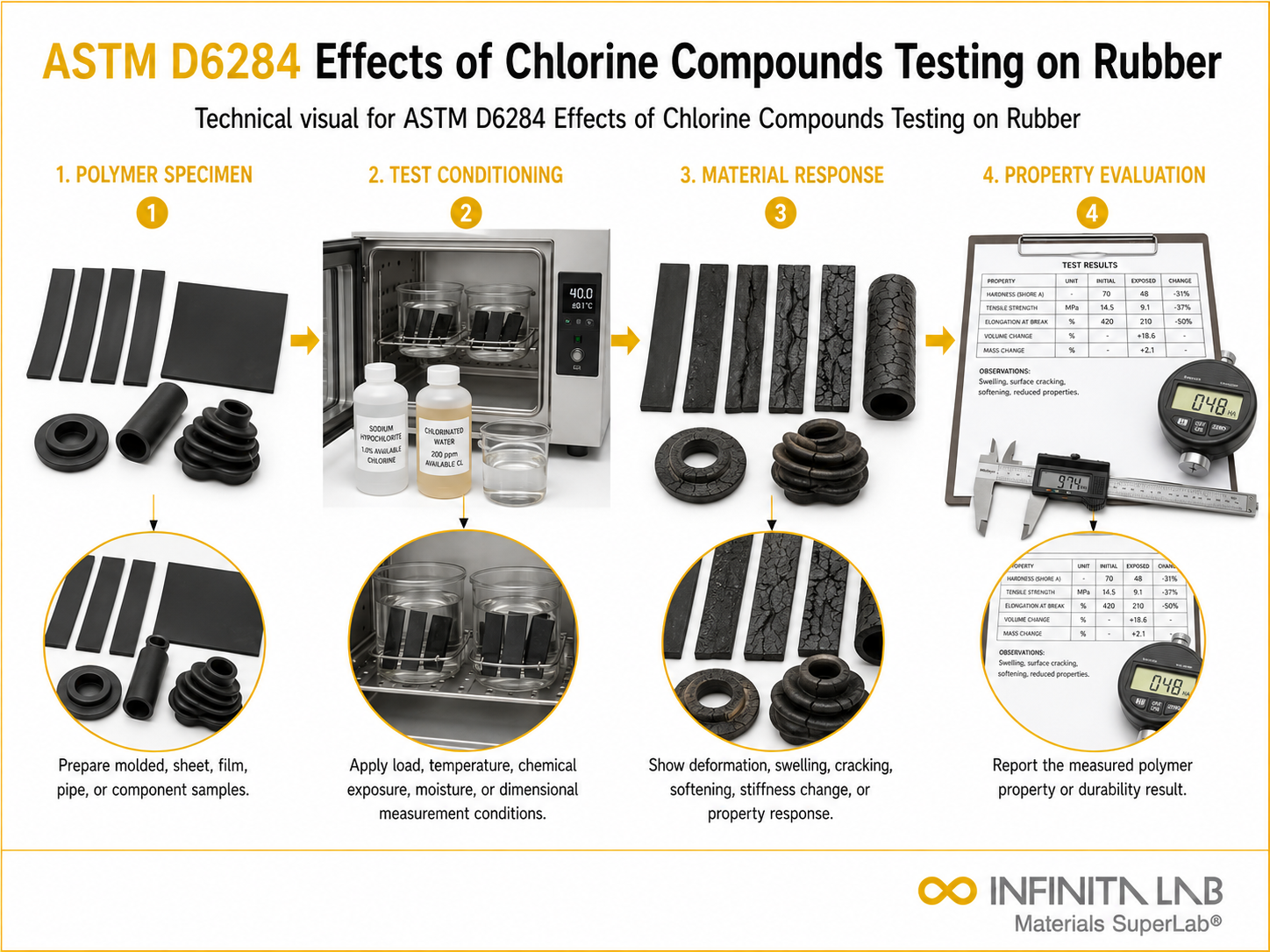
Our ASTM D6284-09 Testing Procedure
Sample Preparation
Rubber specimens are prepared to standard dimensions.
1Chlorine Exposure
Samples are exposed to chlorine-containing solution or environment.
2Property Evaluation
Mechanical and surface properties are measured after exposure.
3Data Recording & Evaluation
Changes are analyzed and compared with original properties.
4ASTM D6284-09 Test Parameters and Requirements
| Parameter | Details |
|---|---|
| Applicable Materials | Natural and synthetic rubber |
| Exposure Medium | Chlorine solution (e.g., sodium hypochlorite) |
| Chlorine Concentration | Typically 50 ppm to 500 ppm |
| Exposure Temperature | Approximately 23°C to 50°C |
| Exposure Duration | 24 hours to several days |
| Measured Outputs | Tensile strength, elongation, hardness, surface condition |


- Tensile testing machine
- Hardness tester (durometer)
- Chemical exposure tanks
- Temperature control system
- Visual inspection tools
- Data acquisition system
Equipment and Instrumentation Used for ASTM D6284-09 Testing
What You Receive: Test Report, Data, and Certification
- Property change analysis
- Degradation assessment
- Mechanical performance comparison
- Surface condition evaluation
- Test condition summary
- ASTM compliance report
ASTM D6284-09 Rubber Chlorine Compound Effects FAQs
ASTM D6284-09 is a standard test method used to evaluate the effects of chlorine compounds on rubber materials, assessing changes in properties after exposure to chlorinated environments or chemicals.
ASTM D6284-09 helps determine rubber durability in chlorinated conditions, ensuring material suitability for applications like water systems, seals, and industrial components exposed to chlorine-based chemicals.
ASTM D6284-09 involves exposing rubber samples to chlorine compounds under controlled conditions, then measuring changes in physical and mechanical properties such as strength, hardness, and elasticity.
Chlorine exposure can cause degradation, hardening, cracking, or loss of elasticity in rubber, affecting its performance and lifespan in demanding environments.
Results are evaluated by comparing pre- and post-exposure properties, determining the extent of degradation and the material’s resistance to chlorine-induced damage.
Why Choose Infinita Lab for Rubber Chlorine Compound Effects Testing?
At the core of this breadth is our network of 2,000+ accredited laboratories across the USA, offering access to over 10,000 testing methods and analytical services. From advanced materials characterization (SEM, TEM, RBS, XPS) to mechanical, chemical, environmental, biological, and standardized ASTM/ISO-compliant testing, we deliver unmatched flexibility, specialization, and scale. You are never limited by geography, facility, or methodology — Infinita Lab connects you to the right expertise and testing solution, every time.

Looking for an Accredited Partner for ASTM D6284-09 Rubber Chlorine Compound Effects Testing?
Send query us at hello@infinitalab.com or call us at (888) 878-3090 to learn more about our services and how we can support you.



Request a Quote
Submit your material details and receive testing procedures, pricing, and turnaround time within 24 hours.
 Quick Turnaround and Hasslefree process
 Confidentiality Guarantee
 Free, No-obligation Consultation
 100% Customer Satisfaction
