


ASTM D2647: Crosslinkable Polyethylene Specification Testing Services
ASTM D2647 is a classification standard for crosslinkable ethylene plastic compounds — materials supplied in uncrosslinked form that are designed to be cured (crosslinked) by the end user to achieve enhanced mechanical, thermal, and electrical properties. The standard classifies these compounds into mechanical and electrical types based on performance requirements including elongation, modulus, brittleness temperature, and dielectric properties. It is widely used in the wire and cable industry, particularly for crosslinked polyethylene (XLPE) insulation compounds used in power cables, building wire, and industrial wiring systems.
TRUSTED BY


Get ASTM D2647 compliant results — request your crosslinkable polyethylene specification testing quote
- Overview
- Scope, Applications, and Benefits
- Test Process
- Specifications
- Instrumentation
- Results and Deliverables
What Is ASTM D2647 Crosslinkable Polyethylene Specification?
ASTM D2647 is a standard specification that provides a classification system for crosslinkable ethylene plastic compounds. These materials are typically supplied in an uncrosslinked form but are designed to undergo crosslinking (curing) to enhance their mechanical, thermal, and electrical properties for various industrial applications.
The standard categorizes materials based on their performance characteristics, particularly distinguishing between mechanical types and electrical types. It defines key parameters, including elongation, modulus, and brittleness temperature, to ensure consistent material performance and suitability for applications such as wire insulation and structural components.

Applications and Benefits of ASTM D2647 Crosslinkable Polyethylene Specification Testing
Scope
ASTM D2647 evaluates:
- Crosslinkable ethylene plastic compounds
- Mechanical properties (elongation, modulus)
- Thermal behavior (brittleness temperature)
- Electrical properties (dielectric performance)
- Degree of crosslinking and material classification
Applications
- Wire and cable insulation materials
- Electrical insulating and semiconducting compounds
- Automotive and industrial components
- Polymer and plastic extrusion applications
- High-performance crosslinked polyethylene (XLPE) products
Benefits
- Provides standardized classification of materials
- Ensures consistent performance and quality
- Supports material selection for electrical and mechanical uses
- Enables comparison across different compounds
- Improves the reliability of crosslinked plastic products
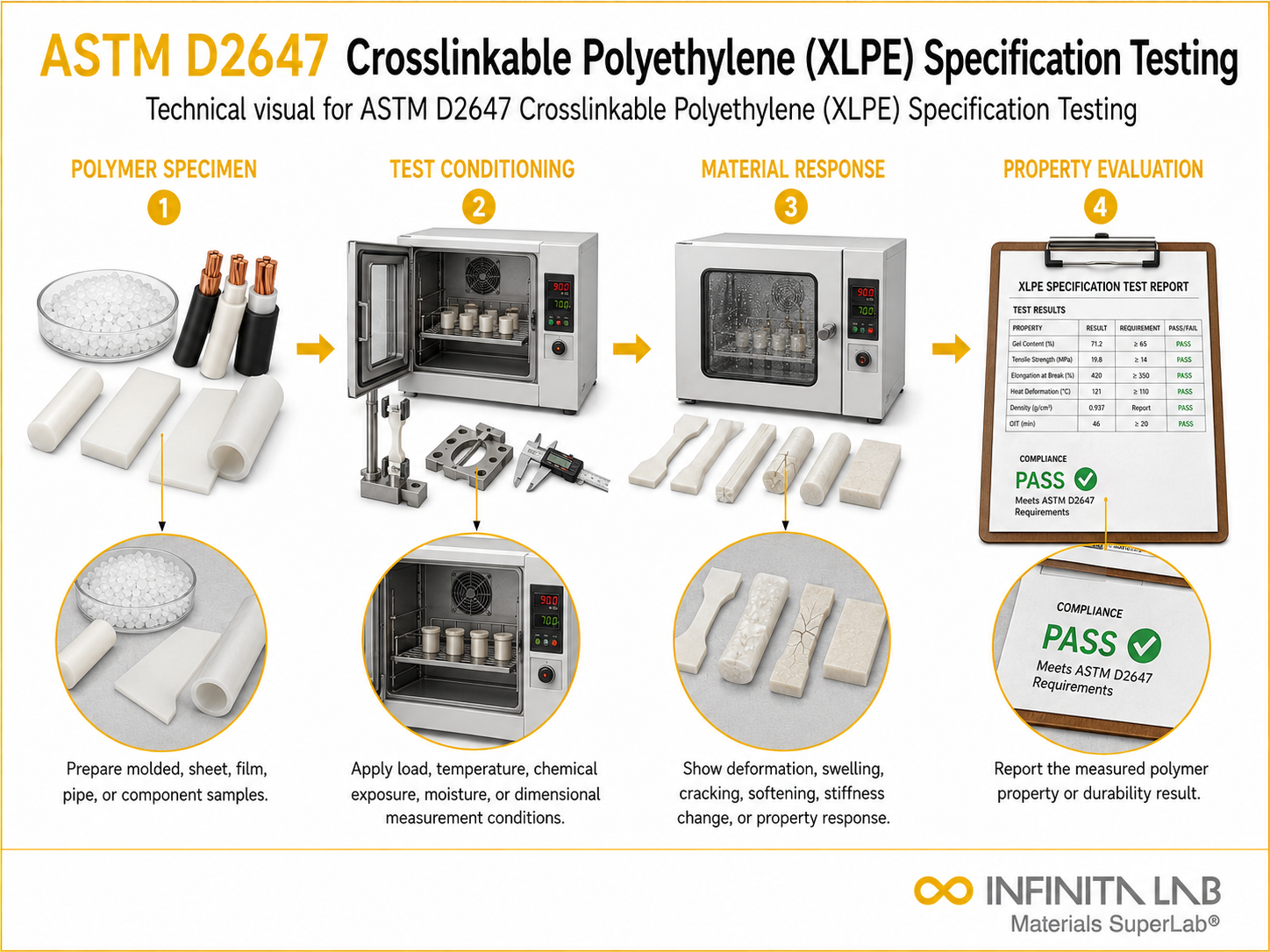
Our ASTM D2647 Testing Procedure
Sample Preparation
Crosslinkable ethylene compound is prepared and conditioned before testing.
1Crosslinking
Sample is cured under controlled conditions to achieve crosslinked structure.
2Property Testing
Mechanical and electrical properties such as elongation, modulus, and dielectric properties are measured.
3Data Analysis
Results are compared with classification requirements defined in ASTM D2647.
4ASTM D2647 Test Parameters and Requirements
| Parameter | Details |
|---|---|
| Material Types | Mechanical type, electrical type |
| Classification | Type I, Type II, Grade A |
| Key Properties | Elongation, modulus, brittleness temperature |
| Electrical Properties | Dielectric constant, dissipation factor |
| Sample State | Uncrosslinked (tested after curing) |
| Measured Outputs | Mechanical, thermal, electrical performance |


- Tensile testing machine
- Environmental chamber (for conditioning and aging)
- Brittleness temperature tester
- Dielectric property measurement system
- Crosslinking oven or curing setup
- Data acquisition and analysis tools
Equipment and Instrumentation Used for ASTM D2647 Testing
What You Receive: Test Report, Data, and Certification
- Material classification (Type and Grade)
- Mechanical property data (elongation, modulus)
- Electrical property measurements
- Thermal performance evaluation
- Compliance report with ASTM D2647
ASTM D2647 Crosslinkable Polyethylene Specification FAQs
ASTM D2647 is a specification that classifies crosslinkable ethylene plastics based on their mechanical and electrical properties, ensuring consistent performance for applications such as insulation and structural components.
These are polyethylene-based materials designed to undergo crosslinking, forming a network structure that improves strength, thermal resistance, and electrical performance compared to non-crosslinked plastics.
Properties such as elongation, modulus, brittleness temperature, dielectric constant, and dissipation factor are evaluated to classify materials based on mechanical and electrical performance.
Mechanical types focus on strength and deformation properties, while electrical types emphasize insulation and dielectric performance for applications such as cables and electrical systems.
It ensures standardized classification and performance of crosslinkable plastics, helping manufacturers select suitable materials and maintain consistent quality in applications requiring durability and electrical reliability.
Why Choose Infinita Lab for Crosslinkable Polyethylene Specification Testing?
At the core of this breadth is our network of 2,000+ accredited laboratories across the USA, offering access to over 10,000 testing methods and analytical services. From advanced materials characterization (SEM, TEM, RBS, XPS) to mechanical, chemical, environmental, biological, and standardized ASTM/ISO-compliant testing, we deliver unmatched flexibility, specialization, and scale. You are never limited by geography, facility, or methodology — Infinita Lab connects you to the right expertise and testing solution, every time.

Looking for an Accredited Partner for ASTM D2647 Crosslinkable Polyethylene Specification Testing?
Send query us at hello@infinitalab.com or call us at (888) 878-3090 to learn more about our services and how we can support you.



Request a Quote
Submit your material details and receive testing procedures, pricing, and turnaround time within 24 hours.
 Quick Turnaround and Hasslefree process
 Confidentiality Guarantee
 Free, No-obligation Consultation
 100% Customer Satisfaction
