


ASTM F326 Electronic Measurement Testing for Hydrogen Embrittlement
ASTM F326 ascribe a procedure for measuring plating permeability to hydrogen using an electronic hydrogen detection instrument. It is used to evaluate a variable linked to hydrogen absorbed by steel during plating and post-plating baking using cadmium-electroplating processes for the measurement.
TRUSTED BY


Precision-driven testing for dimensional accuracy and compliance
- Overview
- Scope, Applications, and Benefits
- Test Process
- Specifications
- Instrumentation
- Results and Deliverables
Overview
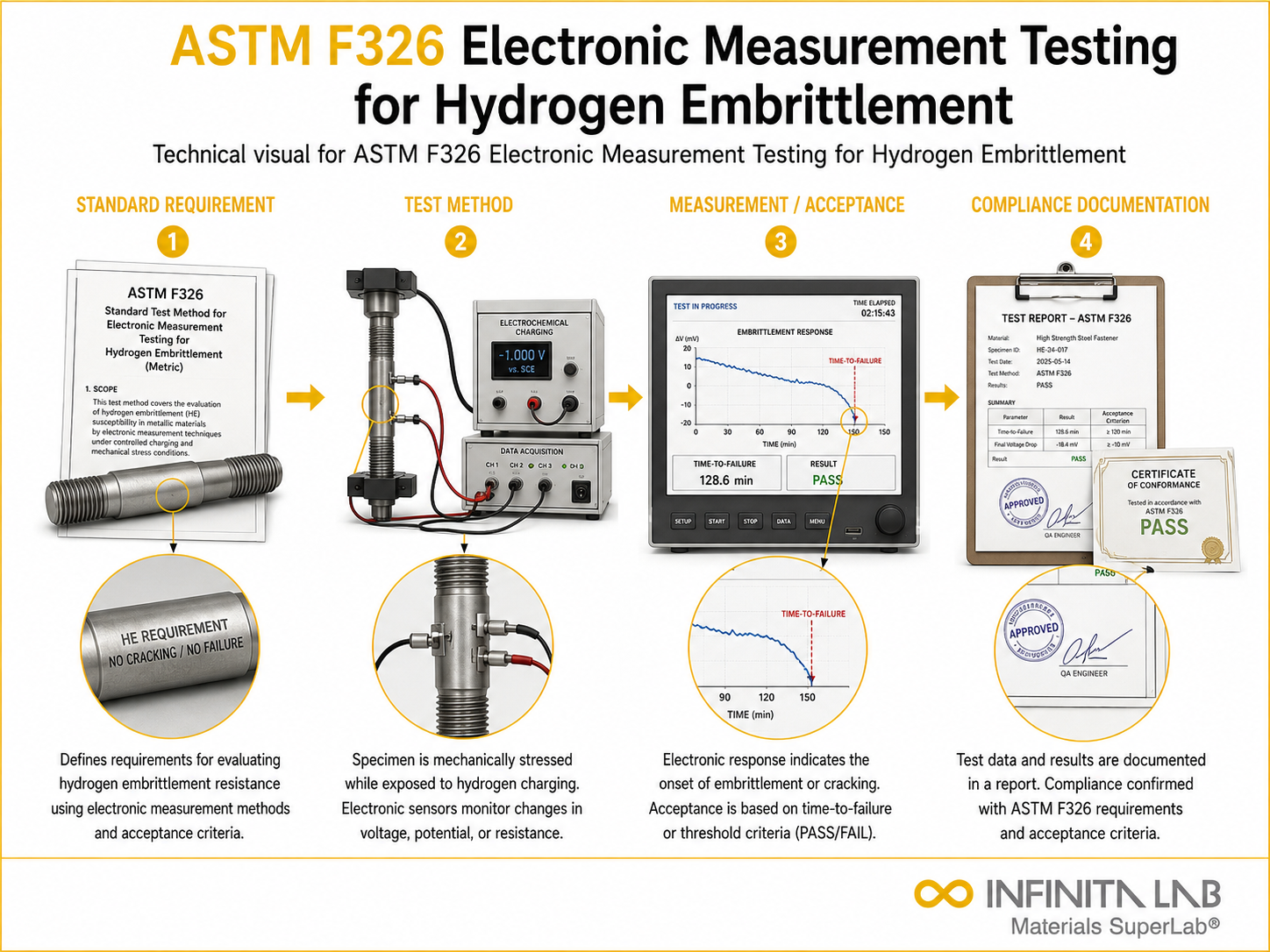
ASTM F326 is used to evaluate hydrogen embrittlement in metallic materials using electronic measurement techniques. The test detects changes in material properties caused by hydrogen absorption, which can lead to reduced ductility, cracking, and premature failure.
This method is commonly applied to high-strength steels and other susceptible alloys used in critical applications. Electronic monitoring enables early detection of embrittlement effects, helping engineers assess material performance and prevent failure in service environments.

Scope, Applications, and Benefits
Scope
ASTM F326 evaluates the susceptibility of metallic materials to hydrogen embrittlement by monitoring changes in electrical or mechanical response during hydrogen exposure. The test identifies the impact of hydrogen on material integrity and performance.
ASTM F326 evaluates:
- Hydrogen embrittlement behavior in metallic materials
- Effects of hydrogen absorption on material properties
- Susceptibility of high-strength alloys to embrittlement
- Changes in electrical or mechanical response due to hydrogen
- Risk of cracking and failure caused by hydrogen exposure
Applications
- High-strength steel components
- Aerospace and defense materials
- Fasteners and structural hardware
- Automotive and industrial components
- Oil and gas equipment
- Metallurgical research and failure analysis
Benefits
- Enables early detection of hydrogen embrittlement effects
- Supports the evaluation of material reliability under hydrogen exposure
- Assists in preventing premature material failure
- Helps compare the susceptibility of different materials
- Provides data for material selection and design decisions
Test Process
Sample Preparation
Metal specimens are prepared and conditioned for hydrogen exposure and electronic measurement.
1Hydrogen Exposure
The specimen is exposed to a hydrogen environment under controlled conditions.
2Electronic Monitoring
Changes in electrical or mechanical response are continuously measured during exposure.
3Data Recording & Evaluation
The recorded data is analyzed to determine susceptibility to hydrogen embrittlement.
4Technical Specifications
| Parameter | Details |
|---|---|
| Applicable Materials | Metallic materials, especially high-strength steels |
| Exposure Condition | Controlled hydrogen environment |
| Measurement Method | Electronic monitoring of material response |
| Evaluation Basis | Changes in electrical or mechanical properties |
| Specimen Type | Standard metallic test specimen |
| Measured Outputs | Embrittlement indicators and material response data |


Instrumentation Used for Testing
- Hydrogen charging or exposure system
- Electronic measurement equipment
- Data acquisition and monitoring system
- Specimen holding fixtures
- Environmental control system
- Analysis and recording software
Results and Deliverables
- Hydrogen embrittlement assessment results
- Electronic response data during exposure
- Material susceptibility evaluation
- Observations of potential cracking behavior
- Test condition summary
- ASTM compliance report
Frequently Asked Questions
ASTM F326 includes applied stress levels, hydrogen charging conditions, electrical signal monitoring, time to failure, and specimen material properties, evaluating susceptibility of metals to hydrogen embrittlement using electronic measurement techniques.
ASTM F326 is commonly applied to high-strength steels, alloys, and fasteners used in aerospace, automotive, and structural applications where hydrogen exposure can cause embrittlement and premature failure.
ASTM F326 involves controlled hydrogen charging, application of sustained or cyclic stress, and continuous electronic monitoring to detect changes indicating embrittlement or crack initiation.
ASTM F326 evaluates time to failure, changes in electrical response, crack initiation behavior, and material susceptibility to hydrogen embrittlement under specified testing conditions.
ASTM F326 evaluates hydrogen embrittlement under controlled laboratory conditions and may not fully represent complex service environments where temperature, stress variations, and environmental exposure influence material performance.
Why Choose Infinita Lab for Advanced Materials Testing and Characterization?
At the core of this breadth is our network of 2,000+ accredited laboratories across the USA, offering access to over 10,000 testing methods and analytical services. From advanced materials characterization (SEM, TEM, RBS, XPS) to mechanical, chemical, environmental, biological, and standardized ASTM/ISO-compliant testing, we deliver unmatched flexibility, specialization, and scale. You are never limited by geography, facility, or methodology — Infinita Lab connects you to the right expertise and testing solution, every time.

Looking for a Trusted Partner for Accurate and Reliable Testing Services?
Send query us at hello@infinitlab.com or call us at (888) 878-3090 to learn more about our services and how we can support you.



Request a Quote
Submit your material details and receive testing procedures, pricing, and turnaround time within 24 hours.
 Quick Turnaround and Hasslefree process
 Confidentiality Guarantee
 Free, No-obligation Consultation
 100% Customer Satisfaction
