


ASTM D6676: Cathodic Disbondment Pipeline Coating Testing Services
ASTM D6676/D6676M outlines an approach for comparing the features of coating systems applied to the outside of a steel pipe for the purpose of measuring corrosion resistance; preventing or reducing corrosion in undersea cables. ASTM D6676/D6676M is used when high temperatures affect external coatings.
TRUSTED BY


Get ASTM D6676 compliant results — request your cathodic disbondment pipeline coating testing quote
- Overview
- Scope, Applications, and Benefits
- Test Process
- Specifications
- Instrumentation
- Results and Deliverables
What Is ASTM D6676 Cathodic Disbondment Pipeline Coating?
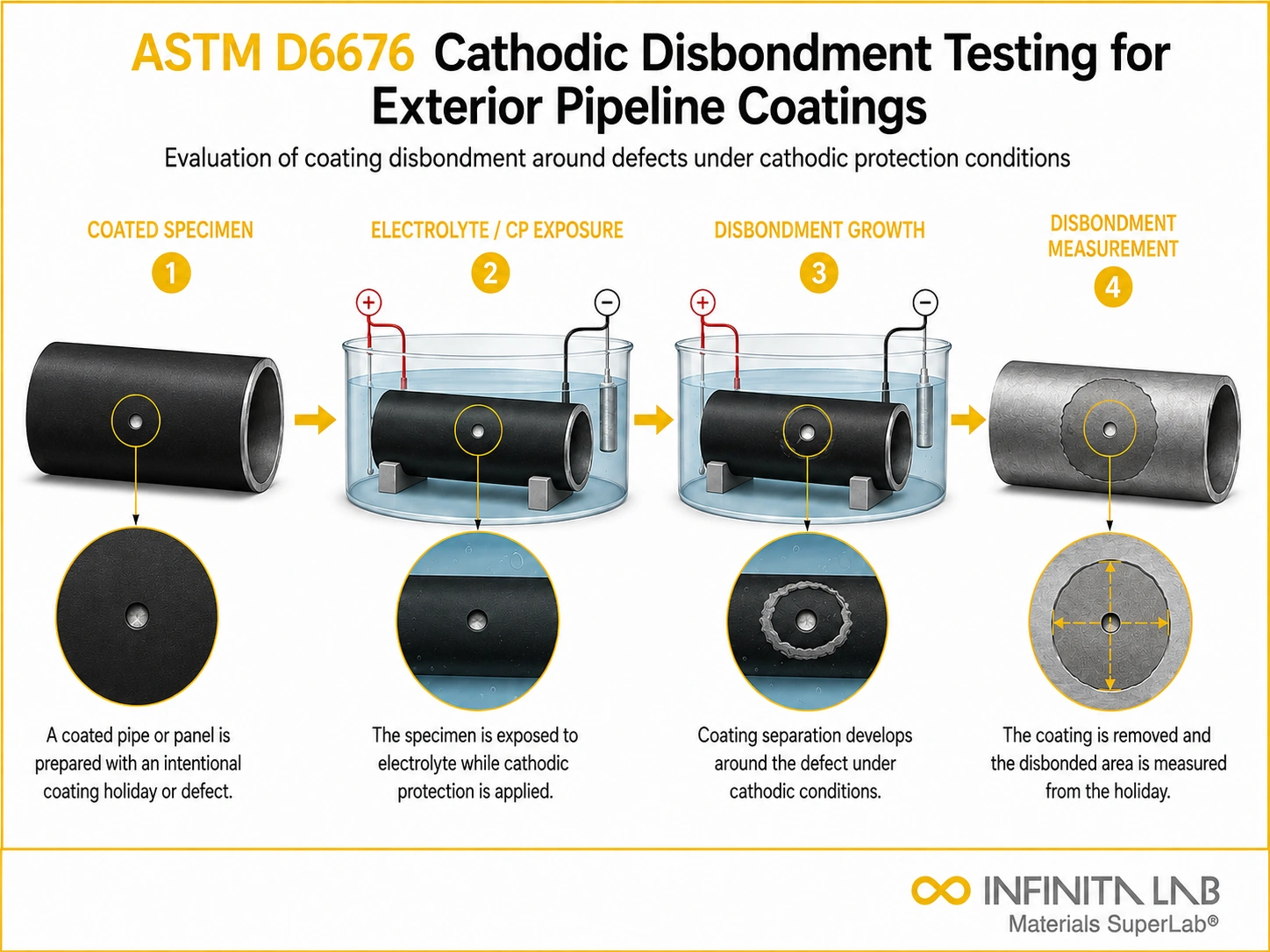
ASTM D6676/D6676M is a standard test method for the cathodic disbondment of dielectric pipeline coatings. This test method provides a reference point by ensuring that all dielectric coatings will, to some degree, debond when exposed to cathodic protection.
The test measures the electric current flow as a relative indicator of the coating area requiring protection against corrosion. ASTM D6676/D6676M enables comparison of different coating systems based on their resistance to disbondment.

Applications and Benefits of ASTM D6676 Cathodic Disbondment Pipeline Coating Testing
Scope
ASTM D6676/D6676M evaluates:
- Cathodic disbondment resistance of pipeline coatings
- Comparative performance of coating systems
- Size of the disbonded area from artificial holidays
- Electrical current flow during polarization
- Coating integrity under corrosive conditions
The method applies to dielectric coatings used for pipeline protection.
Applications
- Pipeline coating qualification
- Corrosion protection assessment
- Oil and gas pipeline testing
- Quality control of protective coatings
- Coating system comparison
- Research and development
- Regulatory compliance testing
Benefits
- Provides standardized baseline data
- Enables coating performance comparison
- Supports coating selection decisions
- Improves corrosion protection strategies
- Enhances pipeline reliability
- Facilitates quality assurance
Our ASTM D6676 Testing Procedure
Specimen Preparation & Thickness Measurement
Coated pipe sections are selected, sealed, and the coating thickness is measured.
1Electrical & Electrolyte Setup
The specimen is connected to the power supply, and the test vessel is filled with electrolyte; pH is recorded.
2Test Execution & Monitoring
The solution is circulated, an electrical current is applied, and measurements are recorded daily.
3Data Collection
Polarization behaviour and current flow are observed and documented.
4ASTM D6676 Test Parameters and Requirements
| Parameter | Details |
|---|---|
| Applicable Materials | Dielectric pipeline coatings |
| Specimen Type | Coated pipe sections |
| Test Medium | Electrolyte solution |
| Output Units | mm, mm² |
| Measured Outputs | Disbonded area, ECD |


- Power supply
- Electrolytic test vessel
- pH meter
- Thickness gauge
- Electrical measuring instruments
- Circulation bath system
- Data acquisition tools
Equipment and Instrumentation Used for ASTM D6676 Testing
What You Receive: Test Report, Data, and Certification
- Equivalent circle diameter (ECD) values
- Disbonded area measurements
- Daily electrical readings
- Coating performance comparison
ASTM D6676 Cathodic Disbondment Pipeline Coating FAQs
ASTM D6676 evaluates the resistance of exterior pipeline coating systems to cathodic disbondment under accelerated conditions. It is intended to compare coating performance when steel pipe is exposed to elevated internal temperatures and cathodic protection.
The method is applicable to electrically insulating (dielectric) coating systems applied to the exterior of steel pipe. Testing can be performed on coated pipe sections, specimens cut from coated pipe, or suitable flat-plate specimens.
Interior heating creates a temperature gradient across the pipe wall and coating, simulating conditions encountered when pipelines carry heated media such as oil or gas while the exterior is exposed to a cooler environment. This accelerates conditions that can contribute to cathodic disbondment.
Evaluation includes physical examination of the coating and monitoring of the electrical current drawn by the test specimen. Physical assessment focuses on changes in coating adhesion and the extent of disbonded or reduced-adhesion areas.
ASTM D6676 provides accelerated, comparative information about a coating's ability to maintain adhesion and resist cathodic disbondment under elevated-temperature service conditions. The results can support coating selection, qualification, quality control, and pipeline corrosion-protection programs.
Why Choose Infinita Lab for Cathodic Disbondment Pipeline Coating Testing
At the core of this breadth is our network of 2,000+ accredited laboratories across the USA, offering access to over 10,000 testing methods and analytical services. From advanced materials characterization (SEM, TEM, RBS, XPS) to mechanical, chemical, environmental, biological, and standardized ASTM/ISO-compliant testing, we deliver unmatched flexibility, specialization, and scale. You are never limited by geography, facility, or methodology — Infinita Lab connects you to the right expertise and testing solution, every time.

Need ASTM D6676 Cathodic Disbondment Pipeline Coating Testing You Can Rely On?
Send query us at hello@infinitalab.com or call us at (888) 878-3090 to learn more about our services and how we can support you.



Request a Quote
Submit your material details and receive testing procedures, pricing, and turnaround time within 24 hours.
 Quick Turnaround and Hasslefree process
 Confidentiality Guarantee
 Free, No-obligation Consultation
 100% Customer Satisfaction
