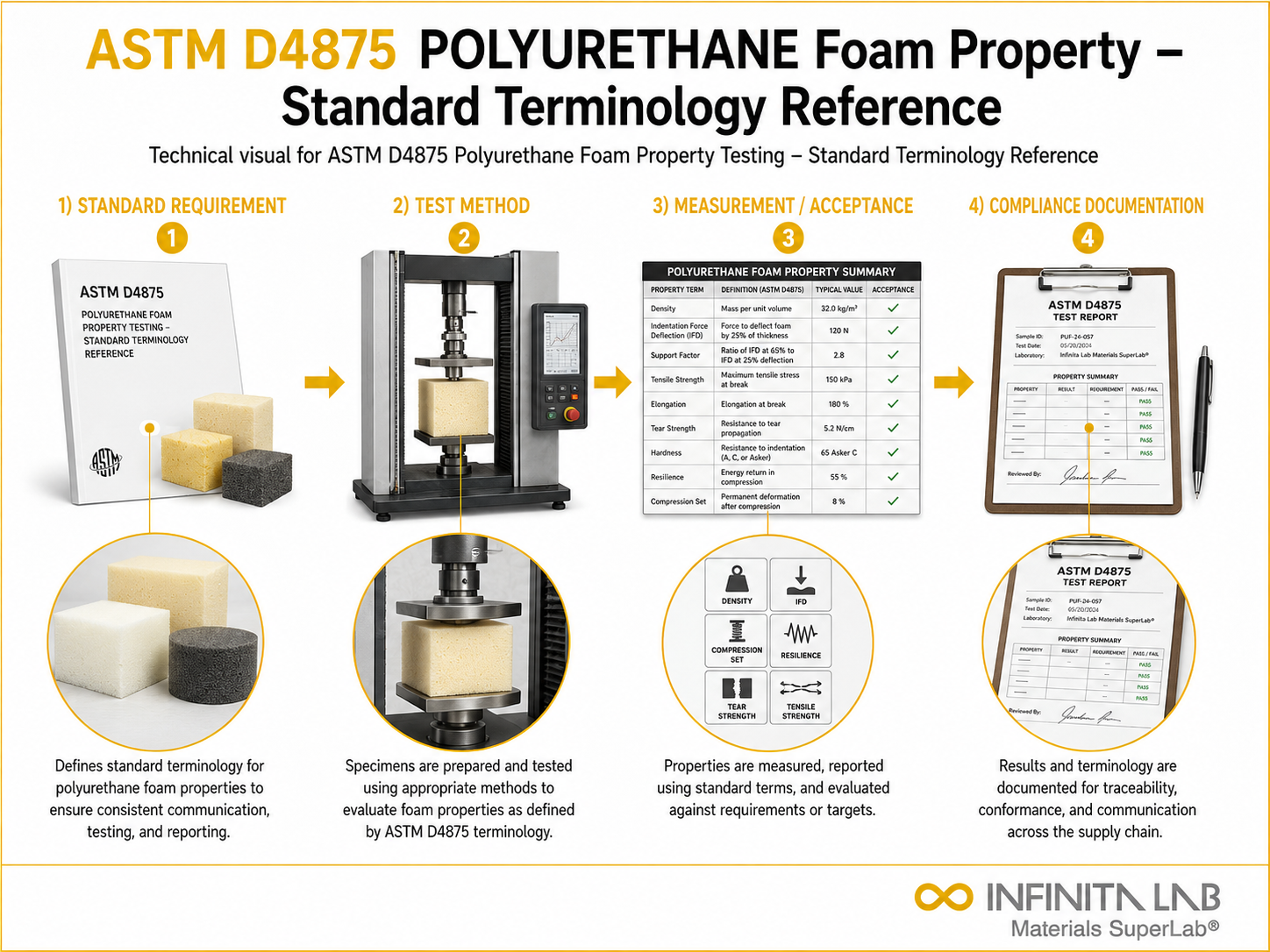


What Is ASTM D4875 Polyurethane Foam Terminology?
ASTM D4875 is the foundational terminology standard for the polyurethane industry, establishing standardized definitions for the vocabulary used in the characterization, testing, and specification of polyurethane raw materials and flexible polyurethane foam products. Clear and consistent terminology is essential for effective communication between polyol and isocyanate suppliers, foam producers, equipment manufacturers, end users, test laboratories, and regulatory authorities.
Without a common reference vocabulary, ambiguities in technical documents — such as purchase orders, test reports, quality standards, and regulatory submissions — can lead to misinterpretation, incorrect formulations, and inconsistent test results. ASTM D4875 eliminates this risk by providing agreed-upon definitions for terms spanning polyol chemistry, isocyanate types and functionality, foam processing parameters, physical and mechanical foam properties, and analytical test method concepts. The standard is periodically reviewed and updated to reflect advances in polyurethane chemistry and technology.

Applications and Benefits of ASTM D4875 Polyurethane Foam Terminology Testing
Scope
ASTM D4875 defines terminology covering:
- Polyol types (polyether, polyester, graft polyols, natural oil polyols, copolymer polyols)
- Isocyanate types and structures (MDI, TDI, polymeric MDI, aliphatic isocyanates)
- Foam processing parameters (cream time, gel time, rise time, tack-free time, demold time)
- Physical and mechanical foam properties (density, indentation force deflection, compression set, resilience, cell structure)
- Chemical characterization terms (hydroxyl number, isocyanate index, NCO content, equivalent weight, functionality)
- Equipment and processing nomenclature (impingement mixing, high-pressure metering, slabstock, molded foam)
Applications
- Polyurethane foam manufacturing quality management systems
- Raw material procurement specifications and purchase orders
- Development and revision of ASTM polyurethane test methods
- Regulatory and compliance documentation for PU materials
- Technical publications, patents, and intellectual property documents
- International harmonization of polyurethane terminology with ISO standards
- Training and education programs in polyurethane technology
Benefits
- Eliminates terminology ambiguity in polyurethane technical communication
- Ensures consistent interpretation of test method procedures and results
- Supports accurate specification writing for polyol and isocyanate procurement
- Facilitates cross-border and cross-laboratory technical understanding
- Reduces errors arising from terminology misinterpretation in formulation and processing
- Provides a definitive reference foundation for all related ASTM polyurethane standards
Our ASTM D4875 Testing Procedure
Terminology Reference
Standard is consulted to confirm the correct definition of a term prior to use in specifications, reports, or standards.
1Nomenclature Adoption
Defined terms are incorporated into test methods, purchase orders, quality documents, and technical reports.
2Harmonization
Terminology is cross-referenced with ISO and other international polyurethane industry standards for global alignment.
3Revision and Update
Terms are periodically reviewed by ASTM Committee D20 and updated as new materials, processes, and test methods emerge.
4ASTM D4875 Test Parameters and Requirements
| Parameter | Details |
|---|---|
| Standard Type | Terminology (definitions and nomenclature) |
| Governing Committee | ASTM Committee D20 on Plastics |
| Scope | Polyurethane raw materials and flexible foam |
| Applicable Industries | Polyurethane manufacturing, foam processing, adhesives, coatings, sealants |
| Output | Standardized term definitions for consistent industry use |
| Related Standards | ASTM D3574, D4274, D4672, D4878, D4877, D4889 |


- Polymer characterization instruments
- Data analysis systems
- Laboratory reporting systems
- Material evaluation tools
Equipment and Instrumentation Used for ASTM D4875 Testing
What You Receive: Test Report, Data, and Certification
- Standardized terminology reference for polyurethane raw material systems
- Consistent vocabulary foundation for test reports and quality specifications
- Basis for accurate cross-laboratory and cross-supplier communication
- compliance report
ASTM D4875 Polyurethane Foam Terminology FAQs
ASTM D4875 determines polymerized ethylene oxide content in polyether polyols. It evaluates chemical composition, helping control reactivity, hydrophilicity, and performance of polyols used in polyurethane applications.
Key parameters include sample preparation, analytical technique such as chromatography, calibration standards, and temperature control. Controlled conditions ensure accurate measurement of ethylene oxide content in polyol samples.
The test measures percentage of polymerized ethylene oxide present. Results indicate composition and influence processing characteristics and final properties of polyurethane products.
ASTM D4875 applies to polyether polyols used in polyurethane foams, coatings, adhesives, sealants, and elastomers where ethylene oxide content affects performance and functionality.
ASTM D4875 results depend on analytical accuracy and sample preparation. Interferences or improper calibration may affect results, requiring additional methods for comprehensive chemical characterization.
Why Choose Infinita Lab for Polyurethane Foam Terminology Testing?
At the core of this breadth is our network of 2,000+ accredited laboratories across the USA, offering access to over 10,000 testing methods and analytical services. From advanced materials characterization (SEM, TEM, RBS, XPS) to mechanical, chemical, environmental, biological, and standardized ASTM/ISO-compliant testing, we deliver unmatched flexibility, specialization, and scale. You are never limited by geography, facility, or methodology — Infinita Lab connects you to the right expertise and testing solution, every time.

Looking for an Accredited Partner for ASTM D4875 Polyurethane Foam Terminology Testing?
Send query us at hello@infinitalab.com or call us at (888) 878-3090 to learn more about our services and how we can support you.





