


ASTM D1712: Plastic Sulfide Staining Resistance Testing Services
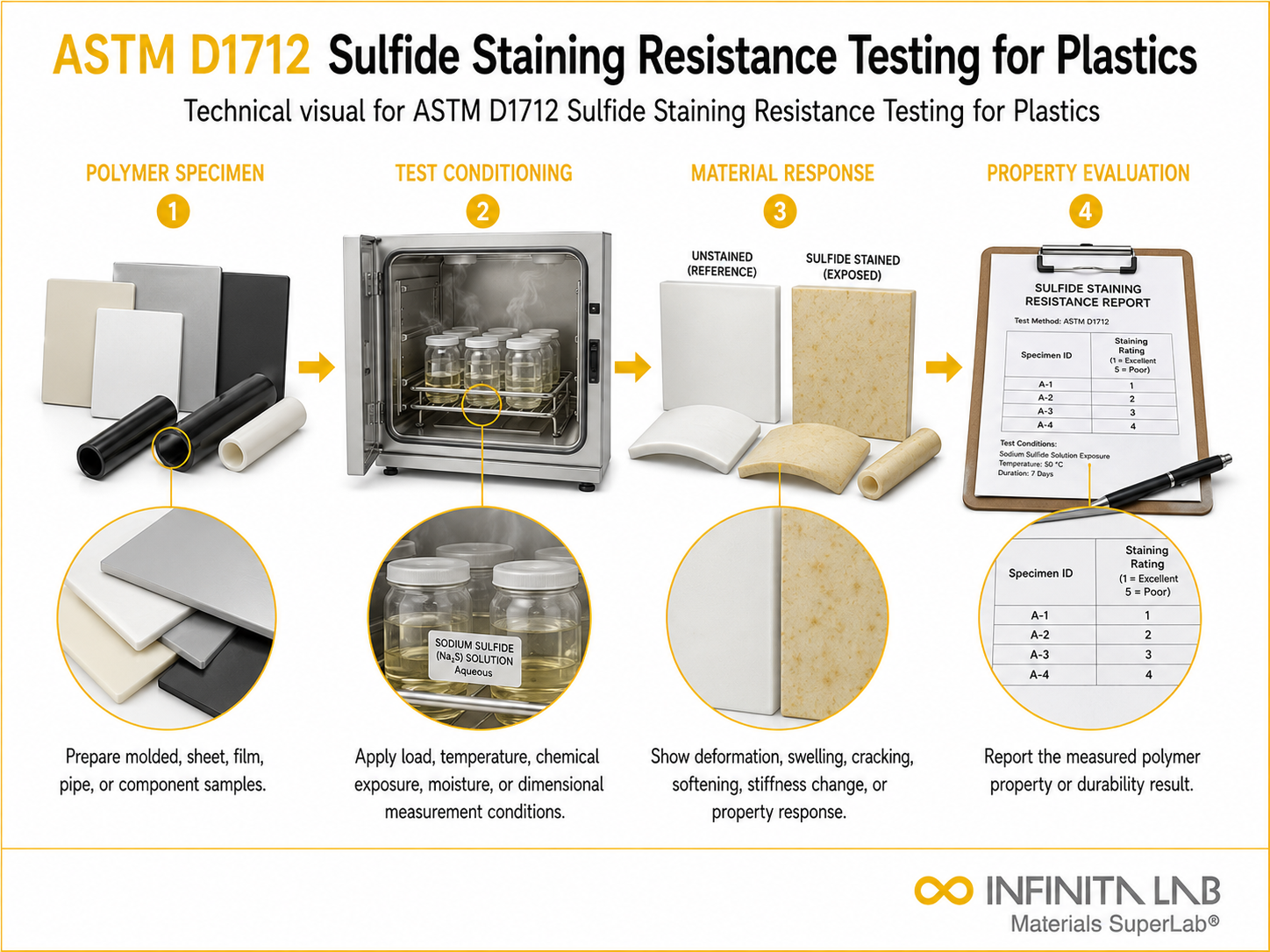
The method for determining how well plastics can tolerate staining when exposed to sulfides is described in this ASTM D 1712 standard practice guideline. It focuses on determining how resistant polymers are to stain when exposed to sulfides, providing information about their durability and color-changing potential.
TRUSTED BY


Get ASTM D1712 compliant results — request your plastic sulfide staining resistance testing quote
- Overview
- Scope, Applications, and Benefits
- Test Process
- Specifications
- Instrumentation
- Results and Deliverables
What Is ASTM D1712 Plastic Sulfide Staining Resistance?
ASTM D1712 evaluates the resistance of plastic materials to sulfide staining caused by exposure to sulfur-containing environments. The test determines whether plastics discolor or degrade under sulfide conditions.
This method is widely used in the electrical, automotive, and consumer product industries. It helps ensure that plastic materials maintain appearance and performance in environments where sulfur exposure may occur.

Applications and Benefits of ASTM D1712 Plastic Sulfide Staining Resistance Testing
Scope
ASTM D1712 assesses the susceptibility of plastics to sulfide staining by exposing specimens to controlled sulfide conditions. The test evaluates color stability and surface integrity.
The test evaluates:
- Resistance to sulfide-induced discoloration
- Color stability under chemical exposure
- Surface degradation of plastics
- Durability in sulfur-containing environments
- Suitability for industrial and consumer applications
Applications
- Electrical insulation materials
- Automotive plastic components
- Consumer plastic products
- Industrial polymer components
- Packaging materials
- Quality control in plastic manufacturing
Benefits
- Prevents discoloration in service environments
- Ensures long-term aesthetic quality
- Supports material selection and design
- Improves product durability
- Enables comparison of plastic materials
Our ASTM D1712 Testing Procedure
Sample Preparation
Plastic specimens are cleaned and prepared for testing.
1Sulfide Exposure
Samples are exposed to a sulfide-containing environment or solution.
2Reaction Period
Specimens are maintained under controlled time and temperature conditions.
3Data Recording & Evaluation
Surfaces are examined for discoloration or staining.
4ASTM D1712 Test Parameters and Requirements
| Parameter | Details |
|---|---|
| Applicable Materials | Thermoplastics and polymer materials |
| Test Environment | Sulfide gas or solution exposure |
| Test Temperature | ~20°C to 60°C |
| Exposure Time | ~1 hour to 24 hours |
| Evaluation Method | Visual inspection (color change) |
| Measured Outputs | Degree of staining or discoloration |


- Chemical exposure chamber
- Sulfide solution or gas setup
- Temperature control system
- Inspection tools and color comparison charts
- Sample handling equipment
- Data recording system
Equipment and Instrumentation Used for ASTM D1712 Testing
What You Receive: Test Report, Data, and Certification
- Sulfide staining resistance evaluation
- Color change analysis
- Surface degradation assessment
- Material performance comparison
- Test condition summary
- ASTM compliance report
ASTM D1712 Plastic Sulfide Staining Resistance FAQs
ASTM D1712 evaluates resistance of plastics to sulfide staining. It determines discoloration caused by sulfur-containing environments, helping assess material suitability for applications where appearance and surface integrity are critical.
Key parameters include sulfide exposure conditions, temperature, duration, and specimen preparation. Controlled environments ensure consistent evaluation of staining effects on plastic materials.
The test measures degree of discoloration or staining after exposure. Results are typically assessed visually or by comparison standards to determine resistance level.
ASTM D1712 is used for various plastic materials, including polyethylene, polypropylene, and other polymers used in consumer, industrial, and decorative applications.
ASTM D1712 relies on visual evaluation, which may introduce subjectivity. It may not fully represent long-term exposure conditions or complex environmental factors affecting staining behavior.
Why Choose Infinita Lab for Plastic Sulfide Staining Resistance Testing
At the core of this breadth is our network of 2,000+ accredited laboratories across the USA, offering access to over 10,000 testing methods and analytical services. From advanced materials characterization (SEM, TEM, RBS, XPS) to mechanical, chemical, environmental, biological, and standardized ASTM/ISO-compliant testing, we deliver unmatched flexibility, specialization, and scale. You are never limited by geography, facility, or methodology — Infinita Lab connects you to the right expertise and testing solution, every time.

Looking for an Accredited Partner for ASTM D1712 Plastic Sulfide Staining Resistance Testing?
Send query us at hello@infinitalab.com or call us at (888) 878-3090 to learn more about our services and how we can support you.



Request a Quote
Submit your material details and receive testing procedures, pricing, and turnaround time within 24 hours.
 Quick Turnaround and Hasslefree process
 Confidentiality Guarantee
 Free, No-obligation Consultation
 100% Customer Satisfaction
