


ASTM C1652: Flat Glass Optical Distortion Digital Photography Testing Services
The standard method ASTM C1652 covers the optical distortion measurement of heat-strengthened and fully tempered architectural glass substrates. Digital imaging methods are used to determine visual distortion. Both SI units and inch-pound units are used as standard units.
TRUSTED BY


Get ASTM C1652 compliant results — request your flat glass optical distortion digital photography testing quote
- Overview
- Scope, Applications, and Benefits
- Test Process
- Specifications
- Instrumentation
- Results and Deliverables
What Is ASTM C1652 Flat Glass Optical Distortion Digital Photography?
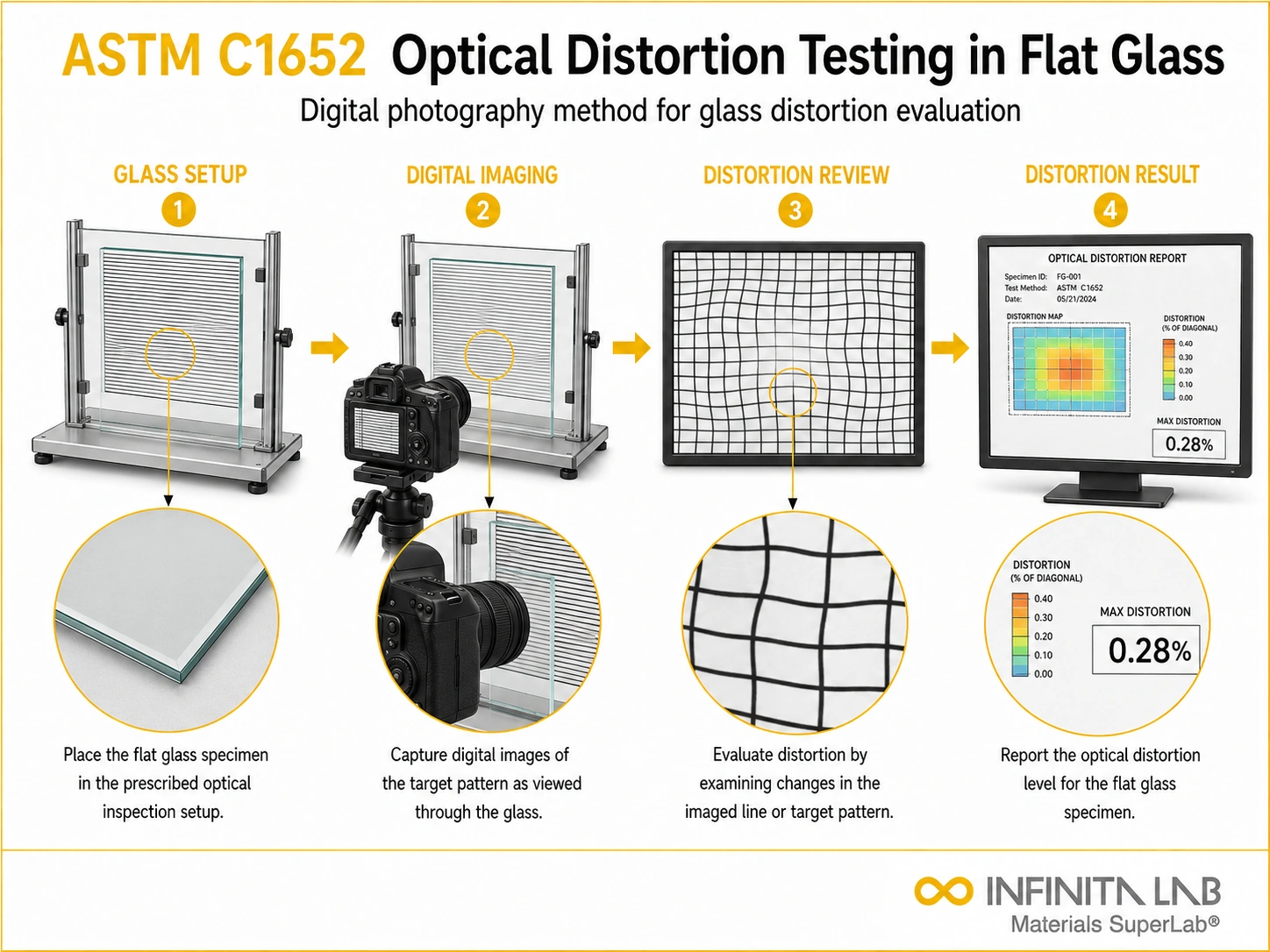
ASTM C1652 establishes a standardized method for measuring optical distortion in flat glass using digital photography techniques. It evaluates how light transmission through glass is affected by surface irregularities or internal stresses, which can distort visual perception and image clarity.
This method uses captured images of reference patterns to quantify distortion levels objectively. ASTM C1652 is widely used to ensure high optical quality in glass products, supporting manufacturers in detecting defects, improving processing conditions, and meeting strict visual performance requirements.

Applications and Benefits of ASTM C1652 Flat Glass Optical Distortion Digital Photography Testing
Scope
ASTM C1652 specifies procedures for assessing optical distortion in flat glass by analyzing digital images of patterns viewed through the glass under controlled conditions.
- Applicable to flat glass including tempered and laminated types
- Measures distortion using photographic image analysis
- Evaluates visual deformation of reference patterns
- Includes controlled lighting and imaging setup
- Ensures repeatable and objective measurements
- Supports quality control and acceptance criteria
Applications
- Architectural and façade glass
- Automotive windshields and windows
- Display and optical glass products
- Solar panel glass inspection
- Quality control in glass manufacturing
- Research and development of glass materials
Benefits
- Provides objective optical distortion measurement
- Eliminates subjective visual inspection errors
- Detects subtle surface and internal defects
- Enhances product visual quality and consistency
- Supports compliance with optical standards
- Enables efficient and repeatable testing
Our ASTM C1652 Testing Procedure
Setup Configuration
Arrange camera, lighting, and reference pattern under standardized conditions.
1Sample Positioning
Place the glass specimen between the camera and the reference pattern.
2Image Capture
Capture digital images of the pattern through the glass sample.
3Image Analysis
Analyze distortion by comparing captured image with reference pattern geometry.
4ASTM C1652 Test Parameters and Requirements
| Parameter | Details |
|---|---|
| Material Type | Flat glass (tempered, laminated, annealed) |
| Measurement Parameter | Optical distortion of transmitted image |
| Reference Pattern | Grid or line pattern |
| Imaging System | High-resolution digital camera |
| Lighting Condition | Controlled and uniform illumination |
| Analysis Method | Image processing and comparison |
| Test Environment | Controlled ambient conditions |
| Output Result | Quantified distortion values and visual assessment |


- High-resolution digital camera
- Reference grid or line pattern
- Controlled lighting system
- Image analysis software
- Tripod or fixed mounting system
- Data processing system
Equipment and Instrumentation Used for ASTM C1652 Testing
What You Receive: Test Report, Data, and Certification
- Quantitative optical distortion values
- Distortion maps and image analysis outputs
- Visual representation of distortion patterns
- Compliance with optical quality standards
- Comparative performance evaluation
- Detailed test report with images and data
ASTM C1652 Flat Glass Optical Distortion Digital Photography FAQs
ASTM C1652 is used to measure optical distortion in flat glass using digital photography. It evaluates how glass affects visual clarity by analyzing image deformation, helping manufacturers ensure high optical quality and compliance with visual performance requirements.
Optical distortion refers to the deformation of images when viewed through glass due to surface irregularities or internal stresses. It affects visual clarity and is critical in applications where accurate vision and aesthetics are important.
The test generates quantitative distortion values, visual distortion maps, and processed images. These outputs help evaluate glass quality, identify defects, and ensure compliance with optical performance standards.
Distortion mapping visually represents areas of optical irregularities across the glass surface. It helps identify localized defects, understand distortion distribution, and improve manufacturing processes for better product quality.
ASTM C1652 helps maintain consistent product quality by identifying optical defects, monitoring manufacturing processes, and ensuring compliance with industry standards, ultimately improving reliability and customer satisfaction.
Why Choose Infinita Lab for Flat Glass Optical Distortion Digital Photography Testing?
At the core of this breadth is our network of 2,000+ accredited laboratories across the USA, offering access to over 10,000 testing methods and analytical services. From advanced materials characterization (SEM, TEM, RBS, XPS) to mechanical, chemical, environmental, biological, and standardized ASTM/ISO-compliant testing, we deliver unmatched flexibility, specialization, and scale. You are never limited by geography, facility, or methodology — Infinita Lab connects you to the right expertise and testing solution, every time.

Looking for an Accredited Partner for ASTM C1652 Flat Glass Optical Distortion Digital Photography Testing?
Send query us at hello@infinitalab.com or call us at (888) 878-3090 to learn more about our services and how we can support you.



Request a Quote
Submit your material details and receive testing procedures, pricing, and turnaround time within 24 hours.
 Quick Turnaround and Hasslefree process
 Confidentiality Guarantee
 Free, No-obligation Consultation
 100% Customer Satisfaction
