


Steel
Steel testing is critical in verifying the strength, durability, and reliability of steel for use in construction, manufacturing, and industrial practice. Infinita Lab offers detailed testing to analyze mechanical, chemical, and metallurgical properties. Some of the important tests conducted include tensile, hardness, fatigue, Charpy impact, bend, microstructure, corrosion, weldability, chemical, and creep tests. The tests identify defects, confirm material performance, and meet industry requirements. By evaluating strength, toughness, ductility, and environmental and operable stress resistance of the steel, our service allows the manufacturers and engineers to choose appropriate steel grades, ensure product reliability, and guarantee safety and long-term performance.


Top Steel Testing Services
-
 ASTM E1820: Fracture Toughness Measurement — Complete Guide
 -
ASTM E21 Elevated Temperature Mechanical Testing Guide for Metallic Materials
-
ASTM E8 / E8M Tension Testing Complete Guide for Metallic Materials
-
ASTM B117 Salt Spray Test Procedure: Step-by-Step Overview Guide
-
Magnetic Particle Testing for Aerospace Materials: Method & Standards
-
ASTM A90 Zinc Coating Mass Test
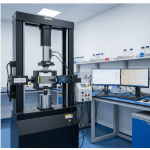
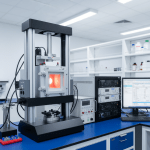
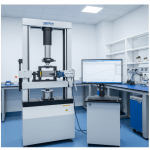



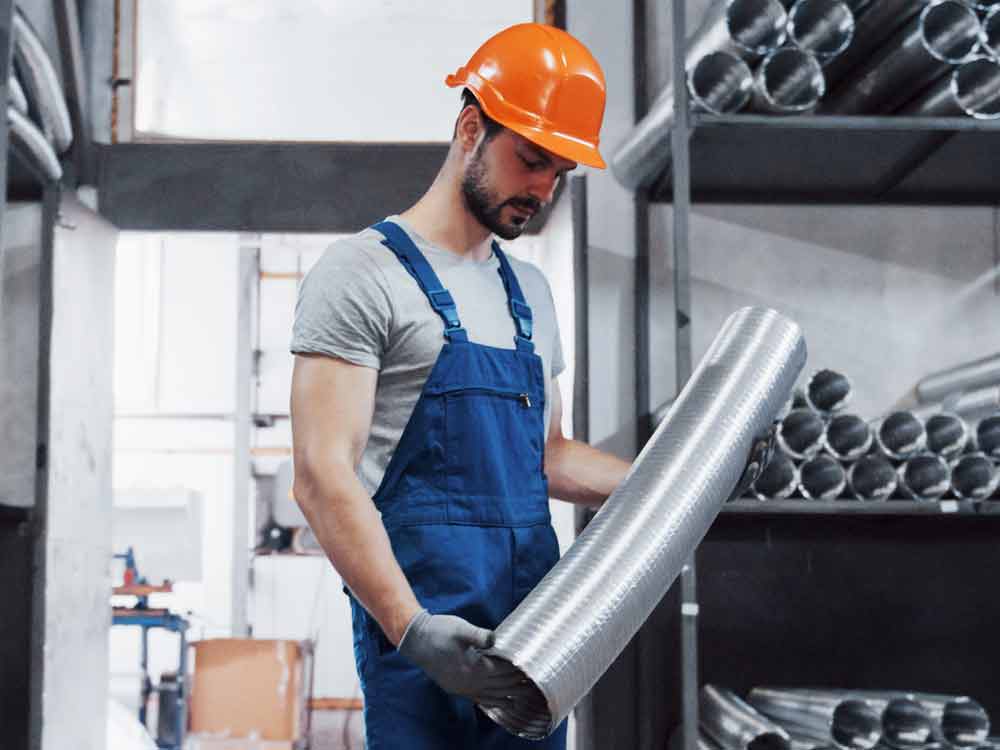
Introduction to Steel Testing Services
Steel is the world’s most widely used structural material, underpinning the construction, automotive, shipbuilding, energy, and aerospace industries. The mechanical, chemical, and microstructural properties of steel vary enormously across grades – from mild low-carbon steels to high-strength martensitic steels and austenitic stainless grades – making material testing essential for safe application, regulatory compliance, and failure prevention.
At Infinita Lab, we offer comprehensive assistance with steel testing, adhering strictly to industry standards and quality benchmarks. ASTM testing for iron and steel evaluates the chemical, mechanical, and metallurgical properties of all ferrous metals. From research and development and quality assurance to failure analysis and incoming material verification, our nationwide network of accredited laboratories delivers accurate, reliable, and fully traceable results under one roof.
Our Steel Testing Services
Mechanical Testing of Steel Products
Mechanical testing defines the fundamental load-carrying capacity, ductility, toughness, and deformation behaviour of steel – providing yield strength, tensile strength, elongation, reduction of area, and impact energy data essential for structural design allowables and material qualification.
Relevant ASTM Standards:
- ASTM A370 – The comprehensive reference standard for mechanical testing of steel products covering tensile, yield, elongation, Charpy impact, hardness, and bend testing across plates, bars, shapes, wire, and forgings. The primary standard referenced in virtually all structural and pressure-vessel steel product specifications.
- ASTM E8/E8M – Tensile testing of metallic materials measuring ultimate tensile strength, yield strength (0.2% proof stress), elongation at fracture, and reduction of area – the foundational mechanical test for steel at room temperature.
- ASTM E21 – Elevated-temperature tensile testing for steel and metallic materials, providing yield strength, tensile strength, and elongation data at service temperatures ranging from above ambient to those encountered in power generation, aerospace, and industrial equipment applications.
- ASTM A1058 – Mechanical testing of steel products in metric units, covering tension, bend, impact, and hardness tests for steel bars, plates, pipes, and structural shapes – aligning with metric units for international and construction-sector applications.
Hardness Testing
Hardness testing is the fastest and most widely used mechanical evaluation method for steel, providing an indirect measure of tensile strength, wear resistance, and heat-treatment response. Infinita Lab offers all major hardness methods applicable to steel – from large-grained castings and forgings to thin coatings and weld cross-sections.
Relevant ASTM Standards:
- ASTM E10 – Brinell hardness testing for castings, forgings, and rolled bar products, using a 10 mm tungsten carbide ball under a 3,000 kgf load to provide an average hardness value across a larger region – especially suited to materials with coarse or non-uniform grain structures.
- ASTM E18 – Rockwell hardness testing for heat-treated steel, finished components, and production quality control – rapid, with a clear scale readout, and invaluable for heat treatment verification and inspection of finished steel parts.
- ASTM E384 – Microindentation hardness testing (Vickers and Knoop) for case-hardened layers, weld heat-affected zones, thin coatings, and specific microstructural phases – providing highly localised hardness assessment where macro tests are not applicable.
- ASTM A956 – Leeb hardness testing of steel products, a dynamic or rebound method that determines hardness using the ratio of rebound velocity to impact velocity of a tungsten carbide ball – a non-destructive, portable field hardness test for large or installed steel components.
Charpy Impact & Toughness Testing
Charpy V-notch impact testing measures toughness – the ability of steel to absorb energy during fracture – and is mandated for structural steels in low-temperature service to verify that the ductile-to-brittle transition temperature is adequate for the intended application.
Relevant ASTM Standards:
- ASTM E23 – Charpy V-notch (and Izod) impact testing of metallic materials, measuring absorbed energy at defined test temperatures from −196°C to ambient. Mandatory for structural plates, pressure vessels, offshore platforms, and Arctic pipelines to confirm adequate low-temperature toughness.
Hardenability Testing
Hardenability defines the depth to which a steel can be hardened by quenching – a critical parameter for selecting the correct grade for heat-treated components such as shafts, gears, fasteners, and tooling. The Jominy end-quench test is the standard method for generating hardness-distance profiles that characterise steel hardenability.
Relevant ASTM Standards:
- ASTM A255 – Steel hardenability testing by the Jominy end-quench method, generating hardness-distance profiles to characterise the hardenability of bar and structural steel grades – the standard method for selecting heat-treatable steel grades and qualifying processes.
Chemical Composition Analysis
Verifying the chemical composition of steel is mandatory at incoming inspection and at each stage of the manufacturing process to confirm that the correct grade was supplied and that all elemental limits are within specification. Infinita Lab provides chemical composition testing using spark optical emission spectrometry (OES), wavelength-dispersive X-ray fluorescence (WDXRF), and combustion analysis.
Relevant ASTM Standards:
- ASTM E1019 – Combustion analysis for the determination of carbon, sulfur, nitrogen, and oxygen in steel, iron, nickel, and cobalt alloys – critical elements governing strength, toughness, and weldability.
- ASTM E572 – Wavelength-dispersive X-ray fluorescence spectrometry (WDXRF) for chemical analysis of stainless and alloy steel samples, appropriate for quality control in the production process and for ensuring that products satisfy specifications through rapid multi-element determination.
- ASTM E1086 – Spark atomic emission spectrometry (OES) for chemical composition analysis of stainless steels and other alloy steels, enabling rapid multi-element verification on the production floor and for incoming inspection.
Stainless Steel Testing
Stainless steels require specialised testing to verify their corrosion resistance, sensitisation susceptibility, and mechanical properties – in addition to standard mechanical qualification. Infinita Lab provides the full range of stainless steel evaluation services for austenitic, ferritic, martensitic, duplex, and precipitation-hardening grades.
Relevant ASTM Standards:
- ASTM A240 – Mechanical and chemical testing for stainless steel plate, sheet, and strip, including austenitic, ferritic, martensitic, and duplex grades, covering tensile, yield, elongation, hardness, and chemical composition testing for fabrication and pressure vessel applications.
- ASTM A262 – Intergranular corrosion susceptibility testing for austenitic stainless steels, using multiple practices (oxalic acid etch, ferric sulfate-sulfuric acid, nitric acid, copper-copper sulfate) to evaluate susceptibility to sensitisation-induced intergranular attack – essential for welded stainless steel structures in corrosive service.
- ASTM G48 – Pitting and crevice corrosion resistance testing for stainless steels and nickel-based alloys using ferric chloride solution, comparing the resistance of different grades and heat treatments to localised corrosion initiation.
Structural & Reinforcing Steel Testing
Structural steel and reinforcing bar (rebar) used in construction, bridges, and infrastructure must be tested to verify mechanical properties and bond performance before deployment in safety-critical structural applications.
Relevant ASTM Standards:
- ASTM A370 – Comprehensive mechanical testing for structural steel products, including plates, bars, shapes, wire, and forgings – the primary reference for tensile, impact, hardness, and bend test requirements in structural steel specifications.
- ASTM A944 – Bond strength testing of steel reinforcing bars, evaluating the bond between rebar and concrete through beam-end test specimens – critical for structural concrete design and rebar qualification in construction applications.
Steel Coating & Surface Protection Testing
Steel used in outdoor and corrosive environments is routinely protected by zinc coatings applied through hot-dip galvanising or electrodeposition. Coating testing verifies that the protective zinc layer meets thickness, adhesion, and coverage requirements to ensure long-term corrosion protection.
Relevant ASTM Standards:
- ASTM A123 – Hot-dip galvanised zinc coating testing for iron and steel products, measuring average zinc coating weight, minimum spot thickness, adherence, and appearance for structural steel, hardware, and fabricated steel products to confirm adequate corrosion protection.
- ASTM A90 – Zinc coating mass testing for galvanised steel products, providing the total zinc coating weight per unit area by stripping and weighing.
- ASTM B117 – Salt spray (fog) corrosion testing for steel and coated steel products, the most widely used accelerated corrosion qualification test for zinc-coated, painted, and plated steel components.
Metallographic Analysis & Microstructural Examination
Metallographic examination of steel reveals grain size, phase distribution, inclusion content, heat-treatment response, and manufacturing defects, directly supporting quality assurance, failure investigation, and process development.
Relevant ASTM Standards:
- ASTM E3 – Standard guide to the preparation of metallographic specimens for steel, covering sectioning, mounting, grinding, polishing, and etching for optical and electron microscopy.
- ASTM E112 – Determination of average grain size in steel by comparison, planimetric, and intercept methods – supporting quality control of heat treatment response and microstructural consistency.
- ASTM E45 – Inclusion rating for non-metallic inclusion content in wrought steels, evaluating oxide, sulfide, silicate, and globular oxide types by optical microscopy.
- ASTM E407 – Standard practice for microetching metals and alloys to reveal grain boundaries, phase distribution, and microstructural features in steel under optical microscopy.
Heat Treatment Verification
Heat treatment processes – annealing, quench and temper, case hardening, and solution annealing – must be verified to confirm that the intended microstructure and properties have been achieved, and that thermal processing equipment maintains the required temperature uniformity.
Relevant ASTM Standards:
- ASTM A991 – Temperature uniformity survey testing for heat treating furnaces and ovens used in steel processing, ensuring that thermal equipment maintains the required temperature uniformity for consistent metallurgical response across production loads.
- ASTM E18 – Rockwell hardness testing for post-heat-treatment verification, confirming that quench and temper, case hardening, and annealing processes have produced the intended hardness profile.
- ASTM E384 – Microindentation hardness traverses across case-hardened layers, weld heat-affected zones, and decarburized surfaces to verify the depth and uniformity of heat treatment.
Corrosion Testing for Steel
Steel in service is exposed to corrosive environments that can initiate and propagate surface corrosion, pitting, and galvanic attack. Corrosion testing evaluates the resistance of steel and its protective coatings to salt fog, pitting, and electrochemical degradation.
Relevant ASTM Standards:
- ASTM B117 – Salt spray (fog) accelerated corrosion testing for steel and coated steel, the most widely used standardised corrosion test for evaluating the corrosion protection provided by coatings, platings, and surface treatments on steel substrates.
- ASTM A262 – Intergranular corrosion testing for stainless steel components to determine whether sensitisation caused stress corrosion cracking or corrosion-related failure.
- ASTM G48 – Pitting and crevice corrosion resistance testing for stainless and high-alloy steel grades in chloride-containing environments.
- ASTM G5 – Standard electrochemical potentiodynamic polarisation for corrosion rate and behavior characterization of steel and stainless steel in aggressive environments.
Frequently Asked Questions
Steel material testing is a crucial process that evaluates the properties, characteristics, and performance of steel materials used in various industries. It involves specialized tests and analyses to determine the mechanical, physical, chemical, and metallurgical properties of steel specimens. Steel material testing is essential for various industries, including construction, manufacturing, automotive, aerospace, and infrastructure development. Performance optimization in steel is another benefit that makes it the best choice for all the steel industries. Infinita Lab ensures that the steel used in industrial applications meets industry-specific quality and performance criteria, ensuring high-quality steel is used in products and structures.
Steel material testing is a vital process in various industries that ensures high-quality and safe products. It verifies the quality and properties of steel, ensuring it meets specified standards and requirements. Mechanical properties assessment, such as tensile, hardness, and impact testing, evaluate the steel’s ability to withstand loads and impacts. These properties are essential for determining the steel’s ability to withstand loads and impacts.
Infinita Lab plays an essential role in manufacturing and construction processes, contributing to product quality and safety, and reducing the risk of failures, accidents, and liabilities while ensuring steel-based products meet or exceed industry standards and safety requirements.
Infinita Lab is a trusted partner for businesses in the steel material testing industry, offering comprehensive and accurate testing services tailored to specific requirements. An array of 2000 specialized tests and a team of skilled technicians and engineers – well-versed in industry standards and methodologies make Infinita Lab a trusted choice with Fortune 500 companies.
Infinita Lab’s material testing contributes to enhanced product safety by identifying potential weaknesses or defects in steel materials, reducing the risk of safety incidents and accidents. They also offer environmental testing services to assess a steel’s resistance to corrosive or harsh environments, contributing to environmentally responsible product design and material selection. Partnering with Infinita Lab provides peace of mind, knowing that your steel materials undergo rigorous testing and evaluation by industry experts, reducing risks associated with material quality and safety.
Infinita Lab is your trusted partner for urgent steel testing requirements and customized projects. Our dedicated team excels in delivering swift and accurate results, ensuring your time-sensitive projects meet deadlines without compromising on quality. With cutting-edge technology and a commitment to precision, we tailor our steel testing services to accommodate unique project needs. Whether it’s a rush order or specialized testing requirements, Infinita Lab is equipped to handle diverse challenges, providing reliable and efficient steel testing solutions. Count on us for responsive and high-quality testing services to meet your custom project needs.
Infinita Lab achieves streamlined testing processes through a meticulous and technology-driven approach. Our process begins with a comprehensive analysis of client requirements, allowing us to tailor testing methodologies accordingly. Leveraging cutting-edge equipment, we automate wherever possible to enhance efficiency and accuracy. Continuous optimization and adherence to industry best practices ensure a seamless flow from sample intake to result delivery. Our experienced team employs a collaborative approach, fostering clear communication and swift decision-making. Infinita Lab’s commitment to process innovation ensures that testing procedures are not only efficient but also adaptable to meet evolving client needs, setting us apart in delivering precision and reliability.
Read Our Blogs and Research Papers
In-depth examination of genuine material testing solutionsResidual Stress: Types, Origins & Measurement Methods Explained
Residual Stress: Types, Origins & Measurement Methods Explained
What Is Residual Stress? Residual stress is the stress state that remains in a material or component in the absence...
Read ArticleTypes of Vibration Testing: Sinusoidal, Random, SRS & Swept Methods

Types of Vibration Testing: Sinusoidal, Random, SRS & Swept Methods
Vibration testing is one of the most critical environmental qualification tests, validating that products withstand the dynamic mechanical stresses encountered...
Read ArticleIs Polypropylene Safe? Material Testing Insights & Chemical Properties

Is Polypropylene Safe? Material Testing Insights & Chemical Properties
Polypropylene (PP) is one of the most widely used thermoplastics in the world, appearing in packaging, automotive components, textiles, and...
Read Article
Get your Ceramic Material testing done from the largest network of accredited labs in the USA
We are a material testing lab with a vast network of accredited labs across the country. Our state-of-the-art equipment and experienced team provide accurate and timely testing services to meet the unique needs of our clients. Partner with us for reliable material testing solutions.
 Quick Turnaround and Hasslefree process
- Confidentiality Guarantee
- Free, No-obligation Consultation
- 100% Customer Satisfaction


