


Composite
Infinita Lab specializes in Composite Testing, offering over 2000 material tests in the U.S. for strength, durability, and performance analysis Trust our expertise for detailed, precise testing results, integral to the success and reliability of your composite applications.


Top Composite Testing Services
-
 Thermogravimetric Analysis (TGA): A Complete Guide to Methods & Applications
 -
 Differential Scanning Calorimetry (DSC): A Complete Guide
 -
ASTM E595: Outgassing Testing — Total Mass Loss & Volatile Condensables
-
ASTM C177: Thermal Conductivity of Insulating Materials — Method Guide
-
ASTM D256 Izod Impact Resistance Testing Guide for Plastic Materials
-
ASTM D4236 Art Material Labeling Guide for Chronic Health Safety

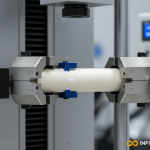



Introduction to Composite Testing Services
Composite materials, including fibre-reinforced polymers such as CFRP and GFRP, sandwich structures, ceramic matrix composites, and hybrid laminates, constitute the structural foundation for contemporary applications in the aerospace, automotive, marine, sports, and wind energy sectors. Given their superior performance relative to conventional metals, rigorous and reliable testing protocols are imperative.
Systematic testing is critical to ensuring the structural integrity of these composites in high-stakes environments, ranging from lightweight electric vehicle frames to primary aerospace components. Due to the vast array of possible combinations involving resins, reinforcements, and manufacturing techniques, predicting in-service behaviour necessitates comprehensive empirical evaluation. Infinita Lab delivers high-precision analytical data that empowers engineers to establish design allowables, validate material specifications, and ensure full adherence to regulatory standards.
Our Composite Material Testing Services
Tensile Testing
Tensile testing is the foundational mechanical characterisation for fibre-reinforced composite laminates, providing ultimate tensile strength, Young’s modulus, Poisson’s ratio, and failure strain data directly used for structural design allowables, material qualification, and comparative evaluation.
Relevant ASTM Standards:
- ASTM D3039 – Tensile testing for polymer matrix composites reinforced with continuous fibres (CFRP, GFRP), measuring ultimate tensile strength, modulus of elasticity, and Poisson’s ratio for aerospace, automotive, and structural composite laminates. The primary tensile characterisation test for fibre-reinforced composites.
Compressive Strength Testing
Compressive failure is a critical and often governing failure mode for fibre-reinforced composites in structural applications. Accurate measurement of compressive properties requires careful specimen support to prevent buckling. Infinita Lab offers multiple validated compressive test configurations to match the composite system and application.
Relevant ASTM Standards:
- ASTM D6641 – Combined loading compression (CLC) testing for compressive properties of polymer matrix composites, measuring compressive strength and modulus of CFRP, GFRP, and other fibre-reinforced laminates – the preferred compressive test method for aerospace and structural qualification per current industry consensus.
- ASTM D3410 – IITRI (Illinois Institute of Technology Research Institute) compressive strength testing for composite materials, providing an alternative compressive test configuration that applies shear-loaded end tabs to achieve specimen failure within the gauge section.
Flexural Testing
Flexural testing characterises the bending stiffness and strength of composite laminates under out-of-plane loading – important for composite panels, beams, and structural components subjected to bending loads in service.
Relevant ASTM Standards:
- ASTM D7264 – Flexural properties of polymer matrix composites by three-point and four-point loading, providing flexural strength and modulus data for CFRP, GFRP, and other laminates under bending, with two test procedures available for comparison across different laminate configurations.
- ASTM D6272 – Four-point bend flexural testing for polymer matrix composites, measuring flexural strength and modulus with a uniform moment field between the load points – preferred for woven fabric laminates and composites, where the maximum stress region must be extended to reveal failure accurately.
In-Plane Shear Testing
In-plane shear properties define the response of composite laminates to loads that induce fibre-matrix interface shear – governing failure in off-axis loading, torsion, and panel buckling scenarios. Shear modulus and shear strength are essential design allowables for structural composite applications.
Relevant ASTM Standards:
- ASTM D3518 – In-plane shear stress-strain response testing for polymer matrix composites using a ±45° laminate tensile specimen to determine in-plane shear modulus and shear strength of CFRP and GFRP laminates for structural design and material characterisation.
Interlaminar Shear Strength Testing
Interlaminar shear strength (ILSS) is the most commonly monitored quality-control parameter for composite laminates, reflecting the strength of the fibre-matrix interface and the quality of laminate processing. Short beam shear testing provides rapid ILSS data for production process control and incoming inspection.
Relevant ASTM Standards:
- ASTM D2344 – Short beam shear testing for apparent interlaminar shear strength (ILSS) of polymer matrix composites, providing a rapid quality check for CFRP, GFRP, and thermoplastic composite laminates for production process control and incoming inspection.
Interlaminar Fracture Toughness Testing
Delamination is the primary internal damage mode in laminated composites. Mode I interlaminar fracture toughness testing quantifies the resistance of a composite laminate to delamination propagation under opening-mode loading – critical data for damage-tolerant structural design in aerospace and automotive applications.
Relevant ASTM Standards:
- ASTM D5528 – Mode I interlaminar fracture toughness (GIc) testing for continuous fibre-reinforced polymer matrix composites using the double cantilever beam (DCB) method, measuring delamination resistance under tensile opening conditions – critical for structural integrity and durability assessment of CFRP, GFRP, and thermoplastic composite laminates.
Constituent Content & Void Analysis
The mechanical properties of a composite laminate depend directly on the fibre volume fraction, resin content, and void content – the three fundamental material parameters that define whether the manufactured part meets its design specification. Constituent content analysis is essential for manufacturing process control and quality assurance.
Relevant ASTM Standards:
- ASTM D3171 – Constituent content testing for composite materials by digestion, ignition, and image analysis methods, determining fibre volume fraction, resin content, and void content for CFRP, GFRP, and ceramic matrix composites – the primary standard for composite process and quality control.
- ASTM D2734 – Void content testing for fibre-reinforced plastics by digestion and theoretical density comparison, evaluating porosity in CFRP, GFRP, and woven composite laminates to assess cure quality and predict mechanical property degradation. High void content significantly reduces composite strength and durability.
Sandwich Structure Testing
Sandwich composites – consisting of stiff, strong face sheets bonded to lightweight cores of honeycomb, foam, or balsa – are widely used in aerospace, marine, wind energy, and transportation for their exceptional bending stiffness-to-weight ratio. Infinita Lab provides the full suite of sandwich core and panel mechanical tests for core material qualification and panel design allowables.
Relevant ASTM Standards:
- ASTM C365 – Flatwise (through-thickness) compressive strength and modulus testing for sandwich construction core materials, evaluating out-of-plane compressive properties of honeycomb, foam, and balsa cores for aerospace, marine, and structural composite panel design.
- ASTM C297 – Flatwise tensile strength testing for sandwich constructions, measuring the tensile strength of the face-sheet-to-core bond – critical for verifying core-to-face bonding stability and load transfer in honeycomb and foam core sandwich panels under through-thickness tensile loading.
- ASTM C271 – Density testing for sandwich core materials, determining the fundamental physical property that governs specific strength and stiffness of honeycomb and foam cores used in composite sandwich panels.
- ASTM D7336 – Static energy absorption properties testing for honeycomb sandwich core materials, evaluating the energy absorption capacity of honeycomb cores under crushing loads – critical for automotive crashworthiness and impact protection applications.
Thermal Analysis of Composites
Composite matrix systems and fibre-matrix interfaces must be characterised for glass transition temperature, cure state, thermal stability, and decomposition behaviour – providing essential data for process development, service temperature specification, and quality control of incoming prepreg and cured laminate materials.
Relevant ASTM Standards:
- ASTM D3418 – Differential Scanning Calorimetry (DSC) for composite matrix polymers, measuring glass transition temperature (Tg), degree of cure, heat of cure, and oxidative induction time – essential for cure process development and quality verification of thermoset and thermoplastic composite matrices.
- ASTM E1131 – Thermogravimetric Analysis (TGA) for composite materials, providing decomposition onset temperature, thermal stability, and filler or fibre content data for composite compound identification, quality assurance, and service temperature characterisation.
- ASTM E1640 – Dynamic Mechanical Analysis (DMA) for composite materials, measuring storage modulus, loss modulus, and glass transition temperature across the service temperature range – providing viscoelastic stiffness data essential for elevated-temperature composite design.
Outgassing Testing for Composites
Composite materials used in spacecraft, satellite structures, and vacuum environments must meet strict outgassing requirements to prevent contamination of sensitive optical and electronic components. Outgassing testing verifies total mass loss (TML) and the collection of volatile condensable materials (VCM) under simulated space vacuum conditions.
Relevant ASTM Standards:
- ASTM E595 – Outgassing testing for total mass loss (TML) and collected volatile condensable materials (CVCM) from composite materials in a simulated space environment – mandatory for composites used in spacecraft structures, satellite components, optical systems, and any vacuum application where material outgassing could compromise performance.
Frequently Asked Questions
Infinita Lab offers a wide range of composite material testing services that are specifically designed to satisfy the various requirements of the construction, automotive, aerospace, and other industries. Our services give organizations vital information about the quality, strength, and performance of composite materials. These range from mechanical testing, such as tensile and flexural assessments, to non-destructive testing (NDT), such as ultrasonic and X-ray inspections.
Your company and businesses can guarantee that composite materials fulfill regulatory requirements and industry standards and improve the overall durability and dependability of your goods by utilizing our testing knowledge. This improves your competitive edge in the market and helps with quality assurance while also optimizing manufacturing processes and cutting expenses.
Yes, Infinita Lab can customize Composite Testing services to meet specific industry needs. Our expansive network, collaborating with various specialized material testing laboratories across the U.S., enables us to offer over 2000 tests, including tailored solutions for diverse industries. This collaborative approach ensures that we can adapt our testing services to specific requirements, whether for aerospace, automotive, construction, or other sectors. Infinita Lab’s commitment to quality and efficiency, combined with our ability to customize services, provides clients with precise, reliable testing outcomes, aligning perfectly with their unique industry standards and objectives.
For composite material testing, our laboratory is the best option because we are dedicated to accuracy, dependability, and customer satisfaction. We have an extensive network of laboratories across the US. We offer 2000 specialized tests that cater to all specific needs of material testing. With state-of-the-art equipment and knowledgeable staff about composite materials, we provide an extensive range of testing services that address non-destructive, mechanical, and thermal aspects. Fortune 500 companies trust us for their quality testing services.
Our adherence to industry standards, involvement in proficiency testing programs, and application of strict quality control procedures demonstrate our commitment to quality assurance. Furthermore, we recognize the value of prompt and economical solutions, making sure that our clients obtain precise outcomes without sacrificing effectiveness. By selecting our lab, you collaborate with a reputable partner committed to bolstering your company’s success through accurate and trustworthy composite material testing.
Composite material testing is an essential part of improving the robustness and dependability of products in a variety of sectors. By putting composite materials through rigorous evaluations like impact, fatigue, and environmental exposure testing, companies may learn vital information about how the materials will function in practical situations. With the use of this information, businesses and industries can choose composite materials that are resistant to the unique difficulties posed by the applications for which they are designed, guaranteeing that their products will hold up over time.
Testing composite materials offers important insights into aspects like structural performance, fire resistance, and thermal stability—all of which are critical for applications where dependability and safety are critical. Businesses may increase product lifespans, proactively address possible flaws, and establish a reputation for providing reliable, high-quality solutions by investing in composite material testing.
Read Our Blogs and Research Papers
In-depth examination of genuine material testing solutionsIEC 60243 Dielectric Breakdown Strength Testing Services

IEC 60243 Dielectric Breakdown Strength Testing Services
Introduction IEC 60243 is the international standard for measuring the electrical breakdown strength of solid insulating materials. The engineers should...
Read ArticleISO 7765 Dart Drop Impact Testing for Plastic Films

ISO 7765 Dart Drop Impact Testing for Plastic Films
ISO 7765 The ISO 7765 test is widely used in the packaging industry to evaluate the puncture resistance of plastic...
Read ArticleVolatile Organic Compounds (VOC) Analysis: Methods, Standards & Applications
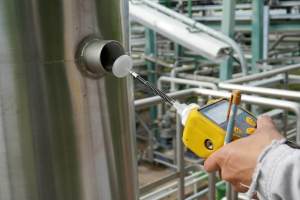
Volatile Organic Compounds (VOC) Analysis: Methods, Standards & Applications
What Is VOC Analysis? Volatile Organic Compound (VOC) analysis is the systematic identification and quantification of organic chemical compounds with...
Read Article
Get your Ceramic Material testing done from the largest network of accredited labs in the USA
We are a material testing lab with a vast network of accredited labs across the country. Our state-of-the-art equipment and experienced team provide accurate and timely testing services to meet the unique needs of our clients. Partner with us for reliable material testing solutions.
 Quick Turnaround and Hasslefree process
- Confidentiality Guarantee
- Free, No-obligation Consultation
- 100% Customer Satisfaction


