


Aerospace
Aerospace materials testing services are crucial for ensuring and validating that every material used in spacecraft and aircraft applications can withstand some of the extreme environments. Infinita Lab offers the best-in-class materials testing services for the aerospace industry. We offer a comprehensive testing service that encompasses a broad spectrum of materials analysis tests, alongside capabilities in both sample production and precision machining.


Top Aerospace Testing Services
-
 Effects of Material Interfaces on Thermal Transmission: Science & Testing
 -
ASTM D6653: Altitude Testing for Packaging Systems — Complete Guide
-
ASTM E111: Young’s Modulus Testing for Metals, Polymers & Composites
-
ASTM E1820: Fracture Toughness Measurement — Complete Guide
-
ASTM E21 Elevated Temperature Mechanical Testing Guide for Metallic Materials
-
ASTM E384 Microhardness Testing Guide – Vickers & Knoop Analysis




About Aerospace
Aerospace materials require uncompromising reliability, as components integrated into aircraft or spacecraft must maintain structural integrity under extreme thermal gradients, continuous vibration, and extensive pressurization cycles over several decades of service. Such rigorous operational environments necessitate comprehensive validation, as most conventional materials would fail without the exhaustive testing protocols required for aerospace qualification.
At Infinita Lab, we work directly with aerospace engineers and manufacturers to handle that testing. Metals, composites, polymers – whatever the material, whatever the standard, we cover it. That includes ASTM and ISO 17025, the frameworks this industry actually runs on.
Mechanical Testing for Aerospace Materials
You can’t assume a material will perform – you have to prove it. In aerospace, that proof starts with mechanical testing. Strength, ductility, hardness, toughness – every one of these properties has to be measured under conditions that reflect real service, because a data sheet won’t tell you what happens when temperatures climb, loads cycle, or impacts hit. We test metals, composites, and polymers across the full range of mechanical properties required by aerospace qualification demands.
Relevant ASTM Standards:
- ASTM E8/E8M – Tension testing of metallic materials, including bars, tubes, sheets, and castings used in aerospace structures, runs on standardized dogbone specimen geometries
- ASTM E21 – Tensile testing at elevated temperatures for metallic materials, measuring yield strength, tensile strength, and elongation at the actual service temperatures inside aircraft engines and hot-section components
- ASTM E10 – Brinell hardness testing of metallic materials for aerospace alloy qualification and incoming quality control
- ASTM E18 – Rockwell hardness testing for heat-treated aerospace steels and high-strength alloys
- ASTM E92 – Vickers hardness testing for microhardness profiling of alloy cross-sections and case-hardened components
- ASTM E23 – Charpy and Izod impact testing for metallic materials, measuring toughness and brittle fracture resistance at temperatures that actually matter for aerospace structural design
- ASTM D256 – Izod impact resistance testing for aerospace-grade polymers and composite materials
- ASTM E384 – Microindentation hardness testing (Vickers and Knoop) for case-hardened components, welds, and heat-affected zones in aerospace hardware
Tensile & Compressive Strength Testing
A material doesn’t earn a spot in a design just by looking good on paper. It has to demonstrate its load-carrying capacity through actual testing – yield strength, ultimate strength, elongation, modulus. These are the numbers engineers build designs around, and they need to be accurate. There’s no fixing a wrong number after a component has been designed and built around it.
Relevant ASTM Standards:
- ASTM E8/E8M – The go-to standard for tension testing of metallic materials across bars, tubes, sheets, forgings, and castings
- ASTM D638 – Tensile testing for aerospace-grade polymers and plastic components, covering yield strength, elongation at break, and Young’s modulus
- ASTM D695 – Compressive strength and modulus testing for aerospace plastics and composite components
Fatigue & Fracture Toughness Testing
An aerospace component rarely fails due to a single large load event. It fails after millions of smaller ones – takeoffs, landings, pressurization cycles, turbulence – accumulated over a service life that might run twenty or thirty years. Fatigue and fracture toughness testing is how you figure out where cracks will nucleate, how fast they’ll propagate, and where the real safe-life limits are. Without this data, structural certification doesn’t happen.
Relevant ASTM Standards:
- ASTM E399 – Plane-strain fracture toughness (K₁c) testing for metallic materials in fracture-critical structures – fuselage frames, wing spars, landing gear
- ASTM E647 – Fatigue crack growth rate testing, generating da/dN versus ΔK curves for aerospace damage tolerance assessments
- ASTM E466 – Axial fatigue testing under constant-amplitude force-controlled conditions, building S-N curves for component life prediction
- ASTM E2714 – Creep-fatigue testing for metallic materials in high-temperature environments like turbine discs and hot-section components
Creep & Stress Rupture Testing
Turbine blades and discs don’t just carry high loads – they carry them continuously, at temperatures where metals behave in ways that room-temperature testing will never show you. Metals creep. They deform slowly but steadily under sustained stress and heat, and eventually they don’t come back. Creep and stress-rupture testing is how you find out exactly when and how that happens, so you can set service life limits that actually mean something.
Relevant ASTM Standards:
- ASTM E139 – Creep, creep-rupture, and stress-rupture testing for metallic materials under constant load and temperature, generating time-to-rupture and creep strain data for superalloy turbine blades, discs, and fasteners
- ASTM E2714 – Creep-fatigue interaction testing for metallic materials under the kind of cyclic thermal and mechanical loading found in aerospace propulsion systems
Composite Testing for Aerospace Structures
Composites have changed what’s possible in aerospace structural design – but they also fail in ways that metals simply don’t. Delamination spreads quietly without obvious signs. Fiber-matrix interfaces can degrade from moisture or impact without visible damage. Strength varies depending on the direction in which you load the material. These aren’t theoretical concerns – they’ve shown up in real structures and real failures. Our composite testing program is designed around those realities, not just the standard test matrix.
Relevant ASTM Standards:
- ASTM D3039 – Tensile testing for continuously fiber-reinforced polymer matrix composites, measuring tensile strength, modulus, Poisson’s ratio, and strain at failure for CFRP and GFRP structures
- ASTM D695 – Compressive strength and modulus testing for composite aerospace panels and laminates
- ASTM D790 – Flexural properties testing for composite aerospace components, including panels and beam-like structural members
- ASTM D7264 – Flexural properties testing specifically for polymer matrix composites in aerospace structural applications
Thermal Analysis of Aerospace Materials
No other application asks materials to function reliably across such a brutal temperature range. The same aircraft that sits baking on a Phoenix tarmac stores fuel at cryogenic temperatures and runs engine components well above 1000°C. A material that handles one end of that range poorly – softening too early, expanding too much, starting to decompose – can cause problems that only show up when it’s too late to do anything about them.
Relevant ASTM Standards:
- ASTM D3418 – DSC for melting point, crystallization behavior, glass transition temperature (Tg), and oxidative induction time of aerospace polymers and composite matrices
- ASTM E1356 – DSC determination of glass transition temperatures for aerospace-grade polymers and amorphous materials
- ASTM E793 – DSC measurement of enthalpy of fusion for phase-change and energy storage materials used in aerospace thermal management
- ASTM E794 – DSC testing for melting and crystallization temperatures of aerospace polymers
- ASTM E1131 – TGA for compositional analysis, decomposition onset, and thermal stability of aerospace polymers, composites, and insulation materials
- ASTM E831 – CTE testing by TMA for dimensional stability predictions in aerospace structural assemblies and electronic packaging
- ASTM E1640 – DMA for storage/loss modulus versus temperature and glass transition temperature of aerospace composite matrices
Non-Destructive Testing (NDT) for Aerospace Components
A high-value aerospace forging or composite structure that took weeks to produce isn’t something you cut apart to look for defects. NDT is how you get the information you need – internal voids, surface cracks, weld anomalies, delaminations – without touching the part’s structural integrity. Depending on the component and where defects are likely to hide, we use different NDT methods to ensure nothing gets missed.
Radiographic Testing (RT):
- ASTM E94 – The foundational guide for radiographic examination using X-ray and gamma-ray methods for aerospace castings, welds, and forgings
- ASTM E1742 – Standard practice for radiographic examination of aerospace components,s including castings and weld assemblies
- ASTM E1570 – Standard practice for CT examination of aerospace castings, providing full 3D volumetric defect characterization
Magnetic Particle Testing (MPT):
- ASTM E1444 – The primary ASTM standard for fluorescent wet-method magnetic particle testing of aerospace landing gear, engine components, structural fittings, and fasteners
- ASTM E709 – Guide for Magnetic Particle Testing covering procedures, equipment, and technique selection for aerospace applications
Eddy Current & Visual Testing:
- ASTM E376 – Eddy current testing for coating thickness measurement and surface crack detection in conductive aerospace materials
- ASTM E1004 – Eddy current testing for electrical conductivity determination, alloy sorting, and surface crack detection in aerospace aluminum and titanium alloys
Chemical Composition & Metallurgical Analysis
Swapping one alloy for another in an aerospace assembly isn’t a substitution – it’s a potential failure waiting to happen. Composition verification has to happen at incoming inspection and at the right points through manufacturing, and it has to turn results around quickly enough that production doesn’t grind to a halt while you wait.
Relevant ASTM Standards:
- ASTM E1086 – Spark OES for rapid multi-element chemical composition verification of aerospace steels and alloys on the production floor
- ASTM A418 – Ultrasonic examination of turbine and generator steel rotor forgings for aerospace propulsion systems, catching internal defects before finish machining
- ASTM E112 – Average grain size determination in metallic aerospace materials for microstructural quality control and failure analysis support
Aerospace Polymer & Polymer Matrix Composite Characterization
Polymers and composites show up throughout modern aircraft – interior panels, structural fairings, brackets, and more – because they’re light, strong, and capable of surviving tough thermal and chemical environments. The catch is that those properties aren’t fixed. Processing variability, moisture absorption during service, and thermal cycling all shift them. You have to test what you actually made, not what the spec sheet said you’d get.
Relevant ASTM Standards:
- ASTM D638 – Tensile strength and modulus testing for aerospace-grade polymers and thermoplastic components
- ASTM D790 – Flexural modulus and strength testing for aerospace polymer components under bending loads
- ASTM D648 – Heat deflection temperature testing to define the service load limit of aerospace plastic components
- ASTM D570 – Water absorption testing for aerospace polymers that can pick up moisture and lose mechanical properties in humid environments
- ASTM D543 – Chemical resistance testing for aerospace polymers that see hydraulic fluids, fuels, and solvents in service
Flammability & Fire Testing for Aerospace Interiors
When a fire starts inside a pressurized aircraft cabin at altitude, there is very little time and nowhere to go. The interior materials – seat foams, wall panels, textiles, overhead bin liners – are the difference between a survivable event and one that isn’t. That’s why flammability requirements for aircraft interiors are some of the strictest in any industry, and why the testing behind them matters as much as it does. We evaluate every interior material against the standards that were written with that reality in mind.
Relevant ASTM Standards:
- ASTM D635 – Horizontal burning rate testing for plastic materials used in aircraft interiors
- ASTM E1354 – Cone calorimeter testing for heat release rate and ignitability of aircraft interior materials, used to support FAA and international airworthiness compliance
- ASTM E84 – Surface burning characteristics testing for composite and insulation materials installed in aerospace interiors
Frequently Asked Questions
As a leader in aerospace materials testing, Infinita Lab provides a broad range of services to evaluate the performance, dependability, and quality of materials that are essential to the space and aviation sectors. We can thoroughly evaluate a variety of aircraft materials to make sure they fulfill the exacting requirements of regulatory bodies.
Metal-Based Alloys: Infinita Lab has extensive experience assessing the fatigue characteristics, corrosion resistance, and mechanical properties of metal alloys that are frequently utilized in aerospace applications. High-strength steels, titanium alloys, and aluminum alloys fall within this category.
Composite Substances: To attain lightweight and high-strength qualities, composite materials, such as carbon fiber-reinforced polymers (CFRP) and glass fiber-reinforced polymers (GFRP), are widely utilized in aerospace structures. Infinita Lab performs tests to evaluate the composite materials’ overall structural integrity, delamination resistance, and tensile strength.
Ceramics and Composites with Ceramic Matrix (CMCs): Ceramics and CMCs are essential in high-temperature aerospace applications. To ensure that these materials are suitable for harsh environments, Infinita Lab specializes in testing them for thermal stability, fracture toughness, and resistance to thermal shock.
Plastics and Polymers: Due to their lightweight and adaptable nature, polymers and plastics are frequently used in aerospace components. Tests are carried out by Infinita Lab to assess their chemical resistance, mechanical strength, and heat resistance.
Superalloys: Superalloys are used in high-performance engines and aerospace components because of their remarkable strength and heat resistance. Tests are carried out by Infinita Lab to evaluate characteristics including fatigue life, creep resistance, and stability at high temperatures.
Cutting-Edge Materials for Spacecraft: Materials that are going into space have to be able to endure radiation, high-temperature swings, and vacuum. Specialized testing is carried out by Infinita Lab to guarantee the robustness and functionality of materials used in spaceship construction.
Adhesives and Agents for Bonding: In the production of airplanes, the performance of adhesives and bonding agents is crucial. To make sure that aircraft components are securely bonded together, Infinita Lab assesses their robustness, resilience, and resistance to environmental influences.
Time is of critical importance in the development and validation of materials for aviation and space applications. Infinita Lab is prepared to manage urgent requests for materials testing, with accuracy and efficiency, since it understands the need for exigency that many projects in the aerospace sector require.
Aerospace projects often work under tight time constraints because of factors like fast-paced technological progress, market demands, or last-minute adjustments in reaction to unanticipated challenges. Since many projects are time-sensitive, Infinita Lab accepts urgent requests without sacrificing the precision and dependability of the test results.
Infinita Lab takes great satisfaction in its ability to offer flexible scheduling. Modern equipment and an efficient process in the laboratory enable quick testing without compromising on reliability. Whether there is an urgent requirement for vital data or a last-minute change to a material specification.
Infinita Lab is dedicated to providing results as soon as possible. We are committed to quality control, even when rush orders are a priority. Our network of labs guarantees the accuracy and dependability of results by adhering to strict testing standards and industry best practices. At every stage of the testing process, from sample preparation to data analysis, we ensure quality control to guarantee that urgent orders adhere to the same strict guidelines as routine testing procedures.
We are a team of leading industry professionals with years of expertise in aerospace materials. We are committed to technological innovations that keep us at the cutting edge of materials testing. Advanced testing apparatus at our labs enable a variety of complex experiments, including fatigue testing, composite material evaluation, and stress analysis.
Our breadth of knowledge in the domain extends beyond performing standard tests to include comprehending the intricate interactions of materials under varied circumstances. Our experts go well beyond just giving out statistics; they are skilled at deciphering the data and providing practical insights. Since no two aerospace projects are alike, we provide specialized testing solutions catering to the unique requirements of each of our clients. Whether it’s a brand-new alloy for jet engines or a new composite material for aircraft bodies, we collaborate closely with our clients to design and carry out tests that accurately determine the materials’ performance under anticipated operating conditions.
In addition, our labs also adhere to the strictest quality and compliance guidelines. We abide by relevant international agencies’ accreditation and aerospace industry standards like ASTM and ISO 17025.
We maintain absolute client confidentiality and follow stringent data security procedures. Every piece of information, including test results and client correspondence, is accessible only with permission. Only authorized individuals have strong access controls to sensitive information. Our systems are kept safe from outside threats by routine audits and updates. Also, all electronic correspondence with clients are encrypted to guarantee the secure transmission of important information.
We typically sign non-disclosure agreements (NDAs) with our clients to ensure our commitment to confidentiality. NDAs make sure that all parties are aware of their obligations to preserve confidentiality. Our staff’s awareness and training are essential components while handling personal information. Our staff receive regular training on the value of protecting personal information, on how to handle sensitive documents, and on the possible consequences of data breaches.
At Infinita Lab, we prioritize efficiency without compromising precision when it comes to aerospace materials testing. Our typical turnaround times are tailored to meet the dynamic needs of the aerospace industry. For routine testing procedures, clients can expect results within a timeframe that ranges from a few days to a couple of weeks, depending on the complexity and scope of the analysis.
We understand the critical nature of aerospace materials testing and strive to provide swift outcomes to support our clients’ project timelines. Additionally, we offer expedited services for those requiring even quicker results, ensuring that urgent testing requirements are met without sacrificing the accuracy and reliability of our analyses.
Our commitment to timely delivery is backed by state-of-the-art testing facilities and a team of experts dedicated to streamlining the testing process. Clients can trust Infinita Lab not only for the precision of our aerospace materials testing services but also for our responsiveness to their time-sensitive needs.
Read Our Blogs and Research Papers
In-depth examination of genuine material testing solutionsSteel Reinforcing Bar Bond Strength Testing Guide
Steel Reinforcing Bar Bond Strength Testing Guide
Determining the Bond Strength of Steel Reinforcing Bars Reinforced concrete structures such as buildings, bridges, and highways are critical to...
Read ArticleCommon Uses of Environmental Vibration Testing for Electrical Products
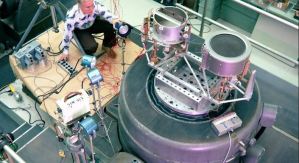
Common Uses of Environmental Vibration Testing for Electrical Products
Every product that moves — or exists in an environment that moves — is subject to vibration. Aircraft avionics experience...
Read ArticleAssessing Material Toughness: A Guide to ASTM D256 Izod/Charpy Impact Testing

Assessing Material Toughness: A Guide to ASTM D256 Izod/Charpy Impact Testing
Introduction The ASTM D 256 test procedure evaluates a material's resistance to standardized pendulum-type hammers mounted on standardized machines that...
Read Article
Get your Ceramic Material testing done from the largest network of accredited labs in the USA
We are a material testing lab with a vast network of accredited labs across the country. Our state-of-the-art equipment and experienced team provide accurate and timely testing services to meet the unique needs of our clients. Partner with us for reliable material testing solutions.
 Quick Turnaround and Hasslefree process
- Confidentiality Guarantee
- Free, No-obligation Consultation
- 100% Customer Satisfaction


