


ASTM D7025 Flax Fiber Fineness Testing Services
This test technique applies to the measurement of titanium in iron ores, concentrates, and agglomerates with titanium concentrations ranging from 0.01 to 6.0 percent composition. In this test technique, except when it is used in conjunction with the word relative standard deviation, the term percent or "percent" refers to the mass fraction (wt/wt) of the form g/100 g.
TRUSTED BY


Precision-driven testing for dimensional accuracy and compliance
- Overview
- Scope, Applications, and Benefits
- Test Process
- Specifications
- Instrumentation
- Results and Deliverables
Overview
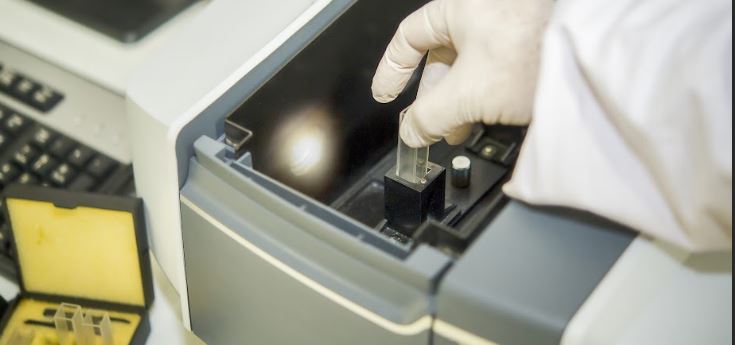
ASTM E 878 Titanium Determination Testing is a specified analytical test method for determining Titanium content in Iron Ores and other materials by utilizing a diantipyrylmethane ultraviolet spectrophotometric test method that ensures accurate and reliable Titanium concentration values from Iron Ore sample matrices by utilizing specified dissolution and complexation methods in accordance with this test method specification. This test method specification, ASTM E 878, specifies the sample preparation and reagent requirements, as well as the diantipyrylmethane complexation methods necessary to ensure accurate Titanium content values for Iron Ore samples and other materials requiring Titanium content characterization and analysis by mining engineers and ore processors.

Scope, Applications, and Benefits
Scope
Similarly, the ASTM E 878 method is used for the determination of the content of titanium in iron ore, in which the iron ore matrix is dissolved, the titanium-diantipyrylmethane complex is formed under specific acidic conditions, the absorbance of the formed complex is measured using ultraviolet spectrophotometry, and the amount of titanium in the iron ore is determined using certified titanium standards.
ASTM E 878 titanium determination testing evaluates:
- Titanium concentration in iron ore, sinter feed, and pellet feed material samples
- Diantipyrylmethane UV spectrophotometric titanium measurement in iron ore matrices
- Comparative titanium content across iron ore types, sources, and processing streams
- Effect of sample preparation, dissolution procedure, and complexation conditions on accuracy
- Compliance with titanium content requirements for iron ore specifications
Applications
- Iron ore mining and processing operations require titanium content characterization
- Sinter plant and blast furnace operations require iron ore and titanium content data
- Iron ore trading and commercial transactions, titanium content verification programs
- Steel plant raw material incoming inspection and ore blend titanium assessment
- Mining laboratories and ore processors requiring ASTM E 878 titanium test data
Benefits
- Provides reliable titanium content data for iron ore characterization and process control
- Supports iron ore specification compliance and supplier assessment programs
- Identifies elevated titanium content in iron ore before processing operations
- Delivers traceable titanium concentration test records for commercial and engineering submissions
- Reduces process risk by verifying iron ore and titanium content early in ore assessment
Test Process
Sample Preparation
Iron ore specimens dissolved and prepared per ASTM E 878 dissolution requirements.
1Diantipyrylmethane Complexation
Titanium-diantipyrylmethane complex formed under defined acidic pH conditions.
2UV Spectrophotometric Measurement
Complex absorbance measured at defined UV wavelength against titanium reference standards.
3Data Analysis & Reporting
Titanium concentration calculated from absorbance data and assessed for test compliance result.
4Technical Specifications
| Parameter | Details |
|---|---|
| Applicable Materials | Iron ore, sinter feed, pellet feed, and related iron ore processing stream samples |
| Analytical Technique | Diantipyrylmethane UV spectrophotometry per ASTM E 878 complexation conditions |
| Measurement Wavelength | Titanium-diantipyrylmethane complex absorbance measured at 390 nm UV wavelength |
| Specimen Preparation | Acid dissolution and diantipyrylmethane complexation per ASTM E 878 procedures |
| Measured Outputs | Titanium concentration values and test compliance result |


Instrumentation Used for Testing
- Calibrated UV spectrophotometer for titanium-diantipyrylmethane complex absorbance measurement
- Diantipyrylmethane reagent preparation and complexation equipment
- Certified titanium reference standards for calibration curve preparation
- Acid dissolution equipment for iron ore sample preparation
- Precision analytical balance for specimen and reagent mass measurement
- Data acquisition and test reporting system
Results and Deliverables
- UV spectrophotometric absorbance and titanium concentration results for all analyzed specimens
- Calibration curve data and reference standard verification per ASTM E 878 requirements
- Statistical summary of titanium content results across the iron ore sample set
- Test compliance result assessed against iron ore titanium specification requirements
- ASTM E 878 test report
Frequently Asked Questions
ASTM E878 uses ultraviolet spectrophotometry with diantipyrylmethane complex, a wavelength close to 385 nm, controlled pH conditions, calibration standards, and proper sample digestion to find out the titanium concentration in iron ores and related materials.
ASTM E878 typically measures titanium concentrations from trace levels to several percent. This depends on dilution and sample preparation. It ensures precise measurement for assessing ore quality and meeting material processing needs.
ASTM E878 requires acid digestion of ore samples. It involves controlled heating and the formation of a titanium complex with diantipyrylmethane. After that, the mixture is diluted to create clear solutions suitable for spectrophotometric analysis.
ASTM E878 reports titanium concentration in weight percent or parts per million. This depends on the analysis range. The standard ensures consistent reporting for industrial uses and allows for comparison of iron ore quality.
ASTM E878 requires a ultraviolet-visible spectrophotometer, a calibrated light source, suitable cuvettes, and controlled reagent preparation to ensure precise absorbance measurement of titanium complexes formed during analysis procedures.
Why Choose Infinita Lab for Advanced Materials Testing and Characterization?
At the core of this breadth is our network of 2,000+ accredited laboratories across the USA, offering access to over 10,000 testing methods and analytical services. From advanced materials characterization (SEM, TEM, RBS, XPS) to mechanical, chemical, environmental, biological, and standardized ASTM/ISO-compliant testing, we deliver unmatched flexibility, specialization, and scale. You are never limited by geography, facility, or methodology — Infinita Lab connects you to the right expertise and testing solution, every time.

Looking for a Trusted Partner for Accurate and Reliable Testing Services?
Send query us at hello@infinitlab.com or call us at (888) 878-3090 to learn more about our services and how we can support you.



Request a Quote
Submit your material details and receive testing procedures, pricing, and turnaround time within 24 hours.
 Quick Turnaround and Hasslefree process
 Confidentiality Guarantee
 Free, No-obligation Consultation
 100% Customer Satisfaction
