


Metal
Infinita Lab conducts comprehensive metal testing for quality, durability, and industry compliance in the aerospace, automobile, building, and energy sectors. It involves mechanical, chemical, environmental, and structural tests spanning tensile, shear, hardness tests, ultrasonic testing, as well as metallurgical inspection. Chemical profiling may incorporate OES, XRF, and EDS techniques, corrosion testing, as well as non-destructive tests for finding defects without destroying parts. Failure analysis and weld inspection allow for reliability and safety measures. Precise testing enables makers to tune performance and increase product longevity.


Top Metal Testing Services
-
 Effects of Material Interfaces on Thermal Transmission: Science & Testing
 -
ASTM E111: Young’s Modulus Testing for Metals, Polymers & Composites
-
ASTM E1820: Fracture Toughness Measurement — Complete Guide
-
ASTM E21 Elevated Temperature Mechanical Testing Guide for Metallic Materials
-
ASTM E384 Microhardness Testing Guide – Vickers & Knoop Analysis
-
ASTM E8 / E8M Tension Testing Complete Guide for Metallic Materials



Industries We Serve


Introduction to Metal Testing Services
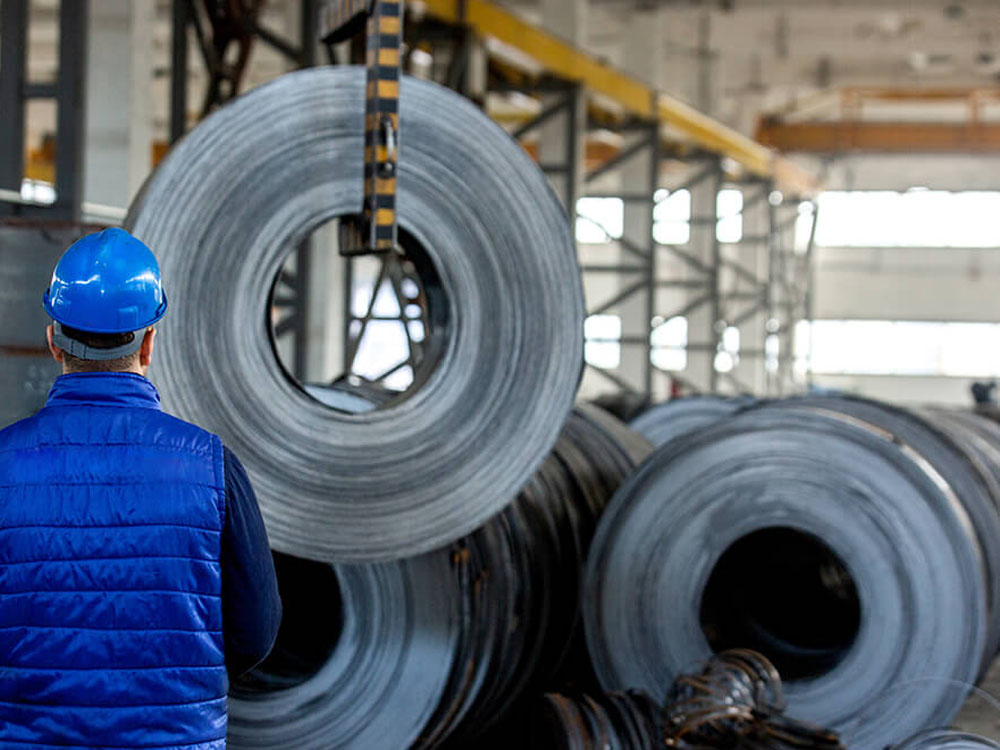
Infinita Lab delivers comprehensive metal testing solutions to guarantee durability, quality, and rigorous adherence to international industry standards within the automotive, aerospace, energy, and construction sectors. Our evaluative protocols encompass a diverse range of mechanical, chemical, structural, and environmental assessments, including hardness, shear, and tensile testing, as well as metallurgical inspections and ultrasonic examinations. By leveraging sophisticated chemical profiling methods such as EDS, XRF, and OES, along with corrosion assessments and non-destructive testing (NDT), we identify internal discontinuities while preserving the structural integrity of the components. Through specialised weld inspections and systematic failure analysis, we offer critical reliability and safety assurance, enabling manufacturers to enhance product performance and extend operational longevity.
Given that metallic materials constitute the fundamental structural framework for essential global industries, Infinita Lab emphasises reliability, precision, and regulatory compliance in every analytical procedure. Our professional metallurgists integrate advanced testing methodologies with profound analytical expertise to validate material quality and functional performance. We provide a specialised suite of metal testing services meticulously engineered to satisfy stringent industry specifications and regulatory mandates.
Our Metal Testing Services
Mechanical & Strength Testing
Mechanical and strength testing defines the fundamental load-carrying capacity and deformation behaviour of metals – providing yield strength, ultimate tensile strength, elongation, hardness, and toughness data essential for material qualification and design allowables. These tests establish whether a metal can withstand real-world operational stresses without fracture or permanent deformation.
Relevant ASTM Standards:
- ASTM E8/E8M – Tension testing of metallic materials, including bars, tubes, sheets, and castings. The standard outlines specimen dimensions and geometries, with the dogbone shape being the most commonly used specimen for these tests.
- ASTM A370 – Mechanical testing of steel products, ensuring that steel materials have the precise mechanical qualities needed for their intended applications.
- ASTM E18 – Rockwell hardness testing of metallic material is one of the most widely used methods for determining metal hardness and its relationship to strength, wear resistance, and durability.
- ASTM E23 – Notched bar (Charpy) impact testing of metallic materials, evaluating a material’s toughness and its capacity to absorb energy during fracture, critical for safety-critical metal components.
- ASTM E384 – Microindentation hardness testing (Vickers and Knoop) for evaluating the hardness of thin films, coatings, welds, and small material samples at the microscopic level, ensuring consistent, reliable results.
- ASTM E10 – Brinell hardness testing of metallic materials for quality control and material qualification.
- ASTM E92 – Vickers hardness testing for microhardness profiling of alloy cross-sections, case-hardened components, and heat-affected zones.
- ASTM E111 – Young’s modulus, tangent modulus, and chord modulus testing for metallic materials under tension, providing fundamental stiffness data for metals, polymers, and composites.
Tensile & Elevated Temperature Testing
Metals used in high-temperature industrial and aerospace applications must retain their mechanical properties under sustained thermal loads. Elevated-temperature tensile testing characterises yield strength, elongation, and reduction in area at service temperatures, providing the design data needed for hot-section components and structural alloys.
Relevant ASTM Standards:
- ASTM E21 – Elevated temperature tensile testing for metallic materials, providing mechanical property data at temperatures representative of actual service conditions in aerospace, power generation, and industrial equipment.
- ASTM B209 – Mechanical testing for aluminium and aluminium-alloy sheet and plate, covering tensile and other mechanical property requirements.
Fatigue & Fracture Toughness Testing
Metals subjected to cyclic loading are susceptible to fatigue failure at stresses well below their static tensile strength. Fatigue and fracture toughness testing defines the endurance limits, crack growth behaviour, and damage tolerance characteristics of metallic materials – data essential for structural life prediction and certification.
Relevant ASTM Standards:
- ASTM E466 – Axial fatigue testing of metallic materials under constant-amplitude force-controlled conditions, generating S-N curves for metal component life prediction across aerospace, automotive, and industrial applications.
- ASTM E606 – Strain-controlled low-cycle fatigue testing for metallic materials subjected to high-strain cyclic loading, typical of engine and pressure vessel components.
- ASTM E399 – Plane-strain fracture toughness (K₁c) testing for metallic materials, providing critical stress intensity factor data for fracture-critical structural components.
- ASTM E1820 – Fracture toughness measurement covering J-integral, CTOD, and K methods for metallic materials, enabling comprehensive fracture mechanics characterisation beyond the linear-elastic limits of ASTM E399.
Creep & Stress Rupture Testing
Metals in service at elevated temperatures under sustained load undergo time-dependent deformation (creep). Creep and stress rupture testing define the material’s long-term deformation behaviour. It determines safe operating stress and temperature limits for metallic components in power generation, aerospace, and chemical processing applications.
Relevant ASTM Standards:
- ASTM E139 – Creep, creep-rupture, and stress-rupture testing for metallic materials, providing time-to-rupture and creep strain data under constant load and temperature for superalloys, stainless steels, and other high-temperature alloys.
Hardness Testing
Hardness testing is the most widely used rapid mechanical evaluation of metallic materials, providing an indirect measure of strength, wear resistance, and suitability for heat-treatment verification. Infinita Lab offers all major hardness methods, including macro, micro, and portable testing options.
Relevant ASTM Standards:
- ASTM E18 – Rockwell and superficial Rockwell hardness testing, the standard method for rapid hardness verification of heat-treated steels, aluminium alloys, and other metallic materials.
- ASTM E10 – Brinell hardness testing for large-grained metals, castings, and forgings in which the indentation size must be large relative to the microstructure.
- ASTM E92 – Vickers hardness testing, providing a continuous hardness scale applicable from soft to very hard materials and well-suited to microhardness mapping.
- ASTM E384 – Microindentation (Vickers and Knoop) hardness testing for case-hardened layers, weld cross-sections, thin coatings, and small specimens where macro hardness tests are not applicable.
Chemical Composition & Elemental Analysis
Verification of the chemical composition of metallic materials is fundamental to quality control, alloy identification, and compliance with material specifications. Infinita Lab provides chemical composition testing using optical emission spectrometry (OES), X-ray fluorescence (XRF), and combustion analysis methods aligned with ASTM standards.
Relevant ASTM Standards:
- ASTM E415 – Optical emission spectrometry (OES) for the chemical analysis of carbon and low-alloy steel, enabling rapid multi-element verification on the production floor and for incoming inspection.
- ASTM E1086 – Spark atomic emission spectrometry for chemical composition analysis of stainless steels and other metallic alloys.
- ASTM E1019 – Combustion analysis for the determination of carbon, sulfur, nitrogen, and oxygen in steel, iron, nickel, and cobalt alloys – critical elements governing strength, toughness, and weldability.
Metallographic Analysis & Microstructural Examination
Metallographic examination reveals grain size, phase distribution, inclusion content, heat treatment response, surface decarburization, and manufacturing defects in metallic materials. This analysis directly supports quality assurance, failure investigation, and process development for wrought, cast, and welded metals.
Relevant ASTM Standards:
- ASTM E3 – Standard guide to the preparation of metallographic specimens, covering sectioning, mounting, grinding, polishing, and etching for optical microscopy.
- ASTM E112 – Determination of average grain size in metallic materials by comparison, planimetric, and intercept methods, supporting microstructural quality control and failure analysis investigations.
- ASTM E45 – Inclusion rating for assessing non-metallic inclusion content in wrought steels, evaluating oxide, sulfide, silicate, and globular oxide types by optical microscopy.
- ASTM E407 – Standard practice for microetching metals and alloys to reveal grain boundaries, phase distributions, and microstructural features under optical microscopy.
Corrosion Testing
Metals are exposed to corrosive environments in virtually every industrial application. Corrosion testing evaluates the resistance of metallic materials and coatings to salt fog, intergranular attack, pitting, and electrochemical degradation – ensuring that metals will perform reliably over their intended service life.
Relevant ASTM Standards:
- ASTM B117 – Salt spray (fog) testing provides an accelerated corrosion evaluation of metallic materials, coatings, and surface finishes under controlled salt-mist exposure conditions.
- ASTM A262 – Intergranular corrosion testing for evaluating the susceptibility of stainless steels and nickel alloys to sensitisation-induced intergranular attack.
- ASTM G48 – Pitting and crevice corrosion resistance testing for stainless steels, nickel-based alloys, and coated components in chloride-containing environments.
- ASTM G5 – Standard reference test method for making potentiodynamic anodic polarisation measurements on metallic materials for electrochemical corrosion characterisation.
- ASTM G59 – Electrochemical corrosion testing by potentiodynamic polarisation to evaluate corrosion rate and behaviour of metallic materials.
Non-Destructive Testing (NDT) for Metals
Non-destructive testing evaluates the internal and surface integrity of metallic components without causing damage. Infinita Lab provides advanced NDT services using ultrasonic, radiographic, magnetic particle, eddy current, and visual inspection methods for metal components across all industries.
Relevant ASTM Standards:
- ASTM A418 – Ultrasonic examination of turbine and generator steel rotor forgings, used to detect internal defects, voids, or cracks in high-value metallic components without causing damage.
- ASTM E164 – Ultrasonic testing (UT) for contact and immersion inspection of metallic welds, forgings, and castings to detect internal defects.
- ASTM E1444 – Magnetic particle testing (MPT) for detecting surface and near-surface discontinuities in ferromagnetic metallic components.
- ASTM E376 – Eddy current testing for coating thickness measurement and surface crack detection in conductive metallic materials.
- ASTM E1004 – Eddy current testing for determining electrical conductivity, alloy sorting, and surface defect detection in metallic components.
Failure Analysis for Metal Components
When metal components fail in service or during validation, fast and accurate root cause identification prevents costly downtime, recalls, and liability. Infinita Lab provides comprehensive failure analysis services for metallic parts across all industries, combining metallographic examination, fractography, chemical analysis, and mechanical testing to determine the mode and root cause of failure.
Relevant ASTM Standards:
- ASTM E8/E8M – Tensile testing as part of failure investigation to verify whether material properties met specification at the time of failure.
- ASTM E23: Charpy impact testing to determine whether embrittlement or inadequate toughness contributed to the fracture.
- ASTM E112 – Grain size measurement as part of microstructural failure investigation, identifying abnormal grain growth, decarburization, or processing deficiencies.
- ASTM E45 – Inclusion rating to assess whether excessive non-metallic inclusions contributed to fatigue or fracture failure in wrought steel components.
- ASTM A262 – Intergranular corrosion testing to determine whether sensitisation caused stress corrosion cracking or corrosion-related failure in stainless steel components.
Frequently Asked Questions
With a full range of cutting-edge metal testing capabilities that exceed industry norms, our lab guarantees accurate and thorough insights into the characteristics and functionality of metals.
Advanced Non-Destructive Testing (NDT): We use state-of-the-art NDT methods like eddy current testing and phased array ultrasonics. These meticulous inspection techniques maintain the metal structure’s integrity. Surface and near-surface flaw identification can be effectively achieved with eddy current testing, whereas phased array ultrasonics offers accurate defect detection and sizing.
Metallographic Analysis: Our laboratory uses optical and electron microscopy to perform complex metallographic analyses. This detailed examination offers a microscopic perspective of the metal’s structure, revealing characteristics including inclusion content, phases, and grain boundaries.
Infinita Lab is a material testing lab that offers a wide range of metal material testing services. The state-of-the-art laboratory is equipped with the latest technology and staffed by experienced professionals who are committed to providing accurate and reliable results.
- Corrosion testing: Infinita Lab performs corrosion testing to evaluate the corrosion resistance of metals in various environments. These tests include salt spray testing, cyclic corrosion testing, and more.
- Fracture toughness testing: They offer fracture toughness testing to evaluate the resistance of metals to crack propagation.
- Fatigue testing: Infinita Lab performs fatigue testing to evaluate the durability of metals under cyclic loading.
- Weld testing: They offer weld testing to evaluate the quality and integrity of welded joints in metals.
Testing metal materials is a proactive strategy that greatly lowers manufacturing costs. Manufacturers can find possible flaws, weaknesses, or discrepancies early in the production process by putting metals through rigorous testing. Early identification lowers the possibility of expensive rejects, rework, or recalls, which lowers production costs overall. Furthermore, testing yields useful information about the mechanical characteristics of metals, allowing producers to maximize material selection and improve production process efficiency. In the long run, this reduces costs by streamlining production and guaranteeing the durability and dependability of the finished goods.
A key element in manufacturing metal component optimization is metallurgical analysis. This kind of examination looks at the characteristics and microstructure of metals to reveal information about their composition, grain structure, and impact of heat treatment. By understanding these factors, manufacturers can tailor their processes to optimize the mechanical properties of metal components, ensuring they meet the specific requirements of their intended applications. Metallurgical analysis is essential to the precision engineering of metal components, whether the goal is to improve the material’s hardness for endurance or refine the grain structure for increased strength. This optimization is a crucial stage in the manufacturing process since it helps reduce production costs and material waste while also producing goods that work better.
We provide an extensive range of testing services, including mechanical, metallurgical, and corrosion aspects. offers end-to-end metals materials testing in the US, offering a vast array of over 2000 specialized tests to meet the diverse needs of industries. We are outfitted with state-of-the-art machinery and manned by knowledgeable metallurgists and technicians. Our commitment to quality assurance is demonstrated by our strict quality control procedures, involvement in proficiency testing programs, and adherence to industry standards. We are approved by Fortune 500 companies.
Furthermore, we recognize the value of prompt and economical solutions, making sure that our clients obtain precise outcomes without sacrificing effectiveness. By selecting our lab, you collaborate with a reputable partner committed to bolstering your company’s success through accurate and trustworthy metal material testing.
Read Our Blogs and Research Papers
In-depth examination of genuine material testing solutionsISO 178 Flexural Testing: Specimen Size, Geometry & Test Conditions

ISO 178 Flexural Testing: Specimen Size, Geometry & Test Conditions
What Is ISO 178? ISO 178 is the international standard for the determination of flexural properties of rigid and semi-rigid...
Read ArticleCommon Uses of Coefficient of Friction Testing in Industry & Research
Common Uses of Coefficient of Friction Testing in Industry & Research
The coefficient of friction (COF) — the ratio of friction force to normal force between two contacting surfaces — is...
Read ArticleSubstances of Very High Concern (SVHC): REACH Testing & Compliance

Substances of Very High Concern (SVHC): REACH Testing & Compliance
What Are Substances of Very High Concern? Substances of Very High Concern (SVHC) are chemical substances identified under the European...
Read Article
Get your Ceramic Material testing done from the largest network of accredited labs in the USA
We are a material testing lab with a vast network of accredited labs across the country. Our state-of-the-art equipment and experienced team provide accurate and timely testing services to meet the unique needs of our clients. Partner with us for reliable material testing solutions.
 Quick Turnaround and Hasslefree process
- Confidentiality Guarantee
- Free, No-obligation Consultation
- 100% Customer Satisfaction


