


Chemical
The most comprehensive chemical analysis and testing services in the U.S. Our network of material testing labs offer over 2000 tests and ensure accurate, efficient results. Our services encompass a wide range of materials, emphasizing quality assurance and streamlined processes for industries demanding precision in chemical composition and properties analysis. Chemical analysis or chemical testing is an essential part of testing services to know the quality and composition of chemical substances and materials used in products, industrial processes, and manufacturing.


Top Chemical Testing Services
-
 ASTM D7490: Gas Pycnometry Testing — Complete Guide
 -
ASTM E928 Explained: DSC Purity Testing Procedures & Purpose
-
FTIR Spectroscopy Explained: Principles, How It Works & Applications
-
What Is ICP-MS? Inductively Coupled Plasma Mass Spectrometry Explained
-
GC-MS Analysis Explained: Principle, Applications & Chromatography-Mass Spectrometry
-
ASTM D1709 Dart Impact Testing Guide for Plastic Films
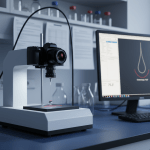
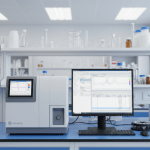


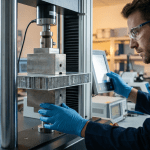
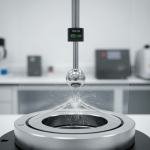


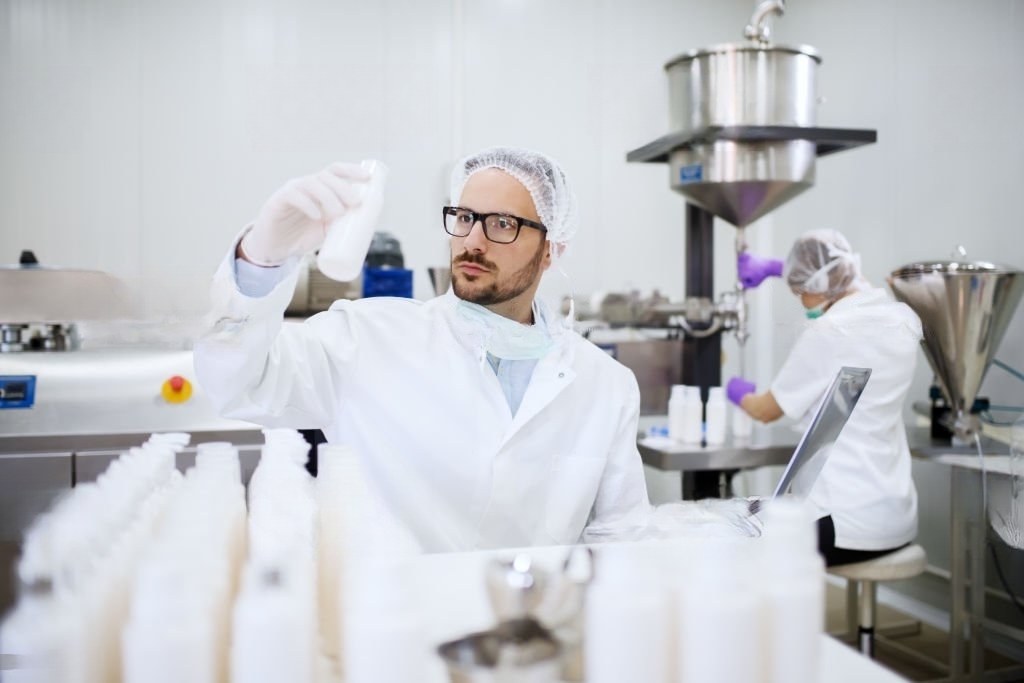
All materials utilised within manufacturing processes possess a distinct chemical identity. This composition is the primary determinant of a material’s ability to maintain functional reliability under thermal stress, exhibit chemical compatibility with contact reagents, resist moisture-induced degradation, and adhere to stringent regulatory frameworks. While these characteristics often remain imperceptible to end users, they require continuous evaluation by engineers, manufacturers, and quality assurance managers. Incidents such as the softening of polymers upon exposure to cleaning agents, the failure of metal alloys to meet elemental specifications, or the migration of extractable substances from films into food packaging represent preventable chemical failures.
Chemical testing and analysis constitute the technical discipline required to characterise material composition, evaluate behavioural responses to chemical exposure, and verify suitability for specific industrial applications. Beyond mere regulatory compliance, these analytical services enable manufacturers to establish product reliability and safety before commercial deployment.
Our Chemical Testing & Analysis Services
Chemical Resistance Testing for Plastics
Consumer products, industrial components, and packaging are routinely exposed to household cleaners, solvents, personal care formulations, food acids, and industrial chemicals throughout their service life. A plastic housing that discolours upon contact with a disinfectant wipe, a storage container that softens when it comes into contact with cooking oil, or a coating that blisters when exposed to moisturiser – these are chemical compatibility failures that rigorous testing catches before the product reaches the end user. Chemical resistance testing gives manufacturers quantifiable evidence that their plastic materials and coatings will maintain their appearance, dimensions, and structural integrity under real-world chemical exposure.
Relevant ASTM Standards:
ASTM D543 – Resistance of Plastics to Chemical Reagents. ASTM D543 evaluates how plastic materials respond to immersion in specified chemical reagents under controlled conditions. The test tracks changes in weight, dimensions, appearance, and mechanical properties to assess whether plastics are suitable for use in environments where chemical exposure is expected. This standard is essential for qualifying plastics used in food packaging, medical devices, consumer goods, and industrial components where chemical compatibility directly affects both safety and product performance.
Chemical Extraction Testing for Plastic Films
Plastic films used in food packaging, pharmaceutical wrapping, and consumer product applications must not leach harmful or unwanted substances into the materials they contact. Understanding what a plastic film releases under wet or immersion conditions is fundamental to product safety assessments and regulatory compliance in food-contact and pharmaceutical applications.
Relevant ASTM Standards:
ASTM D1239 – Chemical Extraction Testing for Plastic Films. ASTM D1239 measures the quantity of water-soluble substances leached from plastic materials under defined immersion conditions. This test is critical for evaluating product safety in applications such as food packaging, medical tubing, and potable water pipes, where extractable substances from the plastic can directly affect the safety and quality of the contents.
Chemical Analysis of Metals and Aluminum Alloys
The composition of a metal alloy is not just a specification on a data sheet – it is the foundation of its mechanical properties, corrosion resistance, weldability, and performance under load. Verifying that a delivered batch of aluminium alloy, steel, or speciality metal actually matches the specified elemental composition is a basic requirement of responsible quality control. Errors in alloy composition can cause catastrophic failures, and are entirely avoidable.
Relevant ASTM Standards:
ASTM E34 – Wet Chemical Analysis of Aluminium and Aluminium Alloys. ASTM E34 provides established wet chemical analysis methods for precisely determining the elemental composition of aluminium and aluminium-based alloys. This standard is critical for quality control in aerospace, automotive, and consumer product manufacturing, where verifying the composition of raw materials is a core requirement of incoming inspection.
ASTM E353 – Chemical Analysis of Stainless and Heat-Resisting Steels ASTM E353 covers chemical analysis test methods for stainless and heat-resisting steels, enabling accurate determination of elemental composition for quality assurance and material qualification in demanding corrosion-resistant and high-temperature applications.
ASTM E354 – Chemical Analysis of Iron, Nickel, and Cobalt Alloys. ASTM E354 provides chemical analysis procedures for high-performance iron, nickel, and cobalt alloys used in aerospace, power generation, and industrial applications where precise composition control is critical to structural reliability and service life.
ASTM E539 – Chemical Analysis Testing for Ferrosilicon ASTM E539 covers chemical analysis procedures for ferrosilicon alloys, providing accurate determination of silicon and other elemental content for steelmaking and foundry process control.
Chemical Analysis of Glass and Refractory Materials
Glass compositions are not incidental – they determine optical clarity, thermal shock resistance, chemical durability, and mechanical strength. Similarly, the chemical composition of refractory materials governs their performance at high temperatures in industrial furnaces, kilns, and process equipment. Verifying chemical composition through standardised analysis ensures that glass and refractory products will perform as designed throughout their service life.
Relevant ASTM Standards:
ASTM C146 – Chemical Analysis of Glass and Glass Sand. ASTM C146 provides test procedures for chemical analysis of glass, glass sand, and related silicate materials. The standard outlines methods for locating and measuring silica, alumina, and other components in glass materials – essential for ensuring product consistency and predicting performance characteristics such as thermal resistance, optical quality, and durability.
Flammability and Chemical Safety Testing
Chemical safety extends beyond composition verification. For many industrial and consumer applications, understanding the temperature limits at which a chemical becomes flammable – and ensuring measurement results are statistically reliable across laboratories – is a direct safety and compliance requirement.
Relevant ASTM Standards:
ASTM E1232 – Temperature Limit of Flammability of Chemicals ASTM E1232 provides guidelines for determining the temperature limits of flammability of chemical substances. Accurate flammability characterisation is a fundamental safety requirement for chemical storage, handling, and product formulation in manufacturing and consumer-product environments, where fire risk must be quantified and controlled.
Moisture Content Testing in Plastics
Residual moisture in plastics affects processing behaviour, dimensional stability, and long-term mechanical performance. Excess moisture in hygroscopic resins leads to degradation during processing – including hydrolysis, voiding, and molecular weight reduction – resulting in parts that fail to meet mechanical specifications. Accurate moisture determination is a practical requirement for quality control in plastics manufacturing and incoming material inspection.
Relevant ASTM Standards:
ASTM D6869 – Coulometric and Volumetric Determination of Moisture in Plastics Using the Karl Fischer Reaction. ASTM D6869 covers both coulometric and volumetric Karl Fischer titration methods for the precise determination of moisture content in plastic materials. This test is essential for qualifying hygroscopic resins before processing, ensuring dimensional stability in finished plastic components, and maintaining quality in moisture-sensitive applications, including medical devices, electronic enclosures, and precision-molded consumer products.
Trace Peroxide Analysis in Organic Solvents
Trace peroxide contamination in organic solvents is a significant safety and quality concern in pharmaceutical manufacturing, chemical processing, and laboratory operations. Peroxides form spontaneously in many common solvents over time and present both explosion hazards and reactivity risks in sensitive chemical processes.
Relevant ASTM Standards:
ASTM E299 – Trace Amounts of Peroxides in Organic Solvents. ASTM E299 provides a test method for determining trace amounts of peroxides in organic solvents. Accurate peroxide quantification is essential for solvent safety management in pharmaceutical, chemical, and laboratory environments where undetected peroxide accumulation poses a direct hazard to personnel and process integrity.
Volatile Inorganic Acid Analysis
Process chemicals, industrial fluids, and water systems may contain volatile inorganic acids that affect material compatibility, corrosion of process equipment, and product quality. Accurate quantification of these acids is a practical requirement for process control and material qualification.
Relevant ASTM Standards:
ASTM D7773 – Determination of Volatile Inorganic Acids. ASTM D7773 covers test methods for determining volatile inorganic acid content in materials and process fluids. This standard supports process quality control, corrosion risk assessment, and regulatory compliance in chemical manufacturing, water treatment, and industrial process environments.
ASTM E224 – Analysis of Hydrochloric Acid ASTM E224 provides methods for the chemical analysis of hydrochloric acid, enabling accurate determination of acid concentration and impurity levels for industrial process control, incoming material quality verification, and product specification compliance.
Activated Carbon Testing
Activated carbon is used across water treatment, air purification, pharmaceutical processing, and industrial applications where contaminant adsorption is required. The chemical integrity of activated carbon – including its ash content and acid-extractable residues – directly determines its performance and suitability for regulated applications.
Relevant ASTM Standards:
ASTM D6385 – Acid-Extractable Content in Activated Carbon by Ashing ASTM D6385 measures the acid-extractable content of activated carbon through controlled ashing procedures. This test is critical for qualifying activated carbon used in water treatment, pharmaceutical applications, and food-contact processes where inorganic residue content affects both regulatory compliance and functional performance.
Key Analytical Techniques Supporting Chemical Testing
Beyond standardised ASTM methods, Infinita Lab’s partner network supports a comprehensive range of advanced analytical instrumentation for chemical characterisation, including:
Inductively Coupled Plasma (ICP-OES/ICP-MS) – for trace and ultra-trace elemental analysis of metals, alloys, and process chemicals.
Gas Chromatography-Mass Spectrometry (GC-MS) – for identifying and quantifying volatile organic compounds, residual solvents, and trace organic contaminants.
Fourier Transform Infrared Spectroscopy (FTIR) – for molecular identification, contamination analysis, and chemical structure characterisation in polymers and coatings.
High-Performance Liquid Chromatography (HPLC) – for separating and quantifying components in liquid chemical formulations and pharmaceutical materials.
Atomic Absorption Spectroscopy (AAS) and Optical Emission Spectroscopy (OES) – for elemental composition verification in metals and process materials.
Scanning Electron Microscopy with Energy-Dispersive X-Ray Spectroscopy (SEM-EDS) – for microscopic surface characterisation and localised elemental analysis.
Frequently Asked Questions
Infinita Lab commits to unparalleled quality in chemical testing through strict adherence to industry standards and continuous collaboration with certified labs. Our unique model involves vetting partner labs for their technical capabilities, quality control processes, and accreditation status, ensuring they meet or exceed regulatory requirements. This meticulous selection process, combined with our ongoing quality audits and proficiency testing, guarantees that all analyses are conducted with the utmost accuracy and reliability. Infinita Lab’s quality assurance program is designed to provide clients with confidence in their testing results, making it a leading choice for companies requiring dependable chemical analysis.
InfinitaLab streamlines the testing experience for clients through a sophisticated coordination system that simplifies the submission, tracking, and reporting of test samples. Our client portal offers a one-stop solution for managing testing projects, from initial inquiry to final report delivery. This digital platform facilitates efficient communication, enabling clients to receive updates, ask questions, and access results seamlessly. By minimizing administrative overhead and enhancing the transparency of the testing process, InfinitaLab ensures that clients can focus on their core activities while leaving the complexities of chemical analysis to our experts.
Infinita Lab offers significant advantages over competitors in terms of testing capabilities by harnessing the collective expertise and resources of over 2000 partner labs. This extensive network enables us to cover a broad spectrum of chemical analysis services, from routine testing to highly specialized analyses that require niche expertise and advanced instrumentation. Unlike single-site laboratories, our model ensures that we can always allocate the most suitable resources for each project, enhancing both the breadth and depth of our service offerings. This comprehensive capability, combined with our commitment to quality and efficiency, positions InfinitaLab as the go-to partner for businesses across various industries.
Infinita Lab goes beyond providing test results; we offer actionable insights that add tangible value to our customers’ operations. By leveraging our expertise and analysis capabilities, clients can optimize processes, improve product quality, and ensure regulatory compliance, ultimately driving efficiency and profitability.Through our collaborative approach, InfinitaLab can swiftly connect clients with the right resources, saving time and reducing complexity. The diversity of our partner labs also means competitive pricing and faster turnaround times, as projects are allocated based on both specialization and capacity. This seamless integration of services under one umbrella offers clients a hassle-free, efficient, and cost-effective solution for all their chemical analysis needs.
Infinita Lab maintains efficiency in handling Gas Chromatography-Mass Spectrometry projects through a combination of advanced project management tools, a highly skilled coordination team, and a strategic partnership network. The Gas Chromatography-Mass Spectrometry is one of the advanced tests and sought-after test that requires coordination and accurate approach. Our project managers are experts in navigating the complexities of this chemical testing, ensuring that each project is assigned to the lab that best matches its specific requirements. This efficient allocation of resources, supported by real-time communication and tracking systems, enables us to optimize project timelines and deliver results promptly. InfinitaLab’s approach minimizes delays and maximizes productivity, offering clients a reliable solution for their complex testing needs.
Read Our Blogs and Research Papers
In-depth examination of genuine material testing solutionsASTM C177 vs C518: Guarded Hot Plate vs Heat Flow Meter Comparison

ASTM C177 vs C518: Guarded Hot Plate vs Heat Flow Meter Comparison
Selecting the correct standard test method for thermal conductivity measurement is critical for obtaining accurate, application-relevant data. ASTM C177 and...
Read ArticleASTM D543 vs Other Plastic Chemical Resistance Tests: Comparison Guide

ASTM D543 vs Other Plastic Chemical Resistance Tests: Comparison Guide
Chemical resistance testing for plastics is not a single-method discipline. Different standards have been developed to address specific application needs,...
Read ArticleSustainable Wastewater Treatment & Management: Technologies & Testing

Sustainable Wastewater Treatment & Management: Technologies & Testing
Wastewater treatment is essential for protecting public health, preserving water resources, and meeting increasingly stringent environmental regulations. Sustainable wastewater management...
Read Article
Get your Ceramic Material testing done from the largest network of accredited labs in the USA
We are a material testing lab with a vast network of accredited labs across the country. Our state-of-the-art equipment and experienced team provide accurate and timely testing services to meet the unique needs of our clients. Partner with us for reliable material testing solutions.
 Quick Turnaround and Hasslefree process
- Confidentiality Guarantee
- Free, No-obligation Consultation
- 100% Customer Satisfaction


