
Polymer
At Infinita Lab, we provide full-spectrum plastic and polymer testing to ensure material functionality, reliability, and safety in aerospace, medical devices, packaging, and the automotive markets. Our capability encompasses thermoplastics, thermosets, elastomers, special-purpose and high-performance polymers, rubber, composites, polyurethanes, coating, and adhesive. By using innovative equipment including FTIR, GC/MS, NMR, SEM/EDS, and others, we conduct mechanical, chemical, thermal, fatigue, and structural testing, including polymer characterization. Our testing identifies defects, determines durability, and ensures standards compliance. Through precise results, fast turn, and R&D support, Infinita Lab aids with material optimization, quality improvement, and new product innovation.


Top Polymer Testing Services
-
 Effects of Material Interfaces on Thermal Transmission: Science & Testing
 -
ASTM D6653: Altitude Testing for Packaging Systems — Complete Guide
-
ASTM D903: Peel Adhesion Testing of Adhesive Bonds — Complete Guide
-
ASTM E1980: Solar Reflectance Index (SRI) Testing — Method & Calculation Guide
-
ASTM E928 Explained: DSC Purity Testing Procedures & Purpose
-
ASTM F1249 WVTR Testing Guide for Packaging Film Moisture Barrier


Industries We Serve



About Polymer
Polymer Testing Services
Polymer testing from Infinita Lab — assure the safe, reliable, and efficient use of your polymeric materials across aerospace, medical devices, packaging, automotive, and manufacturing, in compliance with all relevant national and international standards.
The range of applications for polymeric materials continues to expand across virtually every industry. Because of their versatility and broad applicability, the real value of a polymer lies not just in its functionality, but in its ability to perform consistently under real-world conditions. Achieving this requires exhaustive and accurate testing.
At Infinita Lab, we offer polymer testing solutions specifically designed to deliver precise insights into material functionality, reliability, and safety — ensuring every polymer product meets the stringent standards your industry demands.
Our Polymer Testing Services
Mechanical Testing
Mechanical testing determines the strength, stiffness, and endurance of a polymer under various conditions, including tension, compression, and bending. By simulating actual service stresses, mechanical testing ensures that polymers will operate safely and reliably under harsh service conditions — from automotive components to industrial equipment — without deformation or failure.
Relevant ASTM Standards:
- ASTM D638 – Tensile testing for yield strength, tensile strength, elongation at break, and Young’s modulus — the most fundamental mechanical property set for polymers.
- ASTM D790 – Flexural testing for flexural modulus and flexural strength for beam-like parts under bending loads.
- ASTM D256 (Izod) / ASTM D6110 (Charpy) – Impact testing measuring energy absorbed during fracture, critical for impact-sensitive applications.
- ASTM D2240 / D785 – Hardness testing measures surface resistance to indentation, used for rapid production screening.
- ASTM D2990 – Creep and stress relaxation testing for time-dependent deformation under sustained load, critical for long-term sealing applications.
Polymer Strength Testing
Strength testing assesses the structural strength and hardness of a polymer material, establishing whether it can maintain performance under real-world usage conditions. This testing helps organizations select materials that will withstand day-to-day wear and tear, mechanical stresses, and long-term use across demanding applications.
Relevant ASTM Standards:
- ASTM D638 – Measures tensile strength and elongation of plastic materials.
- ASTM D2240 – Shore hardness testing for surface resistance characterization.
- ASTM D1505 – Determines the density of polymers.
- ASTM D1238 – Measures the flowability (melt flow rate) of plastics.
Polymer Fatigue Testing
Polymers are regularly subjected to repeated loading and environmental stress in service. Fatigue testing defines the long-term material response, identifies potential failure points, and provides lifespan estimates. This is particularly important for aerospace components, medical devices, and flexible parts subject to cyclic loading.
Relevant ASTM Standards:
- ASTM D7791 – Fatigue testing under cyclic loading conditions, used to determine the service life of dynamically stressed polymer components.
Chemical Analysis & Resistance Testing
Polymers can encounter a wide range of chemicals during their service life. This testing assesses a material’s response to acids, bases, solvents, and reactive chemicals — providing a clear understanding of its resistance and longevity against harsh or corrosive environments.
Relevant ASTM Standards:
- ASTM D543 – Chemical resistance testing for resistance to immersion in test fluids.
- ASTM D570 – Humidity and moisture resistance testing, measuring water absorption.
- ASTM D1149 – Ozone resistance testing for ozone cracking resistance in elastomers.
Structural Analysis & Characterization
By analyzing molecular structure, composition, and morphology, structural testing identifies defects, establishes material consistency, and confirms the polymer’s structural integrity. It directly supports quality assurance, R&D programs, and formulation optimization for both new and existing polymer products.
Relevant ASTM Standards:
- ASTM G154 / G155 – UV weathering tests for photodegradation resistance, supporting long-term structural integrity assessment.
- ASTM D3039 – Tensile testing for polymer matrix composites reinforced with continuous fibers, determining tensile strength, modulus of elasticity, Poisson’s ratio, and strain at failure.
Thermal Analysis
Polymers are exposed to a wide range of temperatures that directly influence their functionality. Thermal analysis determines melting points, glass transition temperatures, and heat stability — defining how a polymer responds to cold and heat. This ensures reliable performance in electronics, packaging, and high-temperature applications.
Relevant ASTM Standards:
- ASTM D648 – Heat deflection temperature (HDT) testing defines the service temperature limit under load, critical for structural applications.
- ASTM D1525 – Vicat softening point (VSP) testing for the upper use temperature under indentation load.
- ASTM E1131 – Thermogravimetric analysis (TGA) for decomposition onset, thermal stability, and filler quantification.
- ASTM D3418 – Differential scanning calorimetry (DSC) for melting, crystallization, glass transition temperature (Tg), and oxidative induction time (OIT).
- ASTM E1640 – Dynamic Mechanical Analysis (DMA) measuring storage/loss modulus versus temperature and Tg determination.
Polymer Characterization
Polymer characterization involves a comprehensive examination of the chemical composition, molecular structure, and physical attributes of a material. Through molecular weight distribution analysis, crystallinity measurement, thermal characterization, and structural morphology analysis, this testing detects defects, variations, or contamination that could impair performance. It ensures the polymer meets design requirements, retains structural integrity, and operates consistently under expected conditions — particularly in high-stakes applications such as medical devices, aerospace components, and precision industrial parts.
Relevant ASTM Standards:
- ASTM D3418 – Evaluates transition temperatures such as melting, glass transition, and crystallization enthalpy of polymers using differential scanning calorimetry (DSC), enabling material identification, specification acceptance, and process control.
- ASTM E1356 – Assigns glass transition temperatures to materials using DSC, tracking variations in specific heat capacity to identify crucial thermal events in polymers and amorphous solids.
- ASTM D3418, D3471, D3895, and E1269 – DSC thermal analysis suite evaluating the broader range of thermal properties.
- ASTM F732 – Wear resistance testing of polymeric materials, specifically for evaluating wear properties of materials considered for use as bearing surfaces in total joint prostheses, conducted under lubricated physiological conditions.
Frequently Asked Questions
In many different industries, polymer testing is a key technique for optimizing product development. Manufacturers can obtain valuable insights into the characteristics, functionality, and behavior of polymers by putting them through rigorous testing processes. This process paves the way for improved product quality and innovation. In-depth material characterization, encompassing mechanical attributes like impact resistance, tensile strength, and flexibility, is a crucial part of polymer testing. Designing goods that adhere to particular performance criteria and regulations requires the use of this data. Testing polymer durability guarantees that goods are resilient to the demands of everyday use. This is especially important for the construction, automotive, and aerospace industries, where polymers are essential components that are exposed to a variety of environmental conditions.
By being proactive, the likelihood of product malfunctions, recalls, and consumer discontent is reduced. Product developers can innovate and optimize designs by knowing the special qualities of polymers. Testing polymers enables the investigation of novel formulations, additives, and production techniques, promoting ongoing enhancement and remaining ahead of consumer expectations.
Infinita Lab specializes in providing a variety of specific polymer tests that are made to fit the particular needs of various businesses. This covers sophisticated testing techniques that surpass conventional evaluations. Testing for electrical conductivity involves analyzing a polymer’s electrical characteristics, which is essential for use in conductive materials and electronics. Testing for gas permeability—determining a polymer’s gas permeability—is essential for materials and packaging used in gas storage applications. Testing for flammability is to assess a polymer’s fire resistance—a critical factor in situations where fire safety is of the utmost importance.
Our commitment to fulfilling the varied needs of clients in different industries is demonstrated by our provision of specific polymer tests. These sophisticated tests provide comprehensive information on particular facets of polymer behavior, empowering our clients to make wise decisions during their quality assurance and product development procedures.
Businesses in all sectors must prioritize polymer material testing since it is a crucial component of guaranteeing the dependability, quality, and conformity of their products with industry norms. Companies can confirm the integrity, mechanical characteristics, and durability of polymers by testing them. This guarantees that products produced with these polymers either meet or surpass performance standards. When it comes to the use of materials, several sectors have strict rules and guidelines. By guaranteeing that companies follow these regulations, polymer testing protects them from expensive legal penalties and guarantees access to the market.
Polymer testing gives companies vital information about the characteristics of materials, enabling them to make knowledgeable choices about the materials they use, how to design their products, and how to manufacture them. This supports the creation of competitive, high-quality products. Testing polymer materials to find any flaws or problems helps companies reduce the chance of product recalls, product failures, and disgruntled consumers. Testing in advance reduces the possibility of unforeseen problems in the field. Businesses can investigate novel formulations, additives, and processing methods thanks to polymer testing, which promotes innovation. Businesses are guaranteed to remain at the forefront of technical advancements and industry demands with this ongoing optimization.
Polymer material testing is a crucial investment for companies that are dedicated to producing high-quality, dependable products since it plays a crucial role in guaranteeing product quality, regulatory compliance, and market competitiveness.
Polymer material testing is vital across various industries, including automotive, aerospace, construction, medical devices, and packaging. In the automotive sector. It confirms a material’s resistance to harsh environmental conditions in the aerospace industry. It is essential for guaranteeing the biocompatibility and performance of medical equipment. It ensures that the material used in packaging is appropriate for safeguarding and preserving various products. The flexible testing capabilities of our laboratory meet the unique requirements of these various sectors.
Choosing our lab for your polymer testing needs is a strategic decision rooted in our commitment to excellence, cost-effectiveness, and unwavering dedication to quality assurance. To guarantee exact and accurate results, our laboratory uses the newest technologies and is outfitted with cutting-edge testing apparatus. Our ability to give insights that assist businesses in their material selection and product development processes is made possible by this technological advantage.
We have an extensive network of laboratories across the U.S. We offer 2000 specialized tests that cater to all specific needs of material testing. With state-of-the-art equipment and knowledgeable staff about composite materials, we provide an extensive range of testing services that address non-destructive, mechanical, and thermal aspects. Fortune 500 companies trust us for their quality testing services.
Read Our Blogs and Research Papers
In-depth examination of genuine material testing solutionsRheology Testing of Polymers: Methods, Instruments & Applications
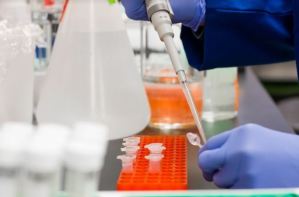
Rheology Testing of Polymers: Methods, Instruments & Applications
Polymers are the backbone of modern manufacturing. From packaging films and automotive components to medical devices and electronic housings, the...
Read ArticleTypes of Environmental Vibration Tests: Sinusoidal, Random & Resonance
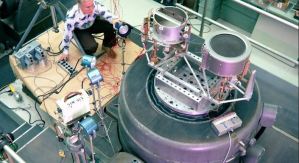
Types of Environmental Vibration Tests: Sinusoidal, Random & Resonance
Environmental vibration testing subjects products to controlled dynamic loading that simulates the vibration environments encountered during transportation, operation, and storage....
Read ArticleLife Endurance Testing: Evaluating Long-Term Material & Component Durability

Life Endurance Testing: Evaluating Long-Term Material & Component Durability
What Is Life Endurance Testing? Life endurance testing is a systematic process of subjecting a product, component, or material to...
Read Article
Get your Ceramic Material testing done from the largest network of accredited labs in the USA
We are a material testing lab with a vast network of accredited labs across the country. Our state-of-the-art equipment and experienced team provide accurate and timely testing services to meet the unique needs of our clients. Partner with us for reliable material testing solutions.
 Quick Turnaround and Hasslefree process
- Confidentiality Guarantee
- Free, No-obligation Consultation
- 100% Customer Satisfaction


