


ASTM E53: Unalloyed Copper Gravimetric Analysis Testing Services
The chemical analysis of copper with a purity of 99.75 percent to 99.95 percent is covered in ASTM E53. It also includes electrolytic copper determination in chemical, electrolytic, and fire refined copper. Silver is deposited with copper in this process, and the result is reported as copper.
TRUSTED BY


Get ASTM E53 compliant results — request your unalloyed copper gravimetric analysis testing quote
- Overview
- Scope, Applications, and Benefits
- Test Process
- Specifications
- Instrumentation
- Results and Deliverables
What Is ASTM E53 Unalloyed Copper Gravimetric Analysis?
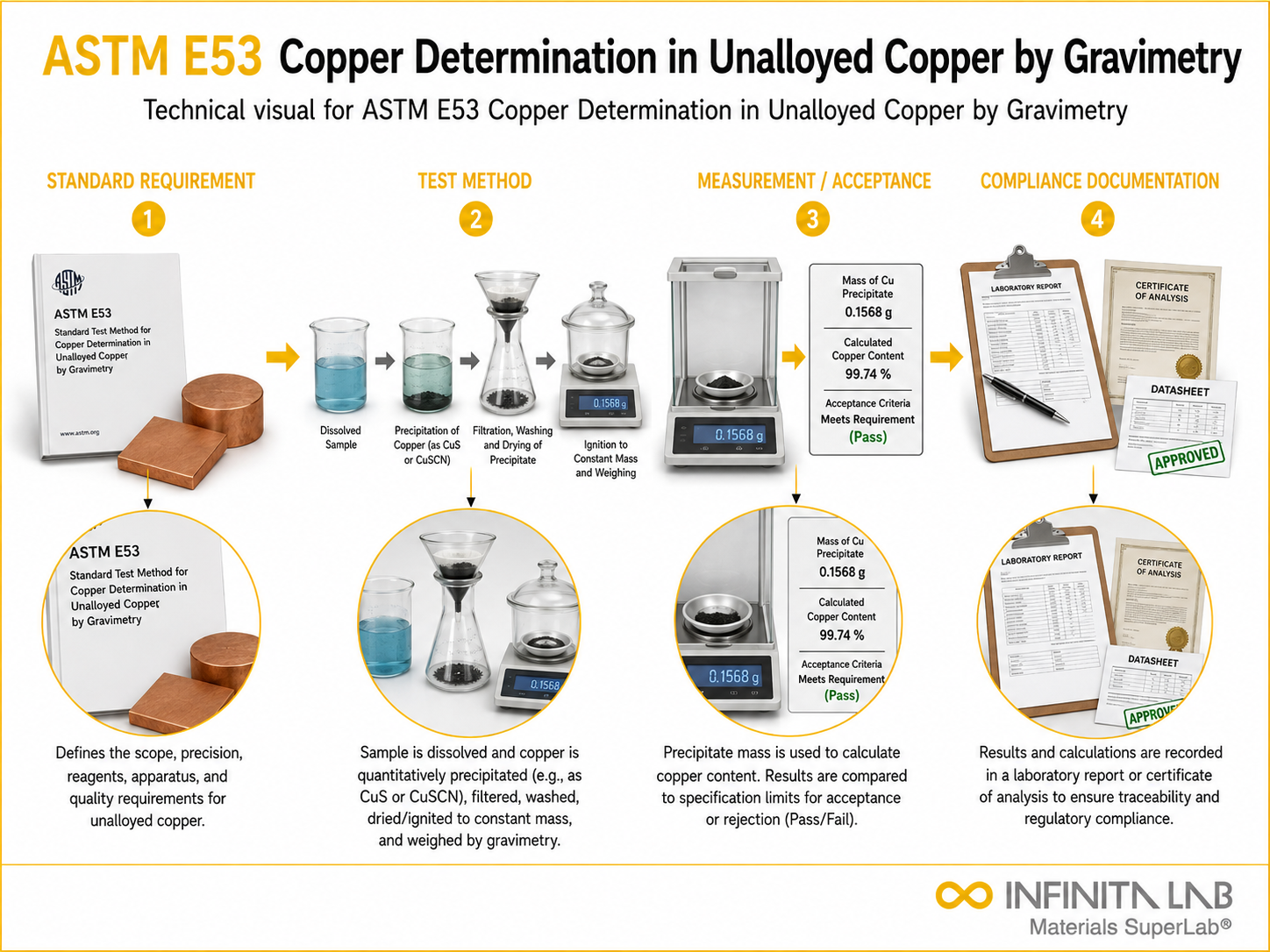
ASTM E53 specifies a gravimetric method for determining copper content in unalloyed copper. The method involves chemical dissolution of the sample followed by precipitation of copper as a stable compound, which is then filtered, dried, and weighed for quantitative determination.
This standard is highly reliable for high-purity copper analysis, as gravimetry provides direct measurement based on mass. It is particularly valuable where high accuracy is required, such as certification of purity, quality control, and validation of instrumental methods in analytical laboratories.

Applications and Benefits of ASTM E53 Unalloyed Copper Gravimetric Analysis Testing
Scope
ASTM E53 outlines a gravimetric procedure for determining copper content in unalloyed copper materials. It ensures precise and accurate quantification through direct mass measurement.
- Applicable to high-purity unalloyed copper
- Suitable for gravimetric chemical analysis
- Based on precipitation and mass determination
- Enables high-accuracy composition verification
Applications
- Purity verification of copper materials
- Quality control in metal production
- Calibration and validation of analytical methods
- Research and laboratory analysis
- Certification of high-purity copper
Benefits
- High accuracy and reliability
- Direct measurement without instrument dependency
- Suitable as a reference method
- Minimal calibration requirements
- Excellent reproducibility
Our ASTM E53 Testing Procedure
Sample Dissolution
Dissolve the copper sample using appropriate acids to obtain a clear solution for analysis.
1Copper Precipitation
Convert copper into a stable insoluble compound through controlled chemical reaction.
2Filtration and Drying
Filter the precipitate and dry it under controlled conditions to constant weight.
3Gravimetric Calculation
Weigh the dried precipitate and calculate copper content using stoichiometric relationships.
4ASTM E53 Test Parameters and Requirements
| Parameter | Details |
|---|---|
| Standard | ASTM E53 |
| Method | Gravimetric chemical analysis |
| Analyte | Copper (Cu) |
| Sample Type | Unalloyed copper |
| Extraction Type | Acid dissolution followed by precipitation |
| Units | Percentage (%) Cu |


- Analytical balance (high precision)
- Filtration apparatus
- Drying oven or furnace
- Volumetric glassware
- Digestion setup
Equipment and Instrumentation Used for ASTM E53 Testing
What You Receive: Test Report, Data, and Certification
- Copper content (% purity)
- Mass of precipitate data
- Calculation details and stoichiometry
- Test conditions and observations
- Final analytical report
ASTM E53 Unalloyed Copper Gravimetric Analysis FAQs
Gravimetric analysis directly measures mass of a chemically defined compound, eliminating dependence on instrument calibration. This makes ASTM E53 highly accurate and suitable for validating other analytical methods and certifying high-purity copper materials.
Copper is converted into a specific insoluble compound under controlled conditions. Proper reagent selection and pH control ensure that only copper precipitates, minimizing co-precipitation of impurities and improving analytical selectivity.
Achieving constant weight ensures all moisture and volatile components are removed. This guarantees that the measured mass represents only the pure precipitated compound, which is critical for accurate calculation of copper content.
Instrumental methods rely on calibration and can be affected by matrix effects, whereas gravimetry is based on direct mass measurement, providing inherently higher accuracy when properly executed.
Errors can arise from incomplete precipitation, loss of precipitate during filtration, contamination, or improper drying, all affecting the final measured mass.
Why Choose Infinita Lab for Unalloyed Copper Gravimetric Analysis Testing?
At the core of this breadth is our network of 2,000+ accredited laboratories across the USA, offering access to over 10,000 testing methods and analytical services. From advanced materials characterization (SEM, TEM, RBS, XPS) to mechanical, chemical, environmental, biological, and standardized ASTM/ISO-compliant testing, we deliver unmatched flexibility, specialization, and scale. You are never limited by geography, facility, or methodology — Infinita Lab connects you to the right expertise and testing solution, every time.

Need ASTM E53 Unalloyed Copper Gravimetric Analysis Testing You Can Rely On?
Send query us at hello@infinitalab.com or call us at (888) 878-3090 to learn more about our services and how we can support you.



Request a Quote
Submit your material details and receive testing procedures, pricing, and turnaround time within 24 hours.
 Quick Turnaround and Hasslefree process
 Confidentiality Guarantee
 Free, No-obligation Consultation
 100% Customer Satisfaction
