
ASTM D7093 Percent Volume Nonvolatile Content Testing for Coatings
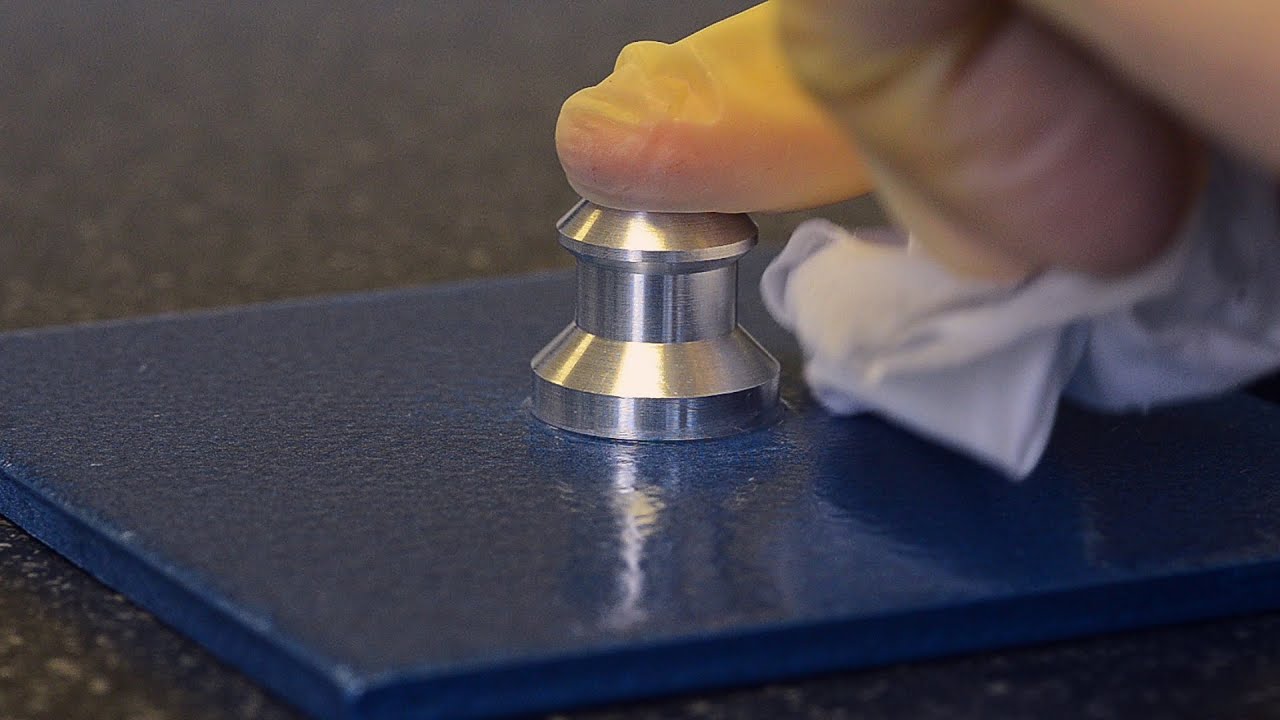
ASTM D7093-13 is the standardized test method that covers the procedure for evaluating the formability of thin-film organic coatings applied on steel. The values stated are in SI units
TRUSTED BY


Precision-driven testing for dimensional accuracy and compliance
- Overview
- Scope, Applications, and Benefits
- Test Process
- Specifications
- Instrumentation
- Results and Deliverables
Overview
ASTM D7093-13 describes test methods for assessing the permanence (lightfastness and chemical stability) of dyes and pigments used in permanent records, including printed documents, archival photographs, and fine art reproductions. Colorants used in permanent records must resist fading and chemical degradation over decades or centuries.
This standard is important for document archivists, museum conservators, printing ink manufacturers, and inkjet and laser printer developers who require verified long-term color stability.

Scope, Applications, and Benefits
Scope
ASTM D7093-13 covers accelerated aging tests for evaluating colorant permanence and includes:
- Light exposure resistance (lightfastness)
- Heat and humidity aging stability
- Gas fade resistance (ozone, NOx)
- Aqueous stability (water resistance)
Applications
- Archival document and certificate printing inks
- Museum-quality fine art print colorant evaluation
- Inkjet and laser printer cartridge permanence testing
- Photographic print material assessment
- Government and legal document production standards
Benefits
- Enables accelerated assessment of very long-term color stability
- Supports archival and ISO 9706 permanence claims
- Identifies unstable colorants before widespread deployment
- Provides a comparative ranking of colorant systems
- Supports product labeling for “archival quality” or “permanent” records
Test Process
Baseline Color Measurement
Initial color values (CIELab or density) are measured for each specimen using a calibrated spectrophotometer.
1Accelerated Aging Exposure
Specimens are subjected to defined light (xenon arc or fluorescent), heat/humidity, or gas fade conditions per specified duration.
2Post-Aging Color Measurement
Color values are re-measured under identical conditions as the baseline measurement.
3Permanence Calculation
Color difference (ΔE) and density change are calculated; results are compared to permanence criteria or rated on an ISO lightfastness scale.
4Technical Specifications
| Parameter | Details |
|---|---|
| Test Principle | Accelerated aging followed by colorimetric comparison |
| Light Source | Xenon arc (D65 simulation) or UV fluorescent |
| Heat/Humidity Aging | Typically 60°C / 50% RH for defined duration |
| Measured Output | ΔE (color difference), density change, visual rating |
Instrumentation Used for Testing
- Xenon arc light fastness tester (per ASTM G155)
- UV fluorescent accelerated aging device
- Gas fade test chamber (ozone generator)
- Calibrated spectrophotometer or densitometer
- Temperature and humidity-controlled aging oven
Results and Deliverables
- ΔE (color difference) values for each aging condition
- Optical density change data
- ISO lightfastness rating or relative permanence ranking
- Visual rating of color and appearance changes
- Comprehensive permanence report
Frequently Asked Questions
Lightfastness is a measure of a colorant's resistance to fading or color change when exposed to light; the ISO lightfastness scale ranges from 1 (very poor) to 8 (excellent permanence).
The test has wide applications in industries like automotive, appliances, and general metal forming, where coatings on steel components must retain their quality and performance during manufacture.
Accelerated light and thermal aging conditions are correlated to real-world years of storage or display exposure, though the exact equivalence depends on environmental assumptions and exposure conditions.
Gas fade testing exposes specimens to reactive gases such as ozone or nitrogen oxides, which are present in typical indoor storage environments and can degrade certain dyes and pigments.
A ΔE greater than 3–5 is generally considered perceptible to the human eye; for critical archival applications, a maximum ΔE of 1–2 over the rated storage period is often required.
Why Choose Infinita Lab
for Electron Energy Loss
Spectroscopy (EELS)?
At the core of this breadth is our network of 2,000+ accredited labs in the USA, offering access to over 10,000 test types. From advanced metrology (SEM, TEM, RBS, XPS) to mechanical, dielectric, environmental, and standardized ASTM/ISO testing, we give clients unmatched flexibility, specialization, and scale. You are not limited by geography, facility, or methodology – Infinita connects you to the right testing, every time.

Looking for a trusted partner for Electron Energy Loss Spectroscopy (EELS) Testing?
Send query us at hello@infinitlab.com or call us at (888) 878-3090 to learn more about our services and how we can support you.




Request a Quote
Submit your material details and receive testing procedures, pricing, and turnaround time within 24 hours.
 Quick Turnaround and Hasslefree process
 Confidentiality Guarantee
 Free, No-obligation Consultation
 100% Customer Satisfaction
