
ASTM D5988-18 Testing: Complete Guide to Determining Aerobic Biodegradation of Plastic Materials in Soil
TRUSTED BY


- Overview
- Scope, Applications, and Benefits
- Test Process
- Specifications
- Instrumentation
- Results and Deliverables
ASTM D5988-18 Biodegradation Testing Overview
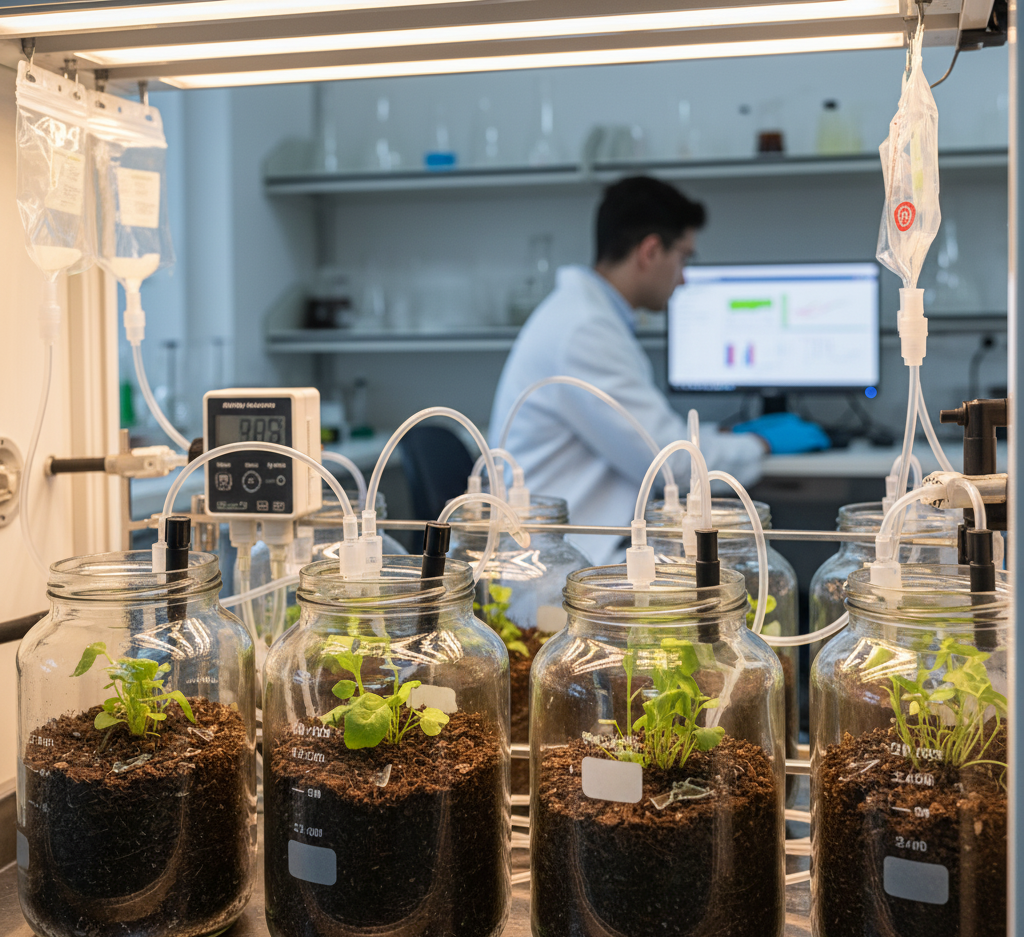
ASTM D5988 determines the aerobic biodegradation of plastic materials in soil by measuring carbon dioxide evolution under controlled conditions. The test evaluates how microorganisms break down plastic materials over time in a soil environment.
This method is widely used in environmental testing, sustainable materials development, and regulatory compliance. It helps assess the biodegradability and environmental impact of plastic products under realistic soil conditions.

Scope, Applications, and Benefits
Scope
ASTM D5988 evaluates plastic materials by simulating aerobic biodegradation in soil and measuring microbial activity. The test provides insight into degradation rate and environmental compatibility.
The test evaluates:
- Biodegradation rate of plastics in soil
- Microbial activity through CO₂ evolution
- Material breakdown under aerobic conditions
- Environmental impact of plastic materials
- Suitability for biodegradable applications
Applications
- Biodegradable plastic materials
- Packaging and compostable products
- Agricultural films
- Environmental compliance testing
- Research and development of sustainable materials
Benefits
- Provides a realistic biodegradation assessment
- Supports the development of eco-friendly materials
- Helps meet environmental regulations
- Enables comparison of biodegradable materials
- Improves sustainability evaluation
ASTM D5988 Test Process
Sample Preparation
Plastic specimens are prepared and mixed with soil.
1Soil Incubation
Samples are incubated under controlled aerobic conditions.
2CO₂ Measurement
Carbon dioxide evolved is measured over time.
3Data Recording & Evaluation
Biodegradation percentage is calculated and analyzed.
4ASTM D5988 Technical Specifications
| Parameter | Details |
|---|---|
| Applicable Materials | Plastic materials and polymers |
| Test Temperature | Plastic materials and polymers |
| Test Duration | ~30 days to 180 days |
| Soil Type | Controlled natural or synthetic soil |
| Measurement Method | CO₂ evolution analysis |
| Biodegradation (%) | Biodegradation (%) |
Instrumentation Used for Testing
- Biodegradation test chambers
- CO₂ measurement system (respirometer)
- Soil conditioning setup
- Temperature and humidity control system
- Analytical balance
- Data acquisition system
Results and Deliverables
- Percentage biodegradation results
- CO₂ evolution data
- Material degradation profile
- Environmental performance evaluation
- Test condition summary
- ASTM compliance report
Frequently Asked Questions
ASTM D5988-18 evaluates aerobic biodegradation of plastic materials in soil. It measures carbon dioxide evolution to assess biodegradability and environmental impact of plastics under controlled soil conditions over time.
Key parameters include soil type, temperature, moisture content, microbial activity, and test duration. Controlled conditions ensure accurate simulation of biodegradation processes in soil environments.
Biodegradation is quantified by measuring the amount of CO₂ evolved during the test period. The CO₂ produced is compared to the theoretical maximum CO₂ expected from complete oxidation of the test material’s organic carbon content, expressed as a percentage of biodegradation.
ASTM D5988-18 applies to biodegradable plastics, polymers, and materials intended for environmental applications where degradation in soil is important.
ASTM D5988-18 results depend on controlled laboratory conditions and may not fully represent natural environments, requiring field testing for complete environmental performance evaluation.
Why Choose Infinita Lab
for Electron Energy Loss
Spectroscopy (EELS)?
At the core of this breadth is our network of 2,000+ accredited labs in the USA, offering access to over 10,000 test types. From advanced metrology (SEM, TEM, RBS, XPS) to mechanical, dielectric, environmental, and standardized ASTM/ISO testing, we give clients unmatched flexibility, specialization, and scale. You are not limited by geography, facility, or methodology – Infinita connects you to the right testing, every time.

Looking for a trusted partner for Electron Energy Loss Spectroscopy (EELS) Testing?
Send query us at hello@infinitlab.com or call us at (888) 878-3090 to learn more about our services and how we can support you.




Request a Quote
Submit your material details and receive testing procedures, pricing, and turnaround time within 24 hours.
 Quick Turnaround and Hasslefree process
 Confidentiality Guarantee
 Free, No-obligation Consultation
 100% Customer Satisfaction
